TOP
Yellowstone in Winter

“Ermines and Everything, the Best Day Ever!”

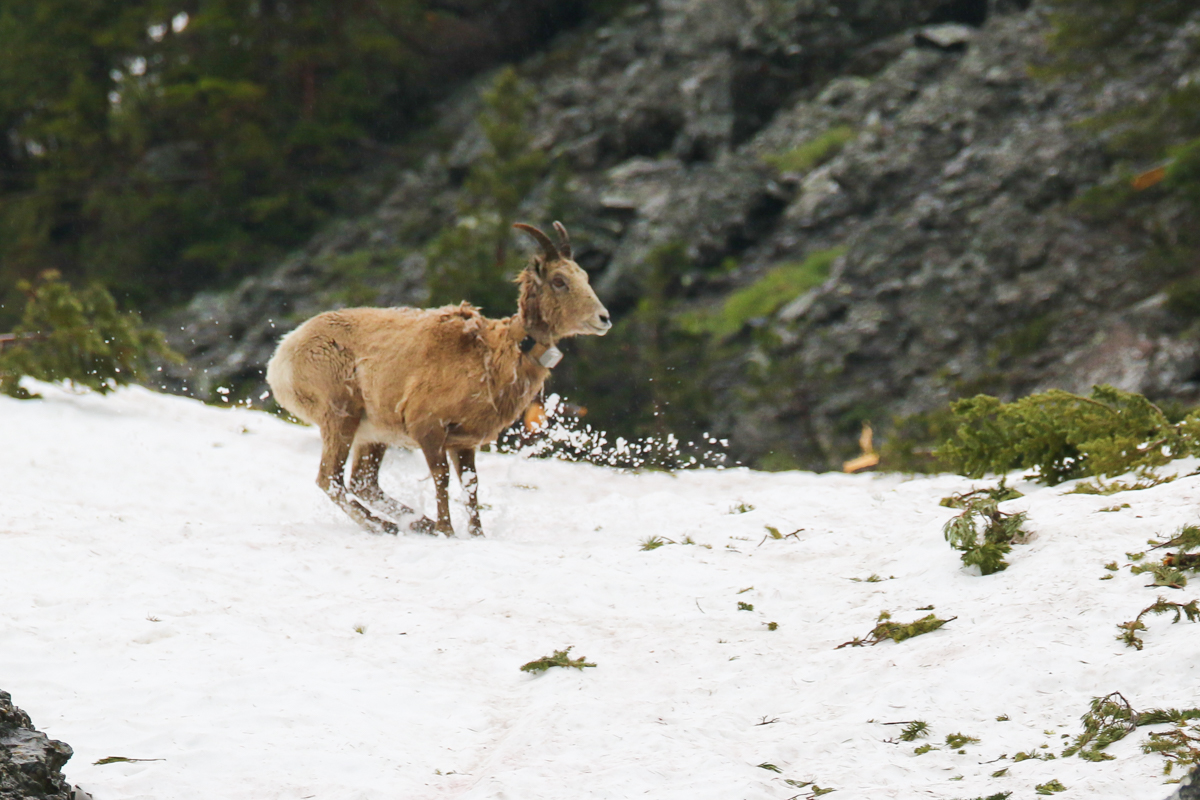
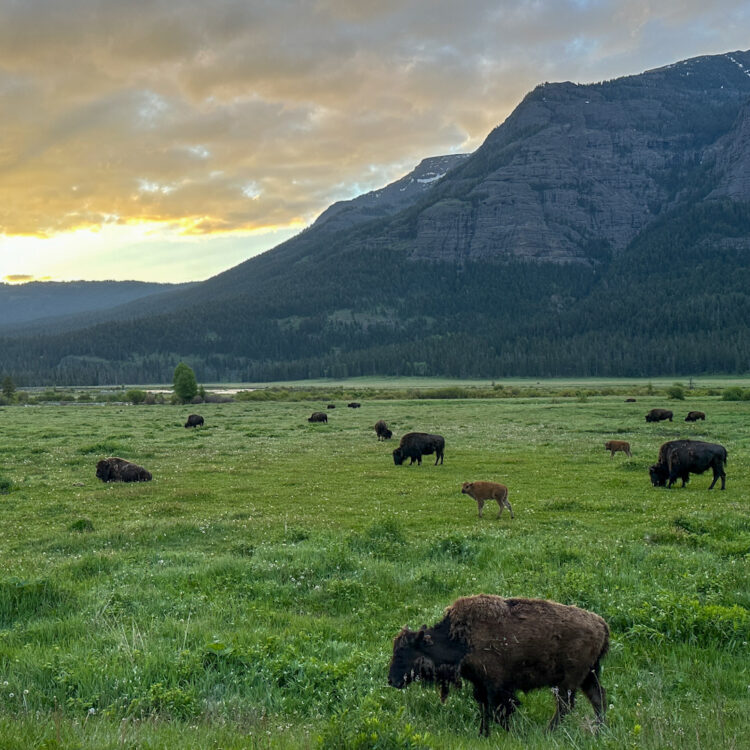
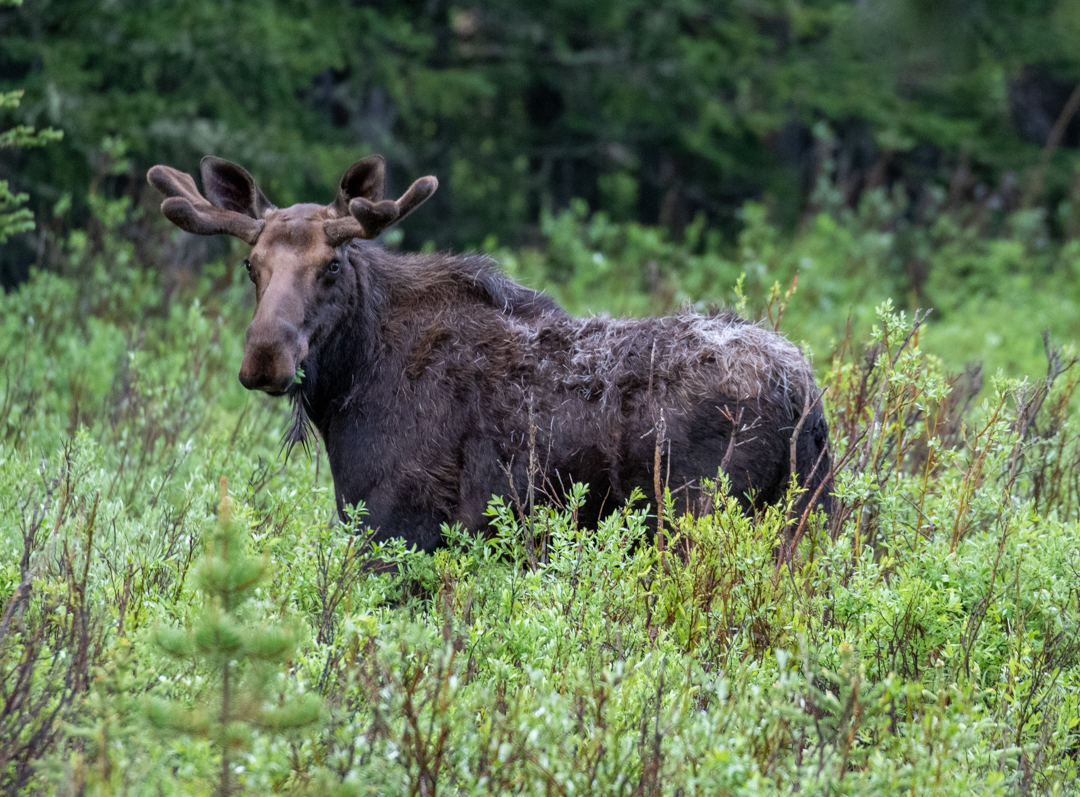
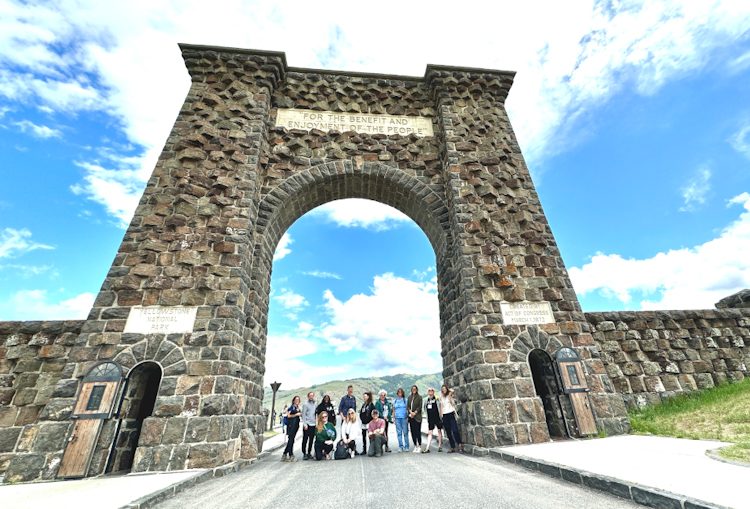
Up before daylight and heading to Yellowstone after a long day of travel, we were all a little bleary-eyed, but soon we sprang to life!!! The first bison of the day was sighted shortly after Roosevelt’s welcome to the park (the famed arch at Yellowstone’s north entrance). The herd was closer and larger than we could have imagined, we could even hear them chewing (safely, from the car)! This was a great start to accomplishing our goal of an octo-ungulate day. As we continued our journey, we were able to rack up six more hooved-mammals (elk, mule deer, bighorn sheep, pronghorn, Rocky Mountain goat, and moose) leaving us missing the ever-elusive white-tailed deer.

bison in road

While viewing the moose, much to our surprise and delight, a subnivean creature popped into view. Mayhem ensued as we scrambled to see the even more elusive ermine. It was hopping over and traversing through the snow drifts at lightning speed, finally crossing the road in front of us. Excitement continued as we tried to capture the perfect picture to share. This was a favorite of the 19 species we spotted today for many people in the group.

white winter weasel with black tail tip in snow

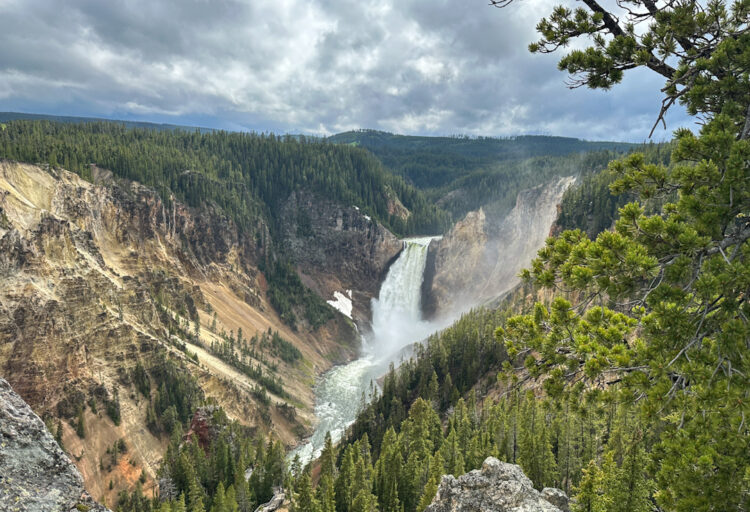
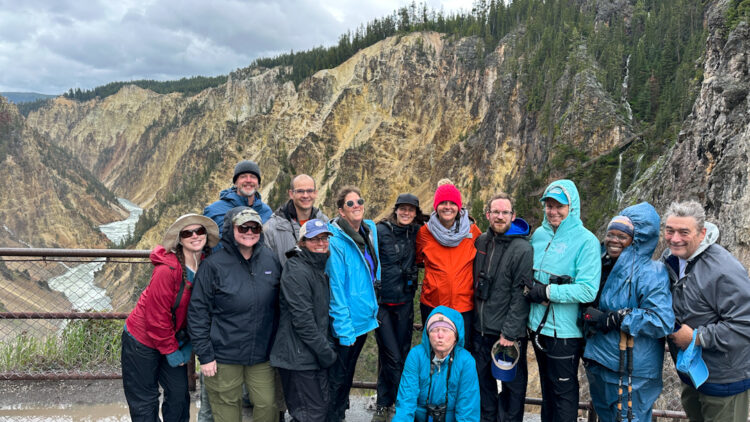
We wrapped up our day with a snowshoe hike to a lovely view of the Yellowstone River. This was a challenging first for many of us in the group and we are proud to say, we all made it to the top and back down. We can’t wait to see what tomorrow holds for us.

Dustin, Julie, and Tonya

Yellowstone in Winter

“Travel Day: The Adventure Begins”

Our day started at 4 am with a trip to Raleigh-Durham International Airport. After our first flight was in the air, we heard that the FAA had grounded all flights until 9 am due to a software update! Thankfully, we had already made it to Minneapolis and it only added an hour to our layover. We spent learning more about our trip and each other, which allowed us to begin our journals. We were given stickers of maps and our background info to begin our reflections, to which we added our own goals and expectations.

people sitting in airport

Our first flight was joyous, with only 35 people onboard. We could all spread out and some people even had 3 seats to lay down! The connector from Minneapolis to Montana was packed tight. After arrival we hit the grocery store for snacks, then hit the road to Gardiner via Livingston. We followed the Yellowstone River south from Gardiner and saw elk, mule deer, bald eagles, and magpies!

view out airplane window of snow covered mountains

We arrived at the North Yellowstone Hostel at 5:30 pm local time, 7:30 our time. A taco dinner awaited us as we had our first group meeting. We are now ready for our Yellowstone National Park journey tomorrow!

poster of lodge logo

Yellowstone in Winter

“Getting Ready for an Adventure”

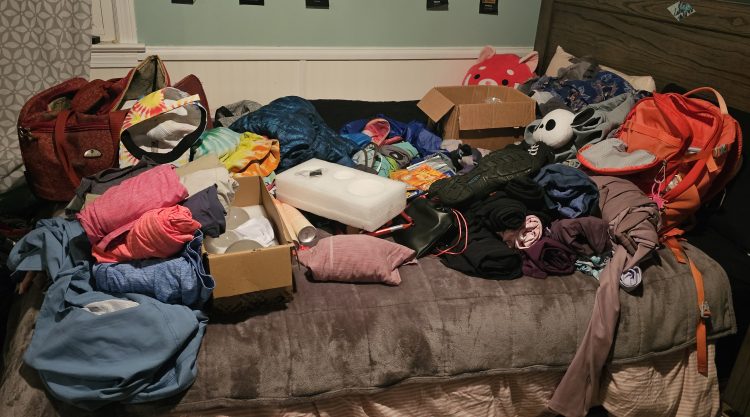
The adventure is less than a week away and I can hardly contain my excitement. Getting ready for an adventure like this is what I live for. Give me a packing list and an agenda of what is ahead and I hit the ground running — or should I say organizing, ordering, packing, and making plans for all that will be left behind (including my teaching partner/pup, Andi)! The packing list is long and the weather is unpredictable, but I am determined to be as prepared as I can be. I even got some new boots to upgrade my favorite L.L. Bean boots from 7th grade; it probably was time! Weather conditions look to be favorable and hopefully not quite as chilly as it could be, but best to be prepared. I’ve started watching snippets of Yellowstone 150 on Netflix and reading the book American Wolf. I hope we’ll get the chance to see a wolf pack during our observations of the Lamar Valley. I can’t wait to travel in a snow coach to Old Faithful. My students are getting excited, too, and have begun asking questions. I am thrilled to be able to share this adventure with them and hope that it will inspire them to reach out and explore the world around us. I am ready; bring on the snow and cold!
two pairs of boots - one old, one new with tags still attached

by Tonya Dobson

Blue Ridge

“Final Day”

Our team spent our final day measuring old growth trees (some close to 500 years old) at Joyce Kilmer – Slick Rock Wilderness. We measured the circumference and then calculated the diameter of each one but then also asked and tested how many of us would wrap around a tree? Which one of us is the same height as the tree’s diameter? The group loved mixing the scientific data collection with more whimsical estimates. Our final stop was Yellow Creek Falls, where we played in a cold swimming hole, swam to the falls itself, and found time to write, knowing that we would all share our writing later this evening.  We closed our day doing just that, as well as sharing our hopes for what we will take away from the Blue Ridge Institute, and our appreciation for the experience.

This is an excerpt of Sarah’s writing:

Vocabulary

New words knock through the corners of my brain,
Upturning rocks and damp crevices to new worlds unknown.

Endemic — unique to an area.
Native
Particular

Can a week of exploration be endemic?
Not to be replicated, unique to place, time, and this set of 12 humans.

Early and late succession – what comes first to the land after a disturbance,
and the sequence of events, plants, species thereafter.
Like a story — setting, conflict, rising action, climax, resolution.
Repeatable but not replicated.

Perhaps 2020 was the worldwide disturbance,
Making all of us early succession teachers and learners.
Precariously revived with the shallow but rich soil of vulnerable willingness.

Radio telemetry, pit tags, migration data banks –
One by one to the masses, seeking and finding
the spruce fir moss spider, or
gray cheek salamander, or
the mighty and ancient hellbender.

Distinct and cooperative worlds of innovation, attention, and ingenuity –
Totally unfamiliar to me.

What other worlds and passions are beyond my scope of vision?
What else will arise that I didn’t know I loved.

Spotting scope, jewel loupe, bug box
The earthy smell of moss and compelling whiff of hickory nut.

What else?

Kinglet! Thrush! Junco! Warbler!
Bird songs of “here I am” and “chicken chicken chicken chicken”

And?

Spruce or fir?
No…. A hemlock.

Blue and black cohosh, wine berries, skunky galax and endless rhododendrons.

Here’s to the next world of detailed delight.
Here’s to the next succession of teachers and learners to take this journey.

To see photos from our final day check out @ncmnsteachered on Instagram

Blue Ridge

“Twas the Night Before the Yurts”

Twas the day before the yurts when all through the mountains,
the teachers were packing and filling up water from water fountains.

The clothes were so smelly, the boots oh so dirty,
but the smiles of each teacher was quite bright and purty.

First on the schedule was to drive the rest of the Parkway,
and on our way we realized, we only have two nights left to stay!

We explored through the Smokies in hopes to find elk,
when what to our wandering eyes should appear,
but an elk similar to a reindeer!

Back in the van on the drive to meet Freeman Owle,
we had 30 more minutes to see a bear and may hear its growl?

Alas we have made it down to the water, the land of the Cherokee,
to watch all the children play with glee.

Freeman Owle began to tell stories of the past,
sharing all the traditions and celebrations in hopes that they last.

He gave us a tour as we drove through the land,
and brought us to the burial site of those who lived beforehand.

Freeman cared so much about his people
and challenged the group of teachers to have the vision of the eagle.

Up the steep hill, our view at the yurts was so nice
and for dinner we shared great conversation over rice.

Reflecting on our day we realized we now had one day left,
so we planned to make it the best one yet!

See photos of our day on our Instagram feed @ncmnsteachered

Blue Ridge

“Enumerating Early Hikes and Exciting Hellbenders”

1

Early morning sunrise on the grassy summit of Black Balsam Knob with views of mountains in all directions.

2

Wild hellbenders we discovered under rocks in the Davidson River with Ben, a biologist with the NC Wildlife Resources Commission, one of which we were able to capture, measure, PIT tag and release.

3

The amount of overlooks along this high elevation stretch of the Blue Ridge Parkway we stopped at to take in the majestic views.

4

The time we had to wake up so we could hike the Art Loeb trail to our sunrise viewing location.

5

The number of layers we SHOULD have worn to go snorkeling in the Davidson River. (The two or three most of us were wearing weren’t quite sufficient to keep us warm in the chilly water.)

6

The number of petals and stamens on the orange-colored, native Turks-cap Lilies, which we studied in the early morning light.

7

The number of folks who shared sketches made during our plant time machine activity, where we looked at how a flower developed from a bud to blossom to fruit.

8

The number of different groups of pollinators that visited the flowers of one bush honeysuckle plant during about 15 minutes of observation.

9

The number of teachers becoming students and learning in the mountains of western North Carolina.

10

The time we will crawl into our sleeping bags and tents after a very eventful and busy day.

11

The number of loud exclamations of joy when we remembered we get to sleep in comfy beds in our yurts tomorrow night (one of us claims that she is still loving tent sleeping, but we think she will be more than happy for her yurt bed once we’re there)!

12

The number of smiling faces as we sat in a circle this evening to share about a day full of adventure and learning.

For pictures of our adventures check out @ncmnsteachered on Instagram

Blue Ridge

“Symbols and Signs”

Melissa teaches us about Indian Cucumber-Root (Medeola virginiana).

Melissa teaches us about Indian Cucumber-Root (Medeola virginiana).

We broke camp this morning at Briar Bottom Campground and spent part of our day at the Blue Ridge Parkway Visitors Center with three guest experts. Brad Sauls discussed the never-ending battle against invasive species in the park as well as the endangered and threatened ones that need our protection. Illustrator Jeff Preston shared his efforts at bringing engaging images and visual messages to the public: everything from roadway markers to bear safety posters in the park bathrooms.

A highlight for many of us, though, was our writing workshop with Dr. Mildred Barya, writer and professor at UNC-Asheville. Mildred starting by asking each of us to share our relationship to writing. Just like our students, our attitudes and perspectives varied widely — some of us are poets, letter writers, journalers, science communicators; others of us disdain writing and suffer through it only when it’s demanded of us. Mildred invited us to consider and then write about the defense mechanisms and characteristics of a specific plant or animal and then use it as a way of thinking of our own. This seemingly simple prompt led to some metaphorical thinking in our group, and we loved hearing more about each other’s lives.

Skinny Dip Falls (2022) looks very different after heavy rains from Tropical Storm Fred caused extensive changes to the landscape.

Skinny Dip Falls (2022) looks very different after heavy rains from Tropical Storm Fred caused extensive changes to the landscape.

We got settled at Mount Pisgah Campground — our home for the next two nights, and then took an evening hike to Skinny Dip Falls. On the way, we foraged cucumber-root and passed hikers who were foraging for chanterelle mushrooms. The site of the falls, however, was a juxtaposition of beauty and destruction. Our group leaders were there just last year, but the falls have changed drastically due to Tropical Storm system Fred, which dumped 14 inches of rain on the area in 12 hours. Massive boulders were re-distributed, trail stairs and fences destroyed, and the entire look of the falls was radically different from the photos that Chris, Greg and Melissa shared from 2021. The falls was a site and sign to consider the impact of changing weather patterns due to the global climate crisis and what can be done about it. How do we convey facts about the climate crisis to our students? How do we act communally and not just individually? How do we engage leaders regardless of their political affiliation?

Just as important as this discussion, though, was the reminder that places — swimming holes, forests, valleys — are important to who we are, our stories and our legacies.

For more pictures of our adventures check out @ncmnsteachered on Instagram: https://www.instagram.com/p/CgDaXZOLrTi/?igshid=YmMyMTA2M2Y=

Blue Ridge

“High in the Sky”

Group of nine people pointing to their home cities on a large map of North Carolina imprinted in concrete on Mount Mitchell.

Where are we from? On top of Mt. Mitchell at 6,684 feet, our teachers showed off their home locations on the map at the summit.

In the meadow of sleepy teachers in tents, the sounds of alarms buzzed through the mountains at 4:00am. We stumbled to the pavilion to get a hot cup of Joe and piled into the vans to get ready to band some birds! Driving through the winding roads of the Blue Ridge Parkway we stopped at Ridge Junction Overlook to take a gander. After taking in the beautiful vistas the teachers all crawled back in the van, trying to make sure we were not late for the birds. Surprise! We all crawled back out to appreciate the simple moments of a sunrise. As the sun rose above the horizon it cast a beautiful fiery orange red glow that crowned the Black Mountains.

A woman in a rain poncho and hat holds a small salamander in her hands.

Anna from Gates County holds a Pygmy Salamander. Click to enlarge.

Next, we drove a short while to the Big Butt trailhead and donned our gear to go capture the birds of the Appalachians with John, the ornithologist from the NCMNS. With high anticipation, we waited on the edge of our Crazy Creek chairs to capture our first bird to band. In the quiet of waiting, a Golden-crowned Kinglet flew into our net. Once freed from the net John showed the group how to measure and weigh the tiny bird. John placed a silver bracelet with multiple numbers on it to help identify the bird in future captures for collecting data. Finally, we released the kinglet and learned about the NC Audubon Society. Amy shared all the work they complete to conserve our native birds. She is a conservation biologist and she had a lot of information to share about private land owners and helping protect many different birds.

Surprise! Our view of Mount Mitchell was obscured by approaching storm clouds. The cloudy and windy summit is the highest point east of the Mississippi. With less-than-ideal views of the Black Mountains, we headed into the spruce-fir forest. The awe and wonder of the misty, dark forest was heightened when one of the teachers led us through a mindfulness exercise focusing on the Fraser Fir tree. Throughout our hike, we were enlightened by so many facts about species including the tiny Spruce-fir Moss Spider that is endangered, the similarly diminutive Pygmy Salamanders, and the giants of the forest, Red Spruce and Fraser Fir.

We were all prepared for the incoming storm … Surprise! The weather held out and made for one more final, beautiful view from Mount Mitchell summit. We had an eventful day of soaking up all of the information shared with us as we continued our explorations through the Blue Ridge Mountains.

Blue Ridge

“On the Road Again…”

Yesterday we traveled 143 miles and had a brand new adventure.  We began our morning packing up our campsite at Stone Mountain State Park. Our team rolled tents, boiled water and packed vans, ready to hit the road by 8:00am. After a short drive we hopped on the Blue Ridge Parkway and stopped at Bluff Mountain Overlook, E.B. Jeffress Park Overlook and the Linville Cove Viaduct to enjoy the beautiful scenery. We learned the rich history of how this famous viaduct came to be and why it is considered an engineering marvel. We then headed over the Viaduct around Grandfather Mountain to Linville Falls Shelter. There, we met with Ranger Jonathan Bennet to learn the vast history of the Blue Ridge Parkway. We discussed everything from how the Blue Ridge Parkway became the most traveled National Park in our country to how Linville Falls earned its name.

Then, it was back in the van for a bumpy ride to Wiseman’s View where we had a beautiful view of the Linville Gorge. From there, we drove to our campsite at Briar Bottom and discovered a surprise along the way. On the side of the road there was a Timber Rattlesnake. We were able to quickly get off to the shoulder of the road and into the nearby grass. Once at Briar Bottom we dried our tents and set up our new campsite at the base of Mount Mitchell.

Once set up, we spent the evening with John Gerwin, NCMNS ornithologist and bird expert. He discussed how the birds are tagged and how data is collected about bird migration. We ended the evening with a moth light, and searching for salamanders using fluorescent dye powder. The dinner consisted of burritos. Yum!

Check back for photos!

Blue Ridge

“What Lies Beneath”

“It was a different experience to see the mountains up close.” — Cecilia, Instructional Coach, Warren County Schools

Group Photo at the Stone River.

Group Photo at the Stone River.

Lying belly down on the cliff face with a magnifier to study the rock up close, the Blue Ridge has become an intimate experience for all of us. With the magnifier in hand, we were astounded at what we could discover in a wide open, sunlit cliff face: sparkly crystals, sage green and dark gray lichen, signs of weathering and water channels. Melissa put North Carolina’s geological history into a story that explained how we ended up on this gorgeous, igneous rock face.

Io moth caterpillar

Io moth caterpillar. Photo by Chris Smith.

On our shaky-leg hike down the mountain, we were introduced to the Table Mountain Pine, whose very special pinecones are serotinous — they only open to disperse when burned, so they patiently wait years — decades even — to spread their seeds. Greg shared a quotation by Rachel Carson about many children being fascinated by “inconspicuous things.” This was true for all of us as we took our time exploring this mountain, asking questions, pointing out caterpillars, box turtles, dragonflies and Indigo Buntings.

Cecilia taking a close look at the rocks

Cecilia taking a close look at the rocks

Crayfish hiding halfway under a rock

Crayfish in the Stone River. Photo by Greg Skupien

To culminate our journey below, T.R. Russ, from the NC Wildlife Resource Commission, told us all about the mussels and fish that are in the Roaring River (which, disappointingly, does not include the Rayed Pink Fatmucket, a species of freshwater mussel). We gathered them with a river seine and then crawled the river bottom with snorkels to see what else we could find along the rocks.

Journeys above and below, patience and presence — here’s to day two!