We began our day at Wetlands Country House & Shed in Wakkerstroom. We enjoyed a delicious made-to-order breakfast of eggs with our choice of sides.
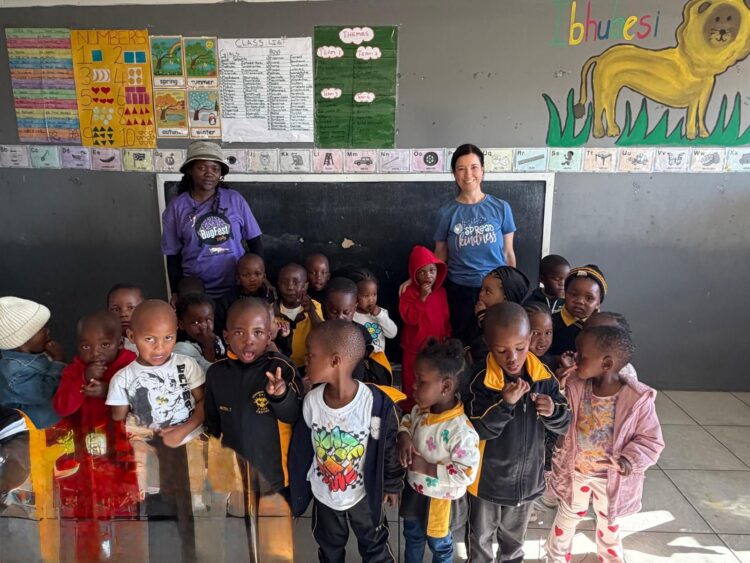
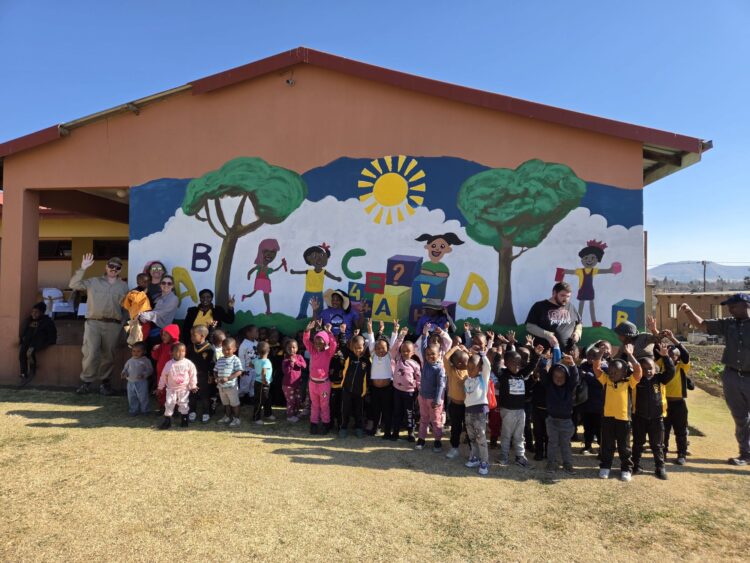
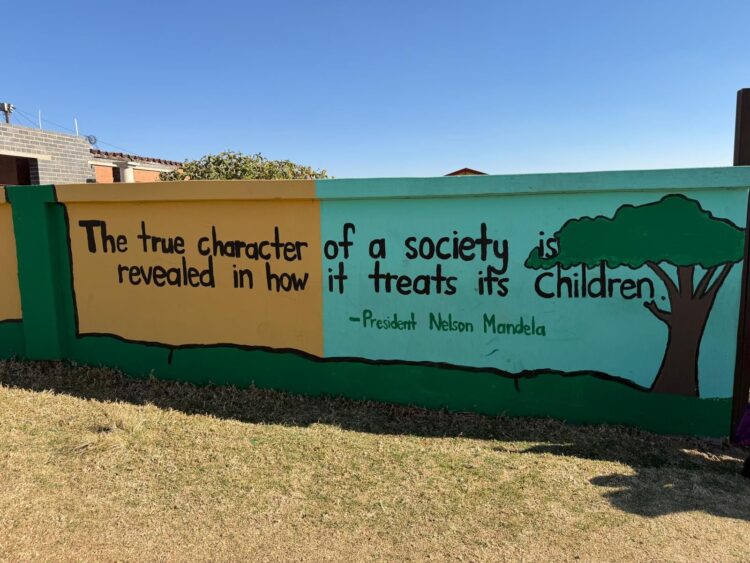
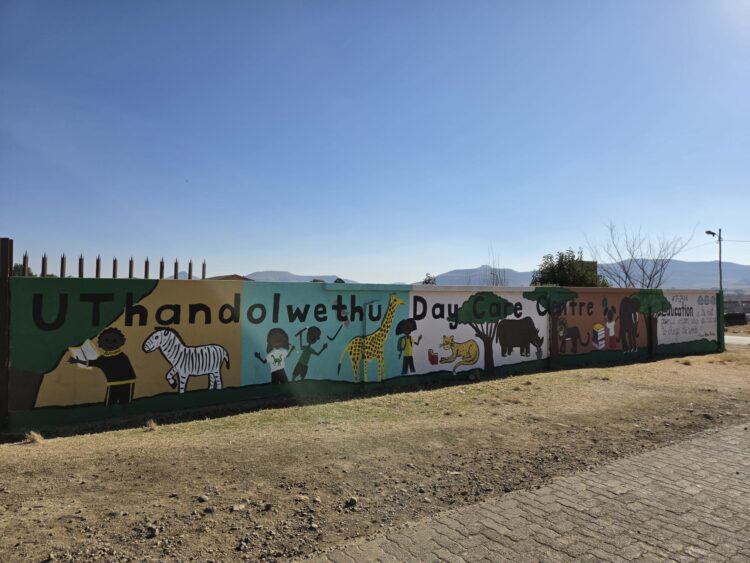
We then traveled to UThandolwethu Day Care Centre which is the school that our two South African teachers, Eunice (4-5 year olds) and Mpumi (3-4 year olds) work at. We worked in groups to create and paint murals on different walls of the school, both inside and outside. Each group worked diligently to make the school walls vibrant and colorful for the school and community. It was a few hours of hard, yet rewarding, teamwork.
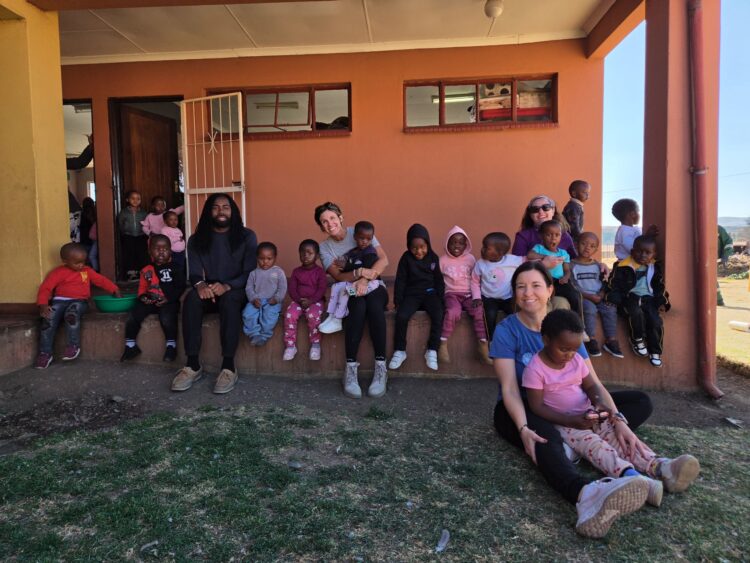
Pansy and Mpumi with the lion class (ages 3-4)
After painting, the school treated our group to a lunch on the school grounds. It was an unexpected and tasty treat! The staff and students danced for us and their joy was contagious. We had some time to interact with the students which was truly magical.
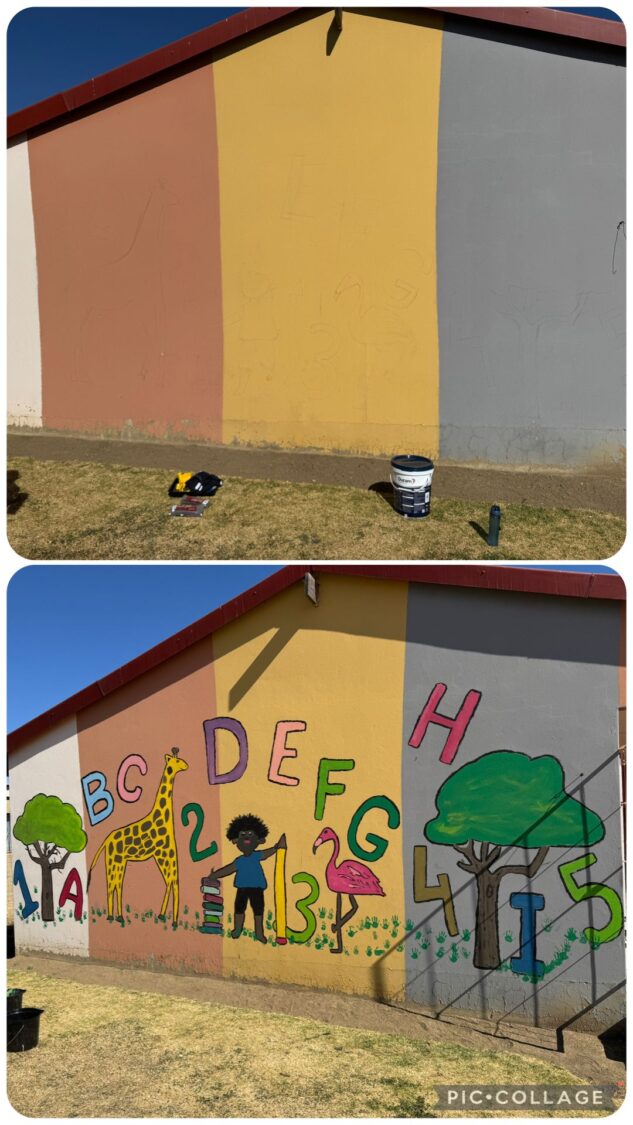
The future is bright. Before and after of one wall of the center.
Before leaving, we gifted the students cut up oranges as a special treat as well as 6 soccer balls, 5 playground balls, and a few of our group brought candy to pass out as well. The students loved seeing some of our Snapchat and TikTok filters, especially the shark and Shrek! Even though we didn’t speak the same language, we were able to build connections through motions, dance, and technology.
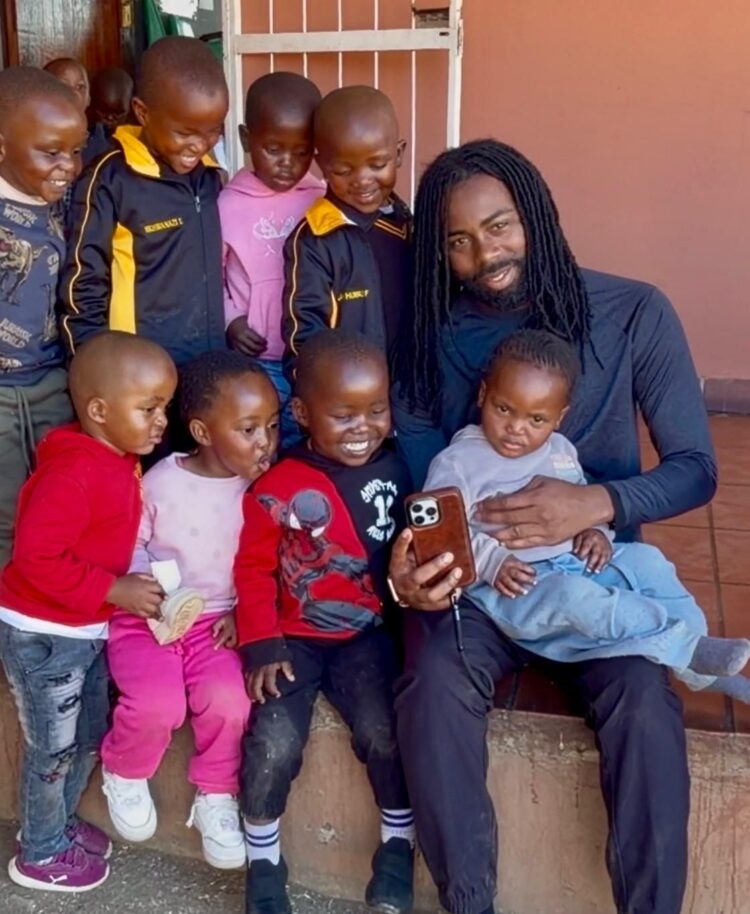
New mural on the welcome wall of UThandolwethu Day Care CenterAnthony made lots of new friends!
The end of the day ended with a hunt for meerkats and South Africa’s national bird- the blue crane. While it was too chilly for the meerkats to pop out, we did see four blue cranes. Their silvery blue color shimmered in the setting sun. We were also able to spot Sacred ibis, African swamp hen, yellow-billed duck, and otters on the way out. The wetlands did not disappoint!
Education and Love are universal languages.
Today reminded us exactly why we became teachers—not just to teach lessons, but to make every child feel seen, valued, and special. Even though we don’t speak their language, kindness, laughter, and compassion became our shared language. For a few hours, we didn’t feel as though we were visitors; we felt truly like we were part of their community and culture. That is a lesson we will carry with us long after this journey ends.
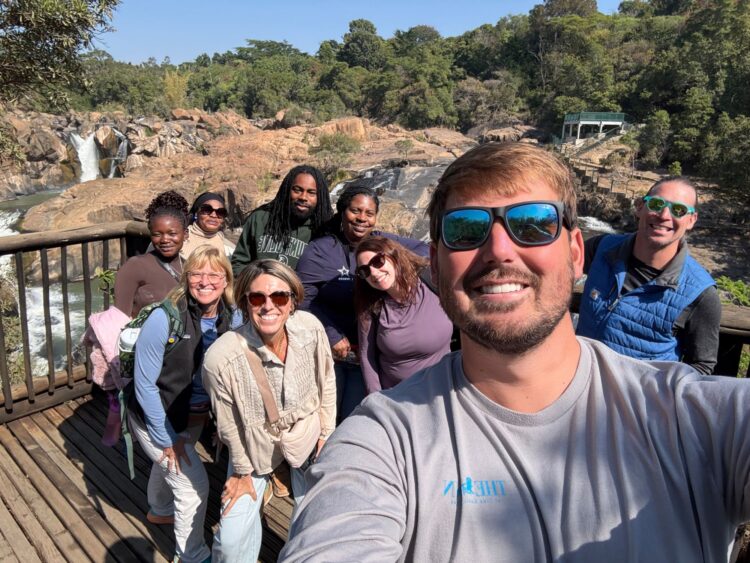
Today we said farewell to the incredible Kruger National Park, leaving behind unforgettable wildlife sightings and memories that will stay with us long after this journey ends. As we hit the road toward Wakkerstroom, our adventure shifted from safari to scenic exploration. Our first stop was the beautiful Lowveld National Botanical Garden, where we enjoyed lunch surrounded by nature. We wandered through stunning landscapes, admired a breathtaking waterfall, and discovered an incredible variety of plants unique to South Africa. It was the perfect place to pause, reflect, and appreciate another side of this remarkable country.
Admiring the falls at the confluence of the Crocodile and Nels rivers at Lowveld National Botanical Garden
Back on the road, our conversations turned to South Africa’s rich history and diverse culture. As the miles passed by, we gained a deeper understanding of the people, places, and stories that have shaped this nation. Every discussion added another layer of meaning to the experiences we’ve already had. The journey is far from over, and each destination continues to reveal something new. Buckle up—we’ve got plenty more adventures ahead, and we can’t wait to share them with you!
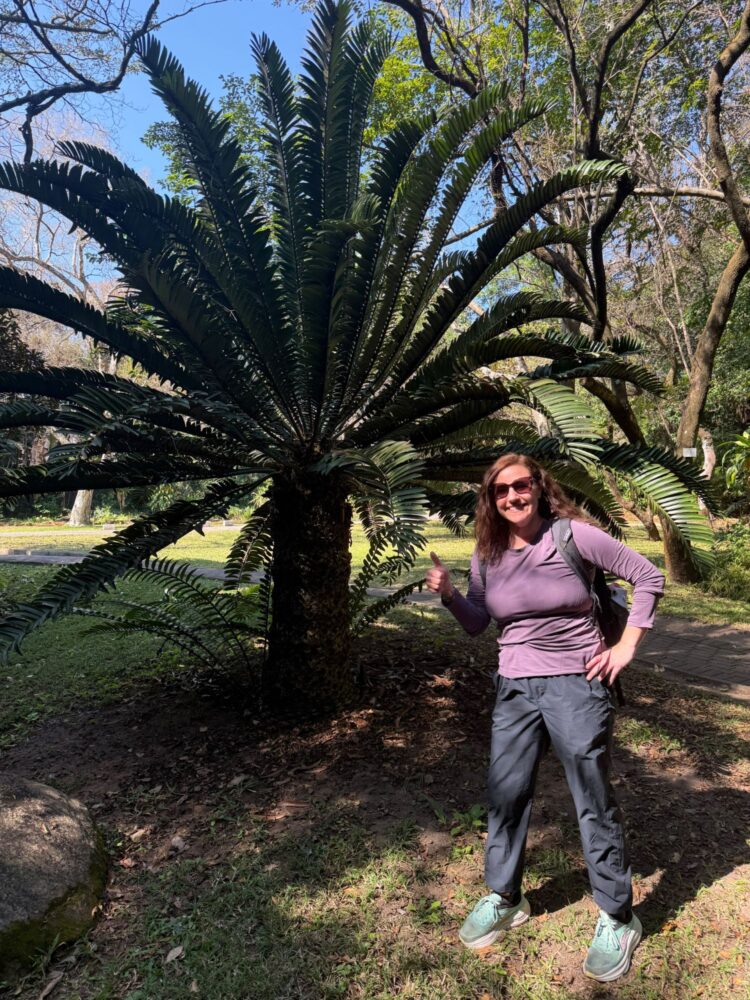
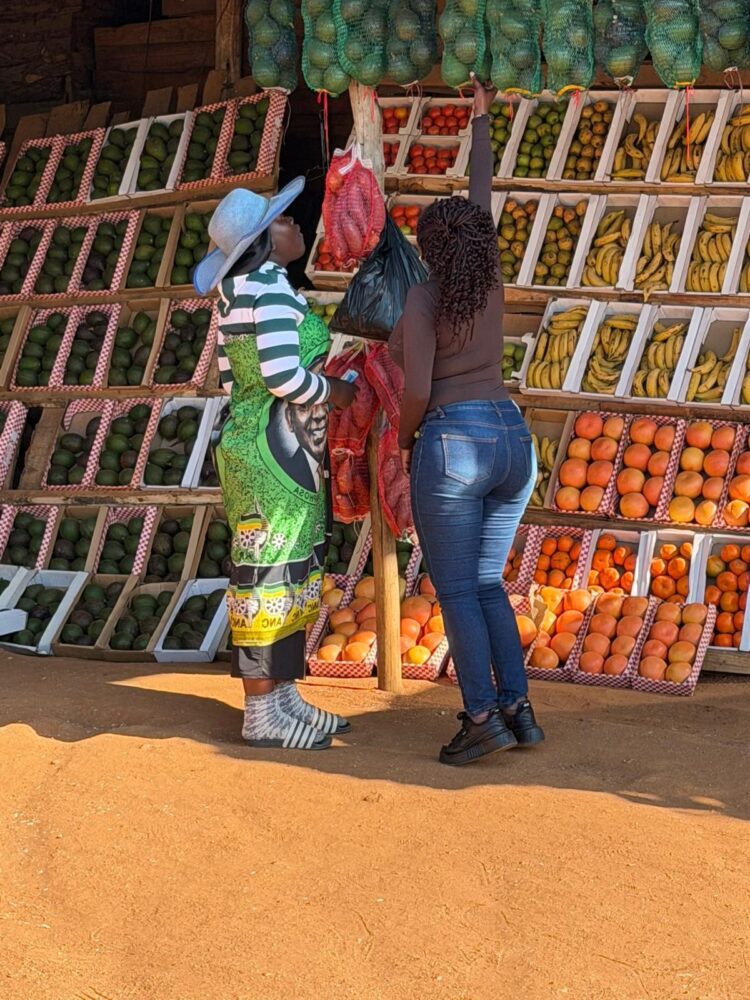
Katie’s expert topic and new favorite plant: the cycad! Cycads are ancient plants that look like a palm but are more closely related to conifer trees. They are cone-bearing and considered “living fossils” because cycads have been around since the age of the dinosaurs! Mpumi helps us select some fresh avocados from a roadside vendor to try.
After a delay due to storms in Raleigh we are on the way to Atlanta, and then a sprint through the airport to catch our flight to Johannesburg… stay tuned!
We’ve brushed up on our common birds of South Africa and are excited to start seeing them once we land!
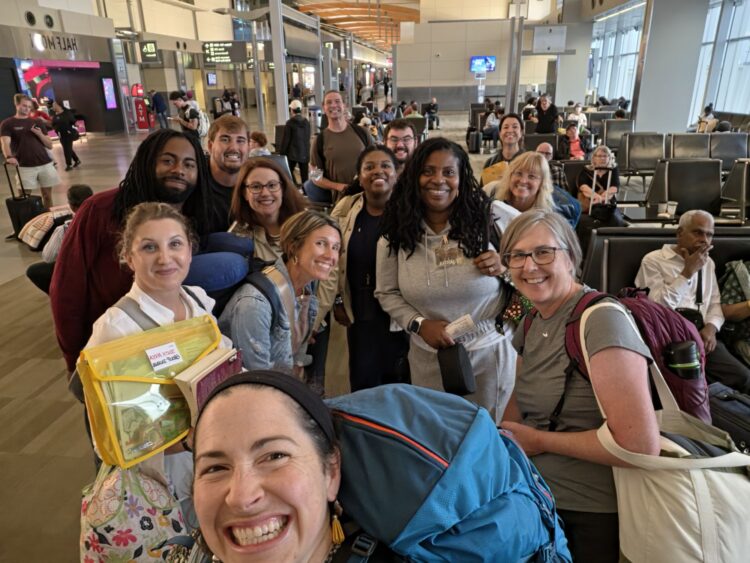
The North Carolina contingent of the Educators of Excellence Institute to South Africa
Update: We made the flight to Johannesburg!! South Africa, here we come!
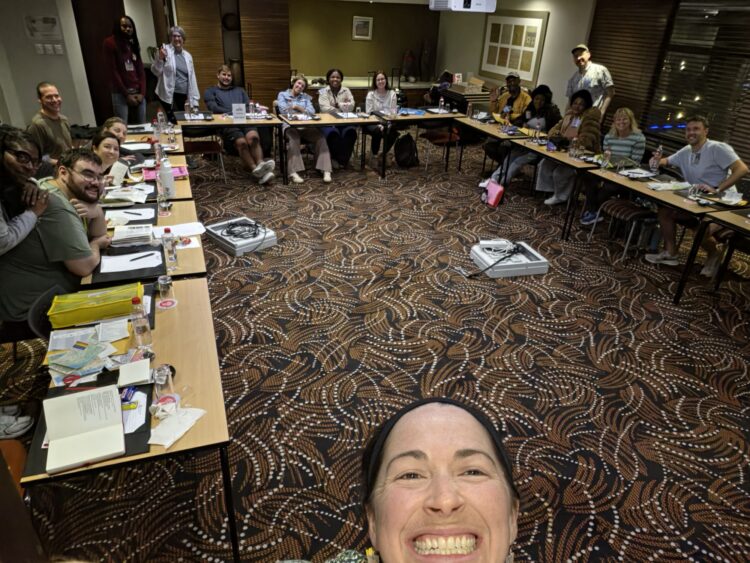
July 21, quick evening update: We made it to South Africa! Our plane touched down at 7:19pm (we are 6 hours ahead of home). Now on to customs, hotel check-in, and our first group meeting with our friends and colleagues from South Africa. We can’t wait!
Anticipation is mounting for our 12 educators heading to South Africa next week. Here are just a few of the ways our teachers are preparing for the journey!
Stephanie: I get more excited, nervous, and anxious each day! The 16-hr plane ride is very daunting, but I know the reward will be worth it. I’ve been scouting ideas for how to stay occupied on the plane (time blocking being the most intriguing so far), and my pile of things to pack has gradually grown since our orientation in April. Once we’re there, I plan to bask in the escape from the NC summer heat! More videos from Kruger have been popping up on my social media, and I feel giddy every time and think Only 32 more days! Only 27 more days!
Stephanie’s growing pile of items to pack.
Pam: Been mentally prepping for South Africa since the “Congrats” email. I’ve been praying daily, walking (not every day), and planning like Dora the Explorer with a checklist. Overpacking…. I hope not, but Mom and Sis are working their magic to stop me! Bless their hearts! Grateful for all the love, support, and hype from everyone!
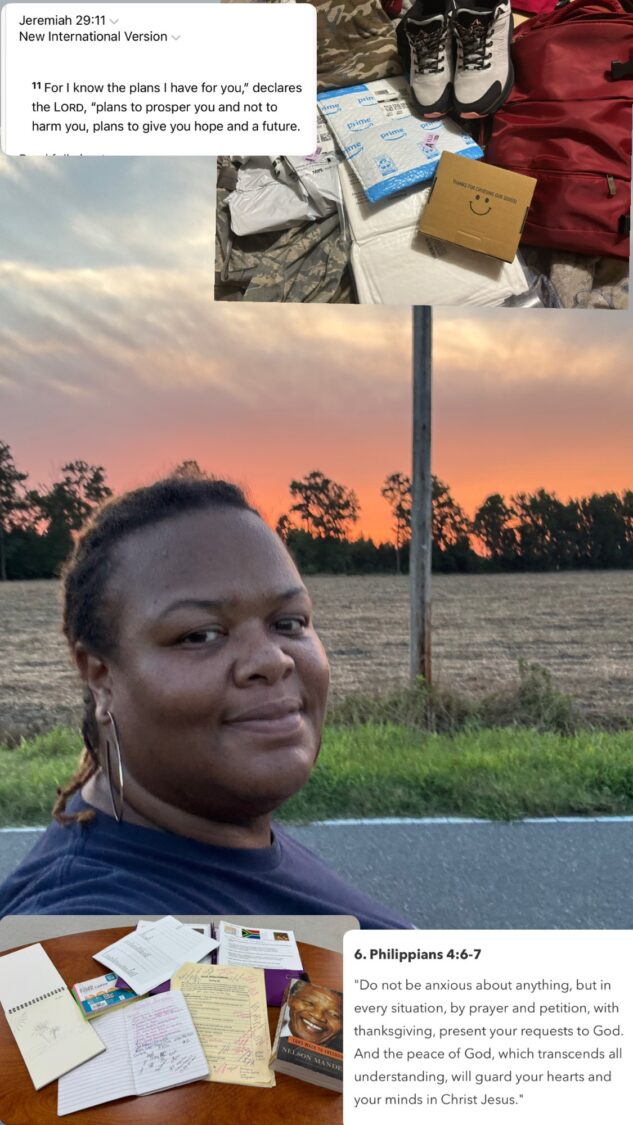
Pam walking, studying, packing and praying in preparation for South Africa
Shelley: I have been busy getting together last minute items and organizing my packing cubes. I also had my students research our flight to Johannesburg. We started classes on June 30th. I am working the first 2 weeks. This will be my group for the blog. According to my 6th graders and I am sure AI, I am happy to report the route is usually on time and often has empty seats in economy to balance the weight. Great circle distance or crow flies is 8,430 miles but flights are usually 8,500-8,600 miles. We will fly around 36,000 feet and cross the equator about 7 hours into our flight somewhere over the Atlantic. They thought that was pretty cool. We will still be over Africa, probably the Congo when we cross the equator on our return from Cape Town.
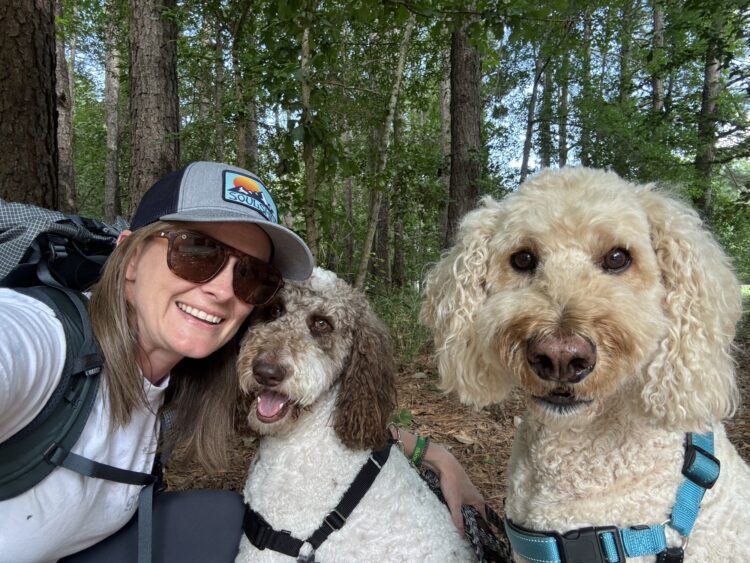
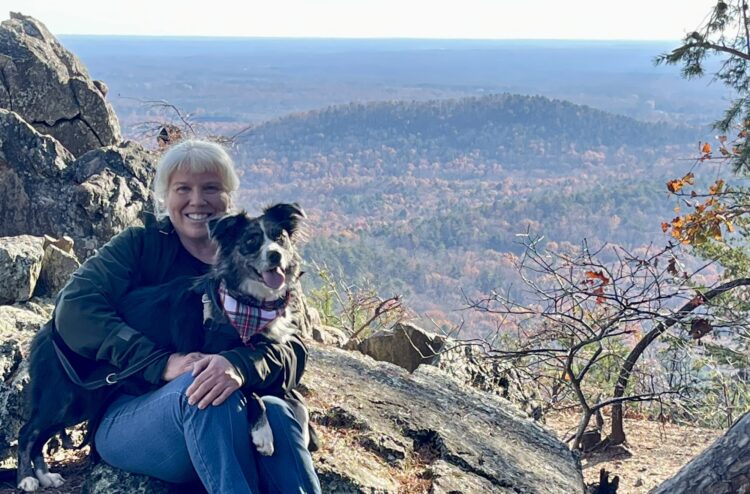
Emily: I am prepping for this amazing journey by taking daily walks with my 2 dogs, River & Birdie. My daughter gave me the trail name “Beans,” because I’ve been filling my pack with various cans of beans and vegetables to help build endurance as I am walking. I have also been listening to podcasts about the history of South Africa. After finishing our assigned reading, I am now able to better understand the facts given through these podcasts about people, places, and events. I can’t wait to see it in person and discover ways for my students to learn through my experiences. Counting down the days and steadily adding cans to my pack.
Emily building hiking endurance with River and Birdie
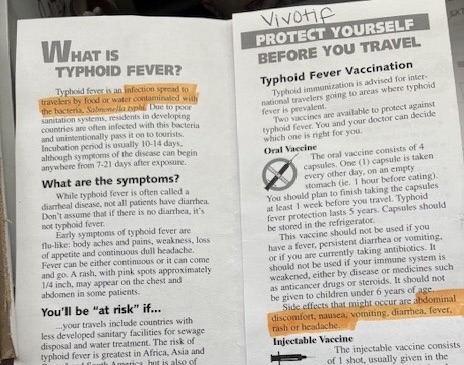
Shannon: Started Typhoid Fever oral vaccination this week (4 doses). I love fresh fruit and veggies and don’t want to miss a day. Malaria pills start 2 days before we leave.
Infographic on Typhoid
Christine: To prepare for this once-in-a-lifetime opportunity, I’ve been making many visits to REI, stocking up on gear, especially all things down, since we’ll be in South Africa during their winter. I’m slowly but surely checking off my packing list for the incredible safaris and unforgettable experiences that lie ahead.
On the educational side, I’ve been completely captivated by Nelson Mandela’s A Long Walk to Freedom; a powerful 27-hour audiobook that I highly recommend. I’m also becoming an expert about the fynbos biome and its rich biodiversity that is unique to South Africa.
To stay physically ready for this adventure, I continue to hike with my husband and our two teenage sons, play USTA tennis a few times a week, and train at Burn Boot Camp several days a week.
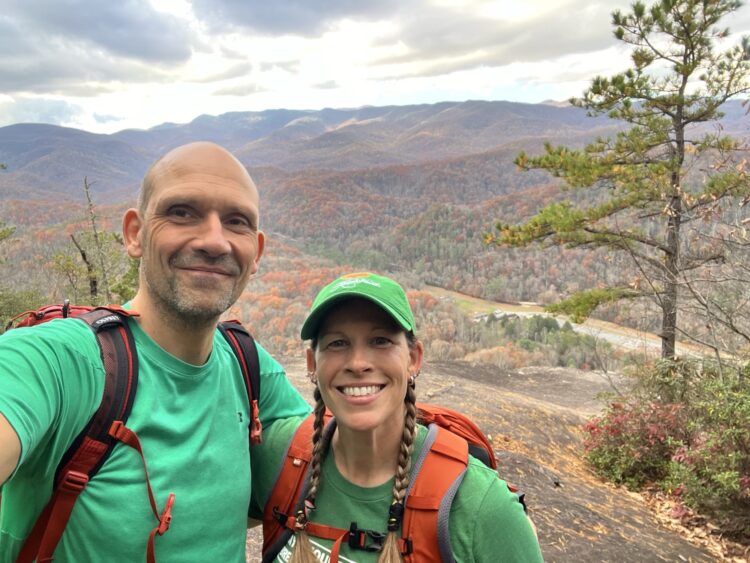
Christine hiking with her husband Jaap
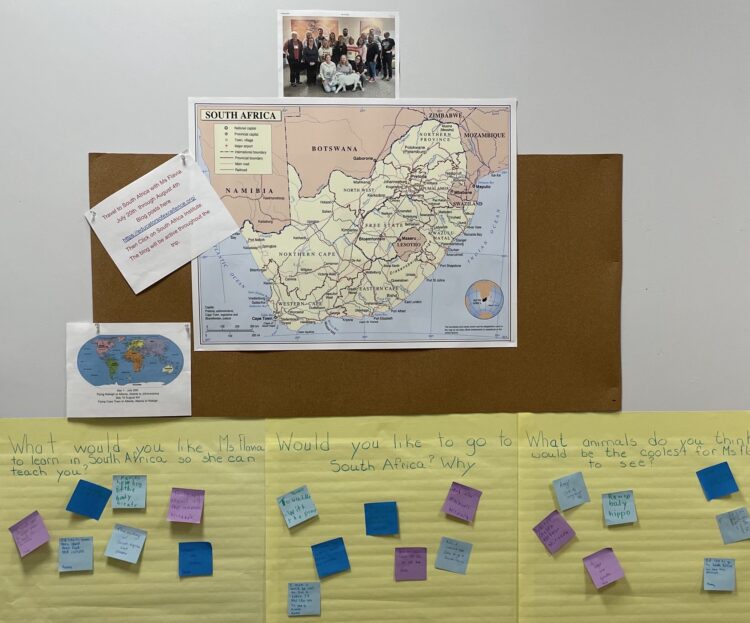
Flavia: In preparation for my South African adventure I created an interactive display outside my classroom. The students and community gave me input on what they wanted me to learn about, if they wanted to go to South Africa and why, and what would be the coolest animal for me to see.
Flavia’s interactive board about South Africa that she created outside her classroom
Amy: Anticipation is more than I can take. I have spent the last few months making sure I have tech to see in the dark, video and photograph as much of this experience as I can. I don’t want to forget a single second. I listened to the Audible version of my homework… LONG WALK TO FREEDOM – what an incredible journey that was! Brushing up on my fauna for the areas we will be visiting has been fun. But most importantly I have been working on my endurance for this 9+ mile hike we will be taking in the Drakensberg Mountains. Climbing 2 flights of stairs a dozen of times a day and taking Freyja on long hikes in our nearby Foothills of the Appalachian mountains. It’s kicking my butt, but I am loving it. I CAN’T WAIT!!!
July 21, 2024
-
Comments Off on Last leg of the journey…
After an eventful night (thanks for your MacGyver skills Rich!), we arrived back at Pisgah Campground to assess storm damage. Overall, everyone weathered the heavy rains, though one of our pop-up tents collapsed under the weight of the water that got caught in its canopy. We quickly dispersed and settled in for the night. Our neighbors at the campground annoyed us with their loud late night festivities that kept us awake, but this forced us to build our patience, which we know is a valuable skill to have in the classroom. Abby had these folks around her campsite on several sides but was somehow skill perky in the morning. Way to go Abby for exemplary positivity!!
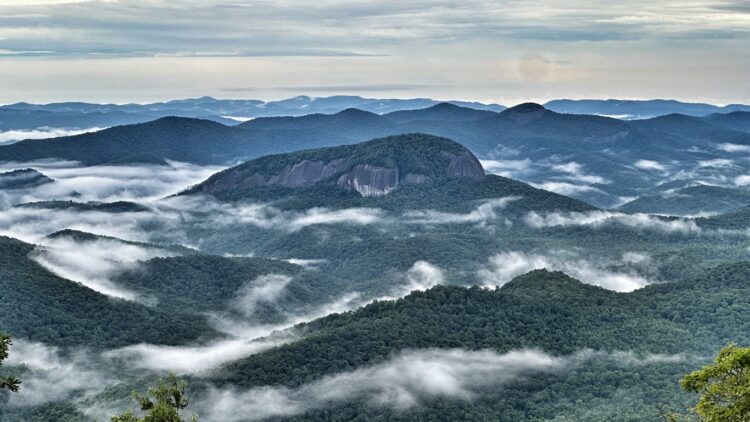
Our morning started with individual campsite breakdown and then group breakfast buffet. Rain was on pause, and we enjoyed warm sustenance and coffee/tea to kickstart Day 6 of our adventure. We piled into the stinky vans thanks to wet river clothes and smelly shoes… a small price to pay to see hellbenders! We traveled down the Parkway towards our final destination of Cherokee. As we curved around the mountain, views of blue misty sky islands rose and fell to our left giving us a surreal vision in hues of blue and yellow.
Early morning over Looking Glass Rock
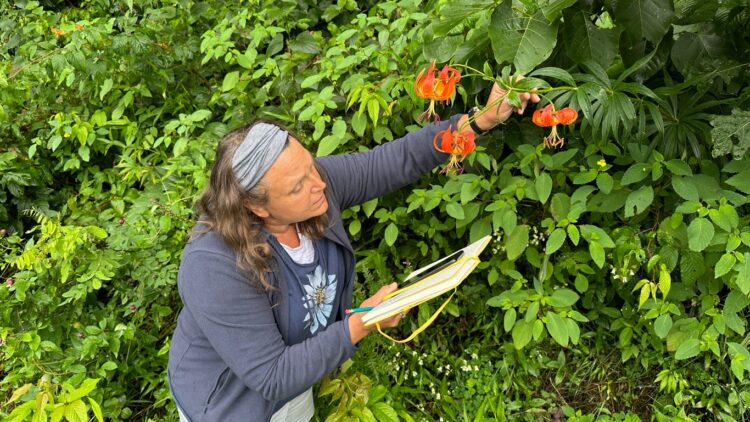
With our souls refreshed, we scoured the shoulders of the Parkway for turks-cap lilies to practice plant part identification. We got more than we bargained for: we met up with a group of folks from the Tennessee Native Plant Society who were engaging in plant discovery. What an impromptu and engaging team we became, sharing our knowledge and experiences with mountain flora. We explored vase-vine leatherflower, tall bellflower, hedge nettle, starry campion, smilax, Solomon’s seal, and bergamot.
Anita examining Turks-cap Lily
Conversations passed the time as we continued toward Cherokee. We made a brief stop at the welcome center for the Great Smoky Mountains National Park and discovered that the US Poet Laureate, Ada Limon was on site to discuss her book, “You Are Here: Poetry in the Natural World”. Unfortunately, long lines and limited time prevented us from meeting her. As we drove past meadows near the Visitor Center, we glimpsed an elk in a field, quietly grazing amidst the human presence that encroached upon their once natural habitat.
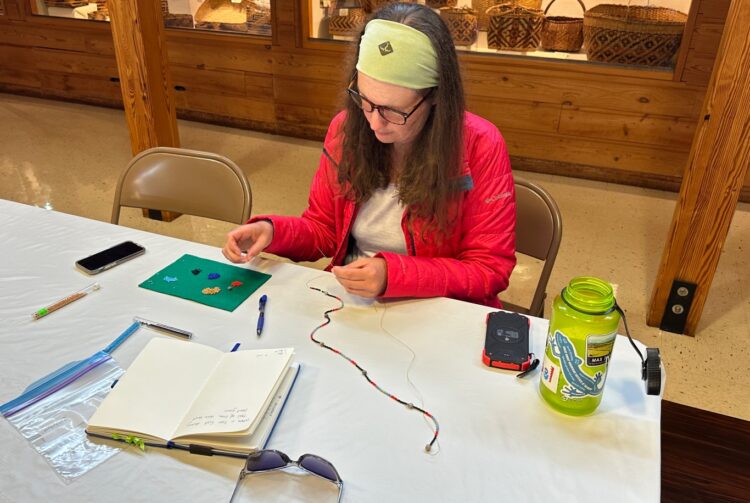
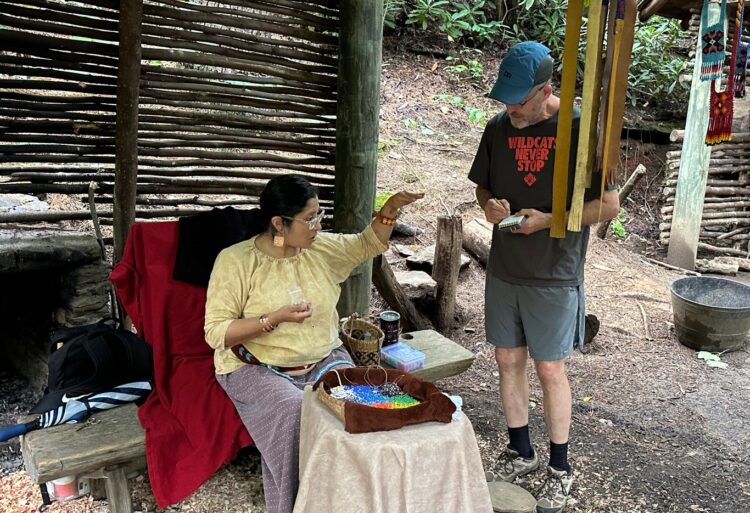
We spent the afternoon in Cherokee, NC which gets its name from the Eastern Band of Cherokee Indians, our only federally recognized tribe in North Carolina. We were honored to meet with two members of the tribe who shared their history and culture, including a deeply moving and inspirational story about the Trail of Tears. We learned from Marvel Welch, who in 2013 was selected to represent the tribe on the “Remember the Removal” bicycle ride that follows the 950 plus mile path taken by indigenous people as they were forcefully relocated along what became known as the Trail of Tears. Marvel also coached us through making our own corn bead necklaces which symbolized the tears shed by the Cherokee along the arduous journey. We also were amazed to hear from Watson Harlan, Curator from Qualla Arts and Crafts Mutual Co-Op as he explained some of the historical context for important artistic traditions and skills of the Cherokee.
Beth making a beaded necklace
Next, we stopped at the Oconaluftee Indian Village, which is a living history museum showing aspects of Cherokee life in the past. We were introduced to the traditional Cherokee arts such as basket weaving, wood carving, finger weaving, pottery, weapon-making, and cooking. In the village we saw contemporary Cherokee people demonstrating their traditions in an 18th century setting. A theatrical performance called “Time of War” gave us a drastically different perception of the “white person: Native American” dynamics which took place back in the day. It revealed a story different from what popular media and (movies like “Pocahontas”) would lead us to believe happened.
Rich asking questions about beading
By early evening, we finally arrived to the yurts and they are LOVELY!!!!!!!!! Now it’s time to dry everything (again)!
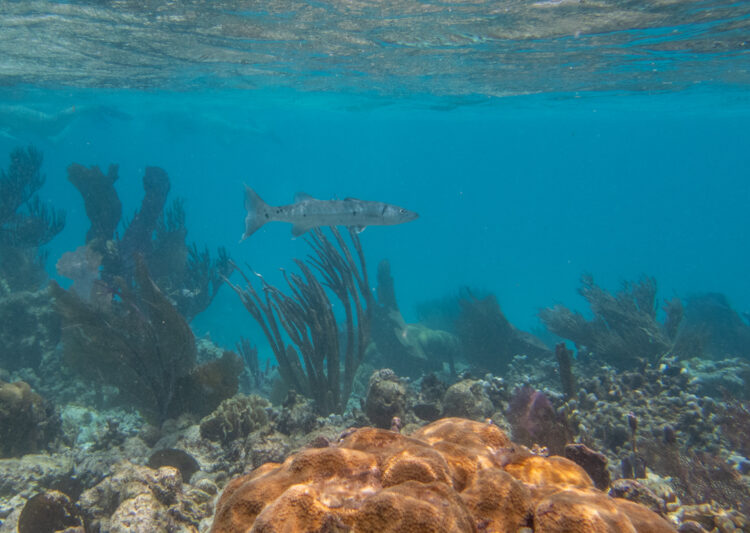
Late last night (Saturday) a small group of us gathered around Danny, a young Belizean boy who just finished eighth grade, on the pier at our Pelican Beach lodging. Danny was casting his line and a hook with a chunk of bait fish (without using a rod) into the crystal clear Caribbean water. Almost instantly his line tugged because he had hooked something. The fish fought but, as he expertly pulled the line in, we marveled at a magnificent 28” barracuda. The sleek scales shimmered in the light of our flashlights as he pulled it onto the dock to unhook it. Soon, after such a long and eventful day, we all drifted to sleep to the soothing rhythm of the Caribbean waves crashing onto the shore and reef of South Water Caye Marine Preserve.
Barracuda
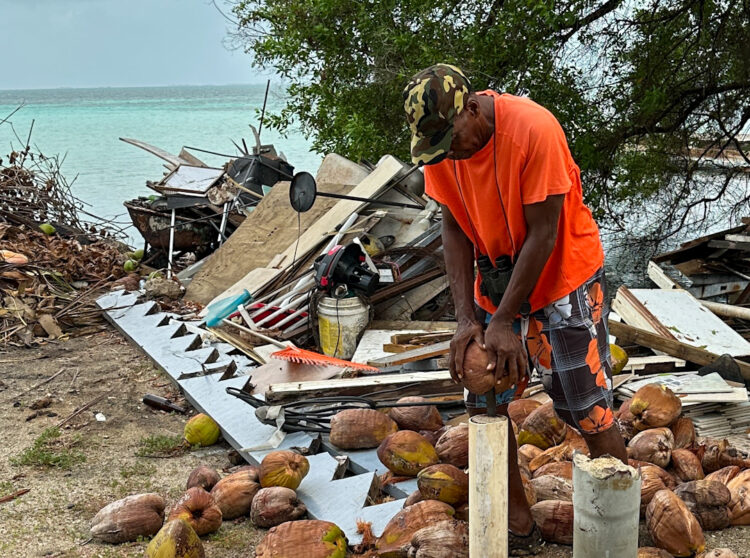
This morning, we were awakened by gusts of ocean breeze entering our rooms as the sun rose over our little piece of paradise. Nathan guided us around the perimeter of the island for our morning walk. We saw seashells, coral fragments, pumice, conch shells and a few friendly island dogs. Nathan demonstrated the proper way to clean and crack a coconut for the group. We continued our way back around the shore until we arrived back to our resort and our open-air dining room. We were served a traditional Belizean breakfast of eggs, bacon, cheese, fruit and fry jacks. We were eager to get out and explore the wondrous underwater world of the Belize Barrier Reef, which is the second largest in the world.
As we rode out to the reef, we first stopped at Tobacco Caye range, and Mr. Omar (our snorkel guide) briefly told us the importance of protecting the West Indian manatee, also known as the “sea cow” in Belize. We were really hoping to see one, but we had no luck. These animals are endangered because only one calf is born every two to five years and they are often harmed by boats and humans since they hang out mostly in the mangroves and shallow water. We marveled at a new fun fact: they only need to come up for air every five minutes.
Nathan showing us how to open a coconut
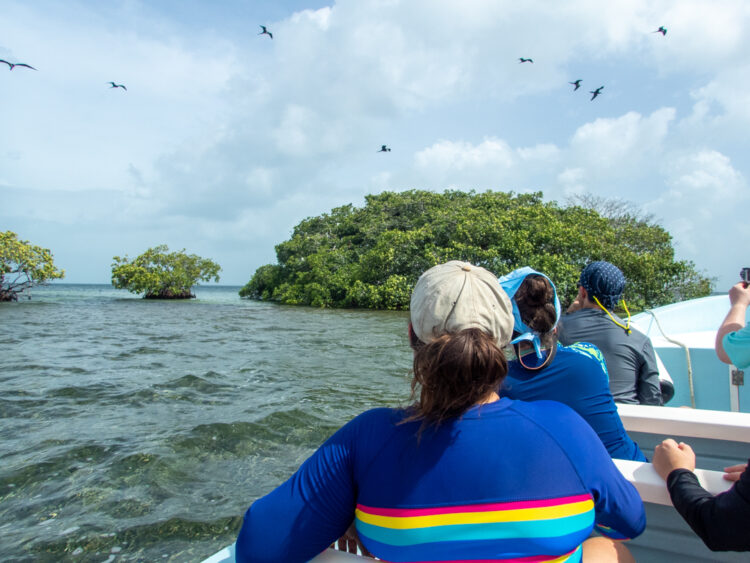
Watching magnificent frigate birds and brown boobies at Man O’ War Caye
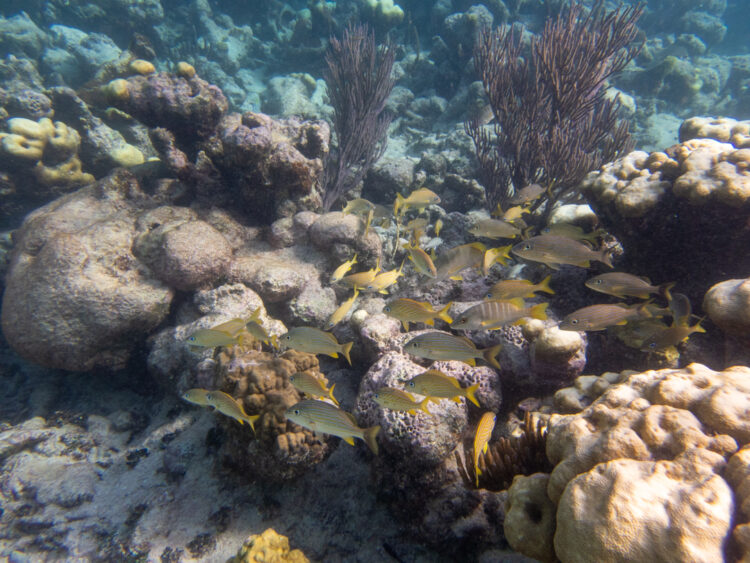
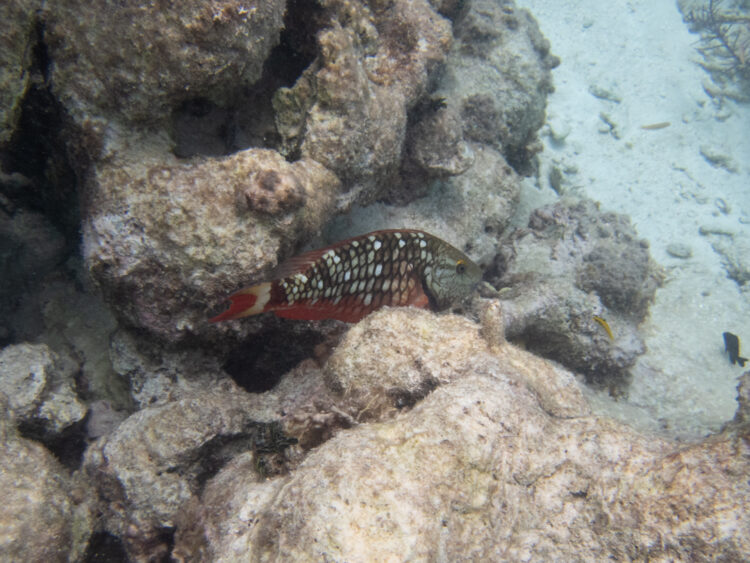
Next, we stopped to check out Man O’ War Caye (aka Bird Island) and viewed frigate birds and brown boobies in their natural habitat and nesting area on the mangroves. When we arrived at the reef, everyone put on their mask and fins, before jumping into the clear Caribbean water. We viewed many coral formations and numerous species of fish including a school of tarpon, stoplight parrotfish, and sting rays. This was a reminder of why we need to preserve and protect our valuable coral reefs.
School of grunts
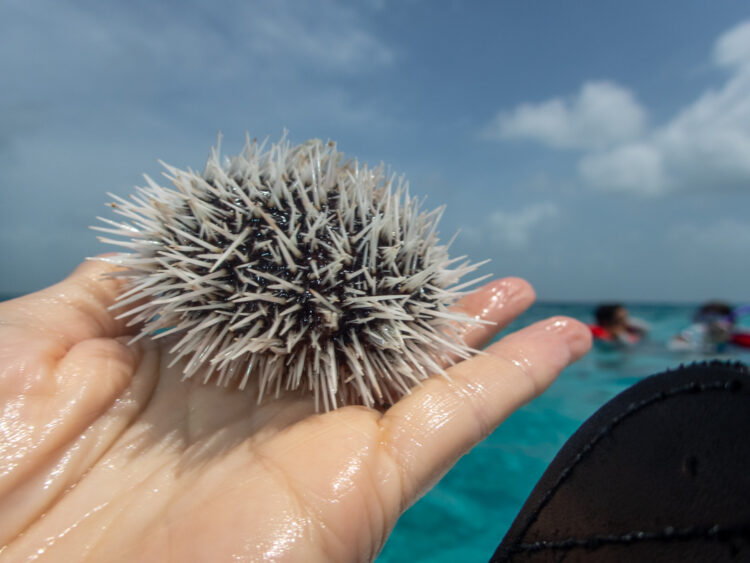
Sea urchin
Stoplight parrotfish female
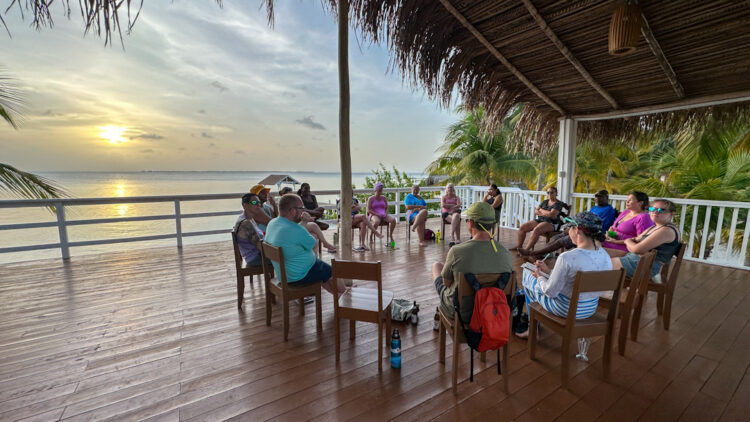
After a splendid time filled with snorkeling we returned to our resort and enjoyed a traditional Belizean Sunday lunch of BBQ chicken, potato salad, rice and beans. We also got to taste Danny’s catch of barracuda from the previous night and some snapper caught by our Belizean teachers Neysy and Kaylie. We had some down time after lunch and enjoyed some rest and relaxation in the oceanside hammocks and chairs, listening to the peaceful sounds of the ocean waves. At 3:30pm, we all jumped back in the water to snorkel to the nearby reefs off our island, which were teeming with fish and beautiful coral specimens. We then met for a short group meeting. Endless laughter followed as we discussed what challenges we had encountered for our trip and what was our favorite thing we saw at the reef while snorkeling. We had dinner and a night snorkeling session to wrap up our day.
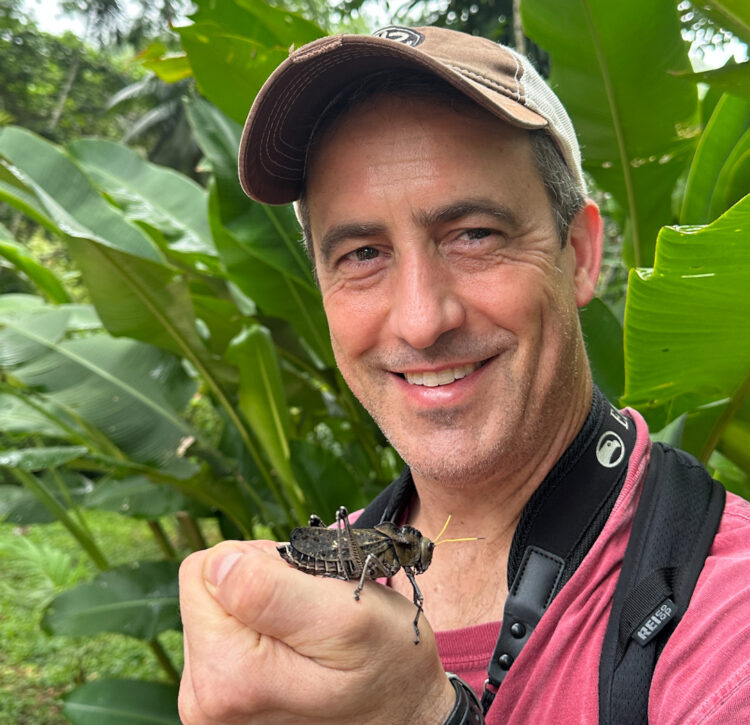
Andy was happy to capture and show off the grasshoppers and their flashes of color (salmon pink, bright magenta, yellow, etc.) underneath their wings, which are used to startle predators.
Our first full day in Belize began very early with a bird walk at 5:45 am. We were rewarded for rising early with coffee, and then we headed off to explore the land surrounding the lodge. In addition to seeing Belize’s national bird, the keel-billed toucan, we saw a white-necked jacobin, a golden-fronted woodpecker, a spiny-tailed iguana and giant grasshoppers that were similar to our lubbers back home. And the plant life did not disappoint either. We saw starfruit and avocado trees, lobster-claws, and got to taste a velvet apple, a type of fruit that looked like a fuzzy peach with the leaves of a persimmon, that tasted reminiscent of a floral pear.
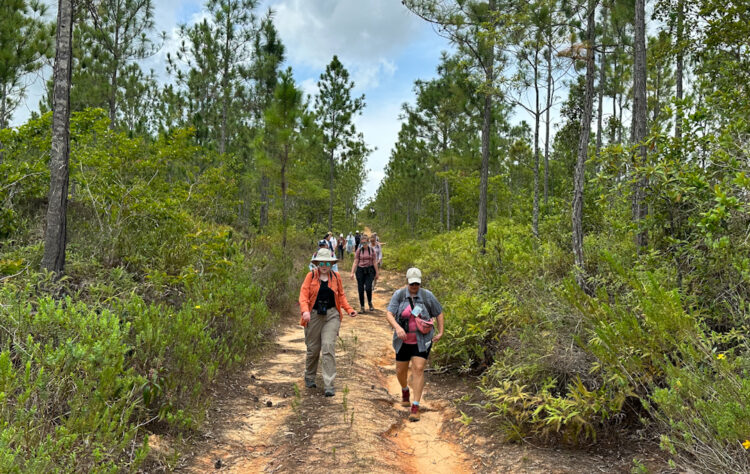
Hiking in the Mountain Pine Ridge Forest Preserve felt similar to our sandhills region in North Carolina.
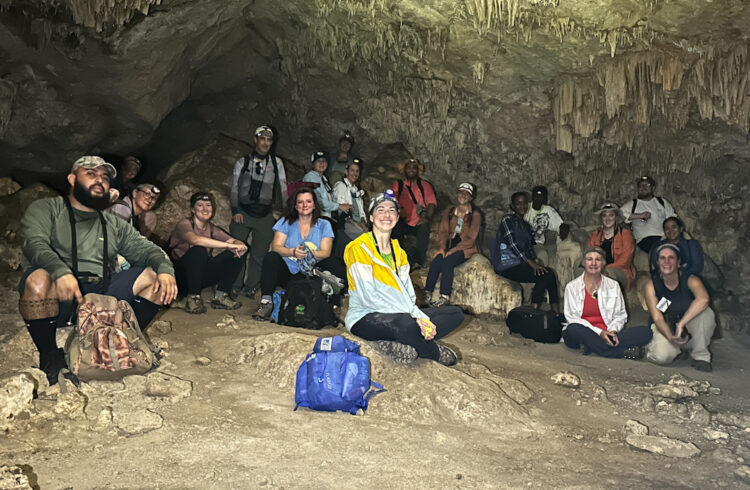
After a delicious breakfast, we loaded into the bus and drove to the Mountain Pine Ridge Forest Reserve where we hiked along the road and then through the jungle — up what we now lovingly refer to as “death hill” due to the steepness and narrowness of the path, the low-hanging branches we had to limbo underneath, and the ever-present heat and humidity — to the entrance to Domingo Ruiz Cave. Once in the cave, we saw stalactites and stalagmites, bats, spiders and kissing bugs; then we sat for a minute in perfect darkness and silence to fully appreciate the majesty of the space.
Our group sitting inside Domingo Ruiz Cave immediately after our moment of silence in total darkness.
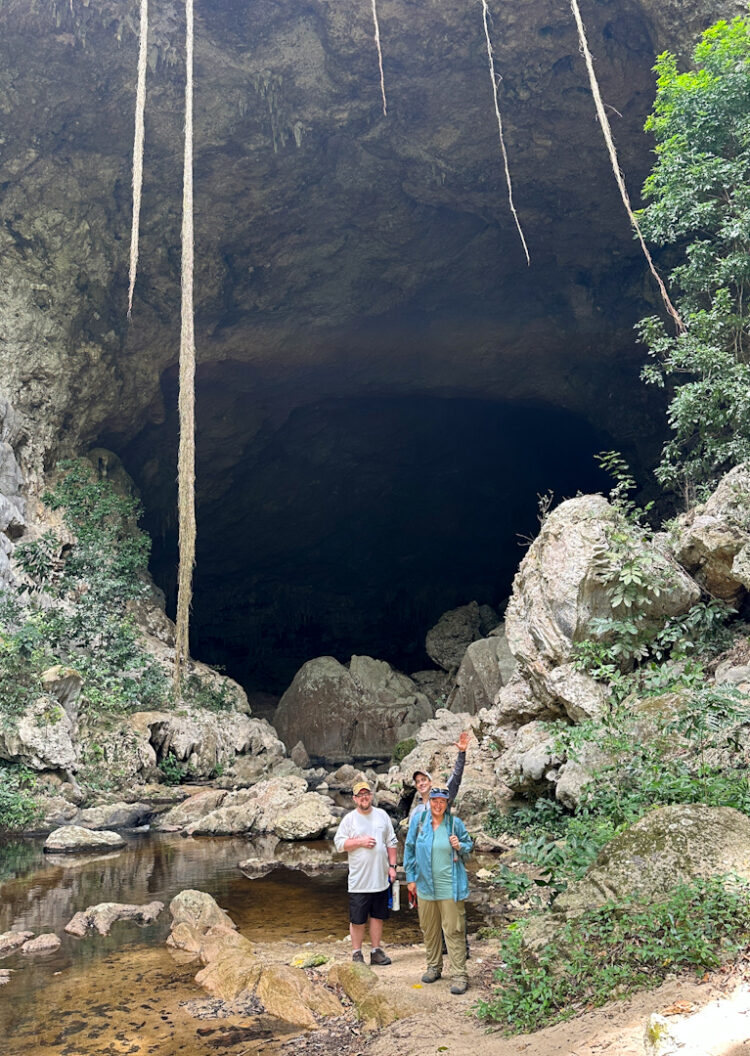
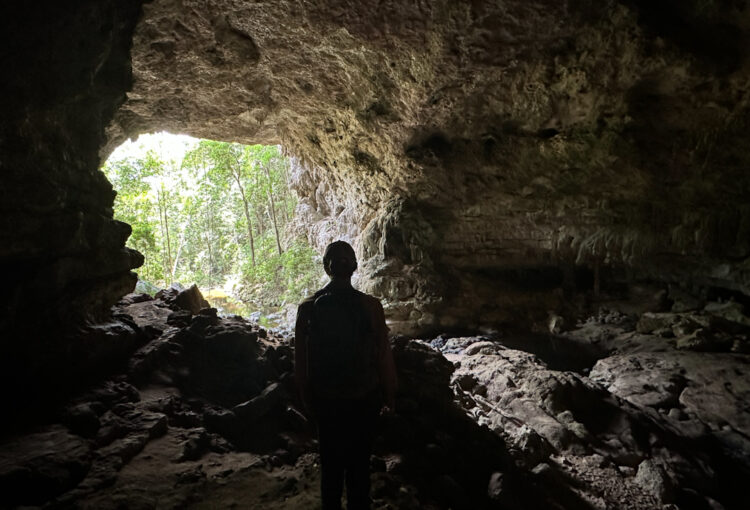
The next cave we visited was named “Rio Frio” (cold river). This is where Late Preclassic and Classic period Maya may have performed sacrifices and other religious ceremonies. Unlike Domingo Ruiz Cave, this one was open on both ends, so we had natural light to aid us as we climbed over rocks to reach a sandy beach along the river running through the cave.
Rustina, Andy and Jeff at the grand entrance to Rio Frio Cave.
Meredith looks out towards the light and forest from inside Rio Frio Cave.
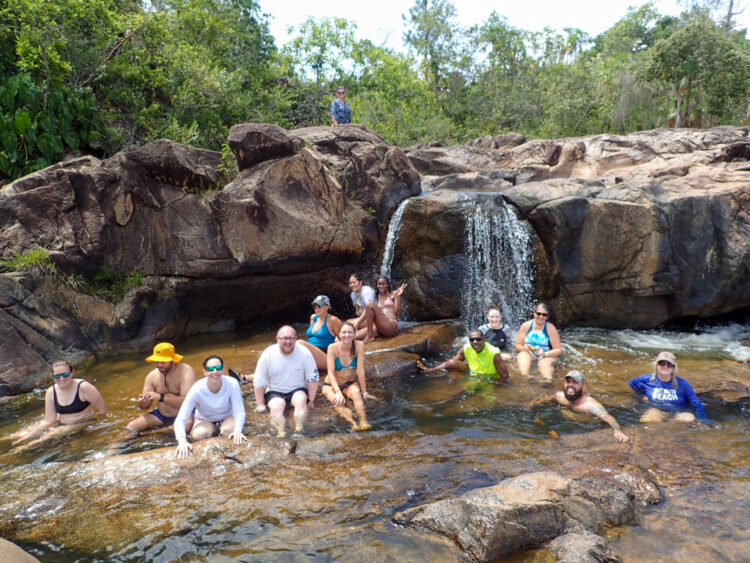
After a lovely picnic lunch outside the Rio Frio Cave, we headed to the Rio On Pools to cool down after a taxing morning of hiking. We changed into our swimsuits and then got to play like children, clambering over smooth granite rocks, sitting under small waterfalls, sliding into the different pools and swimming around the crevices.
Most of the group at one of the small waterfalls in the Rio On Pools.
We returned to Sweet Songs Jungle Lodge where most of us spent our free hour enjoying the infinity pool, and we then had our daily meeting where we discussed highlights of the day and what we learned from our experiences and our top notch tour guides, Nathan Forbes and Zhawn Poot.
After our fabulous dinner, we are headed off on another night hike. Fingers crossed we find some new creatures to observe.
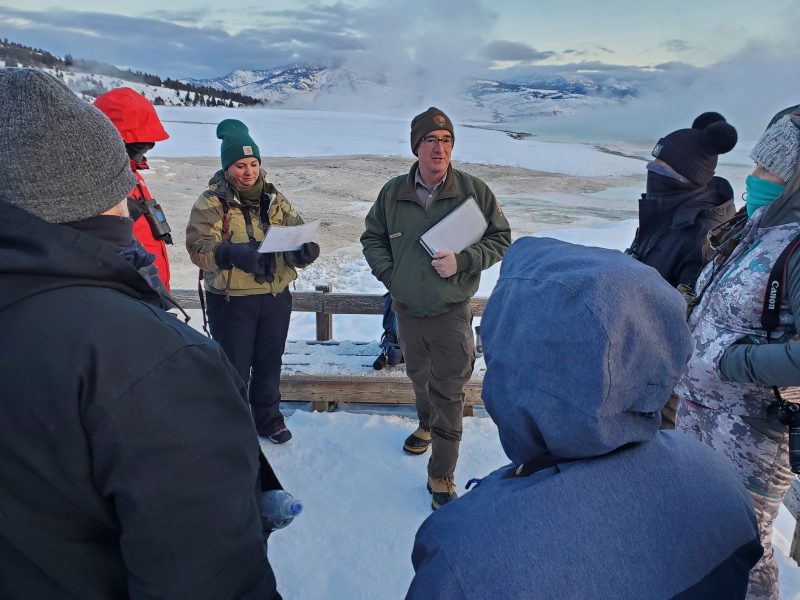
Although we flew home today, we squeezed in one more adventure. With the help of Ranger Mike, we toured around Mammoth Hot Springs. We followed the snowy boardwalks as the sun rose over Mt. Everts to see the travertine terraces. Steam from the ever-changing geothermal features surrounded us as we listened to Ranger Mike use analogy and humor to educate the group. We compared the Upper Geyser Basin where Old Faithful is located to the Mammoth Hot Springs where we now stood. Ranger Mike explained the travertine terraces build up quickly but non-violently while the geyserite deposits of the Upper Geyser Basin build up slowly but can be violent.
After braving our coldest morning (2 degrees Fahrenheit) yet we packed up our luggage to head home to North Carolina. As we drove from the North Yellowstone Lodge in Gardiner, MT to the Bozeman Airport we continued to use our newly developed wildlife spotting skills. The group finally saw the eighth ungulate, the elusive white-tailed deer. Golden eagles, bald eagles, magpies, elk, ravens and a possible carcass party were spotted along our drive.
We arrived at the Bozeman Airport and had come to terms with our grand Yellowstone adventure ending. The once group of strangers knew our newly developed friendships and passion for education would continue to grow. The ideas of bringing Yellowstone to our own classrooms flew out of our mouths as we chatted about the past week.
Through this experience both our eyes and hearts were opened to the importance of conservation of the greater Yellowstone ecosystem. Our first national park, now 150 years old, is the home of various extraordinary species that need to be protected, studied and learned from. Through the continued preservation of this special place, future generations will have the opportunity to experience all the magical wonders Yellowstone for themselves.
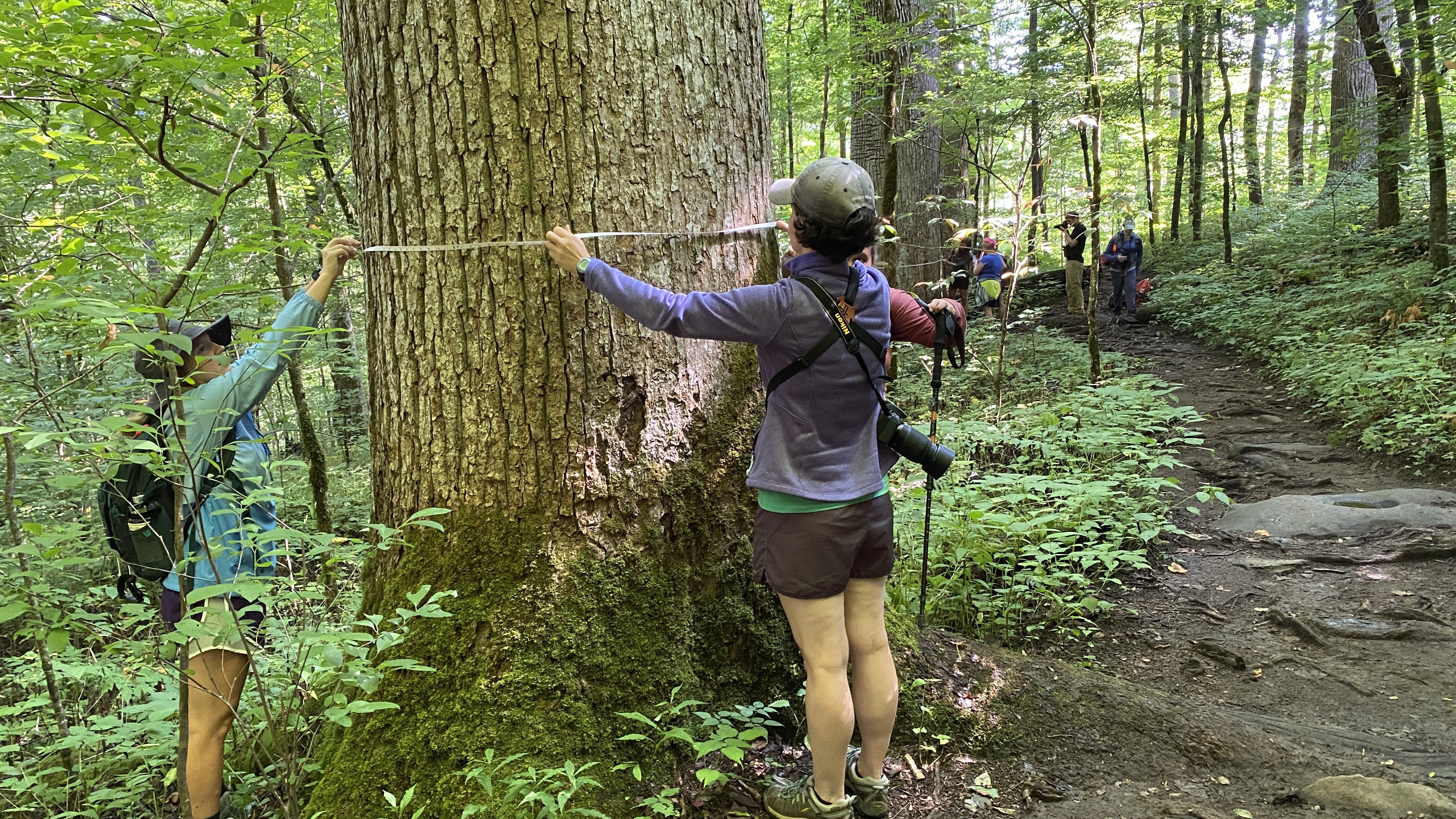
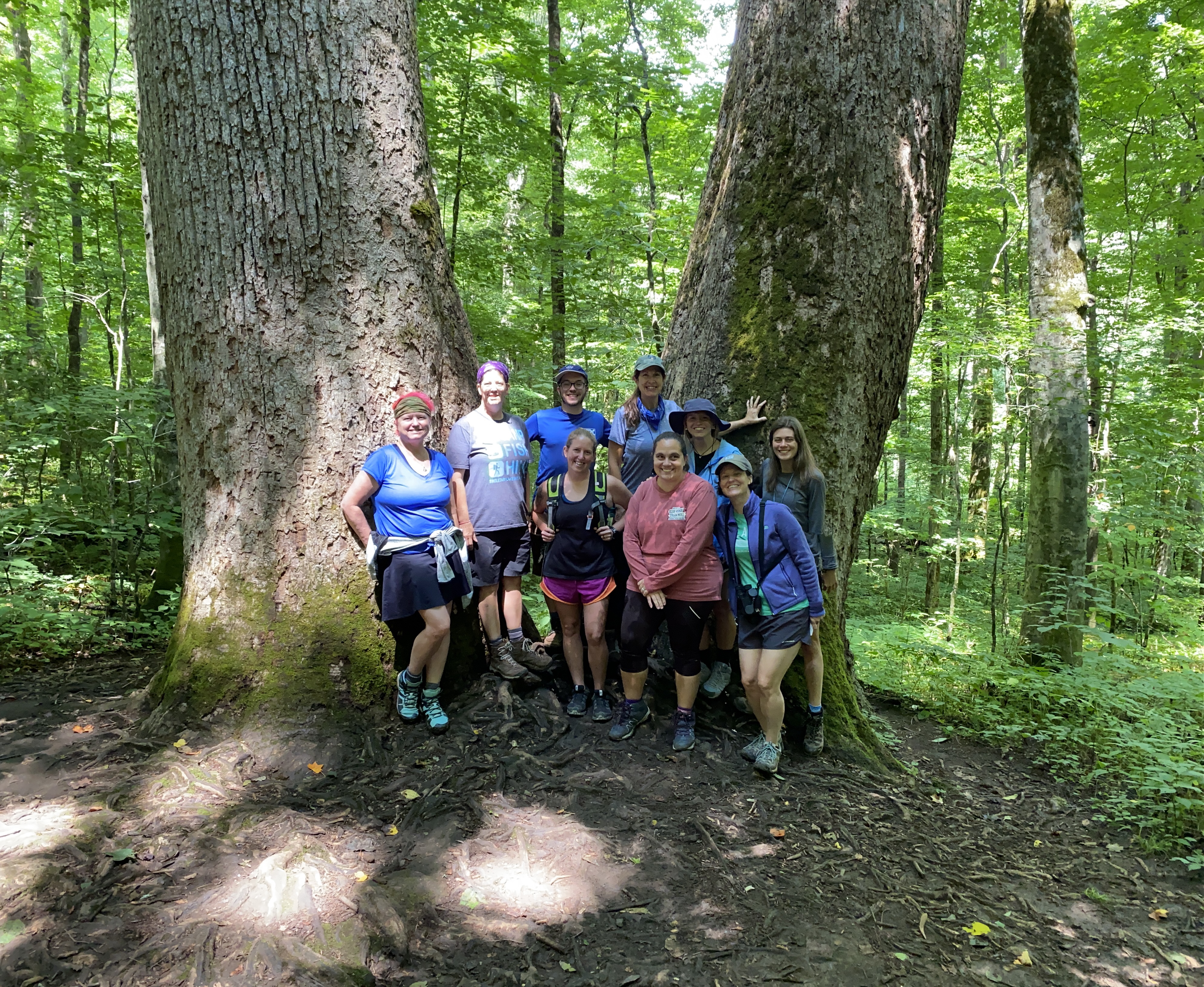
Our final full day together. Today we headed to the Joyce Kilmer Memorial Forest. Here we were able to walk among one of the few remaining old growth forests in North Carolina. Some of the trees here are estimated to be between 400-500 years old. We measured many of these Tulip Poplars, the largest circumference being over 20ft around!
Measuring the circumference of the huge tulip poplar trees in Joyce Kilmer Memorial ForestThe group in Joyce Kilmer Memorial Forest
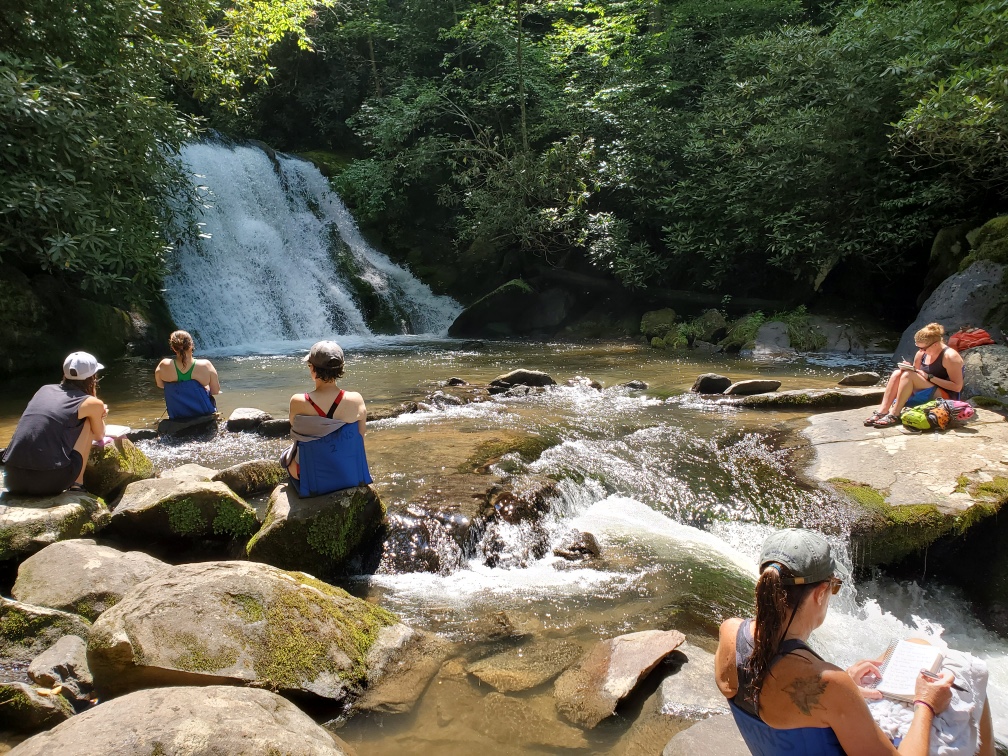
After our hike, we made our way to Yellow Creek Falls for an afternoon of “marathon writing.” The sights and sounds (as well as a refreshing swim) of the waterfall made the perfect backdrop for our writing.
We are writers
We headed back to our yurts for our final group meeting and dinner. We were able to reflect on how powerful this experience has been together and all the ways in which we have grown. We are looking forward to taking these experiences back to our classrooms in the fall.