Yellowstone in Winter

“Travel Day: The Adventure Begins”

Our day started at 4 am with a trip to Raleigh-Durham International Airport. After our first flight was in the air, we heard that the FAA had grounded all flights until 9 am due to a software update! Thankfully, we had already made it to Minneapolis and it only added an hour to our layover. We spent learning more about our trip and each other, which allowed us to begin our journals. We were given stickers of maps and our background info to begin our reflections, to which we added our own goals and expectations.

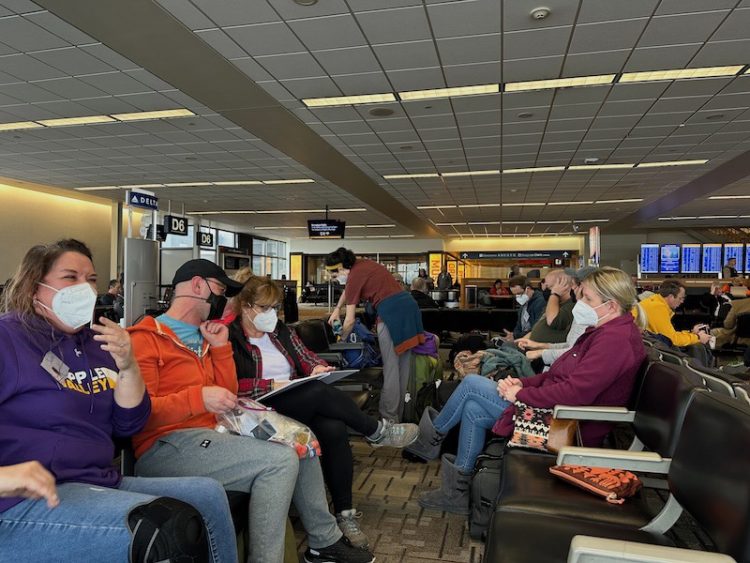
people sitting in airport

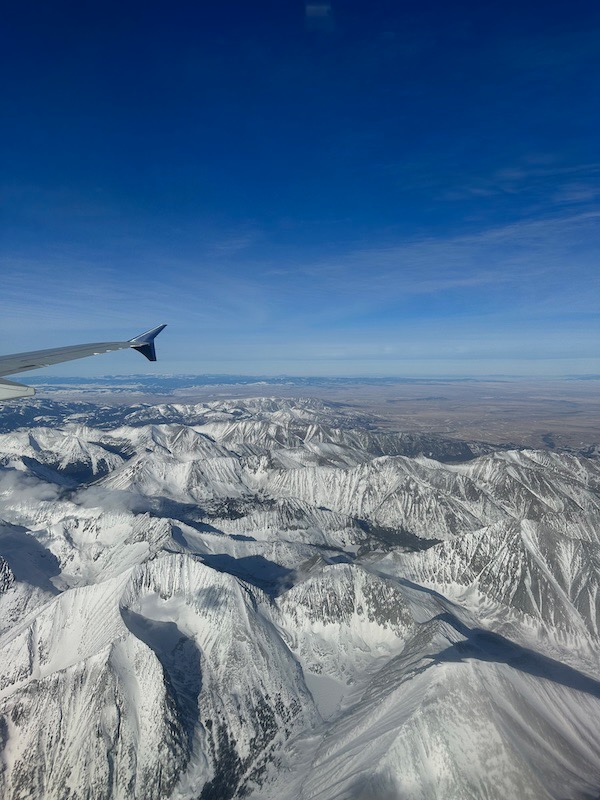
Our first flight was joyous, with only 35 people onboard. We could all spread out and some people even had 3 seats to lay down! The connector from Minneapolis to Montana was packed tight. After arrival we hit the grocery store for snacks, then hit the road to Gardiner via Livingston. We followed the Yellowstone River south from Gardiner and saw elk, mule deer, bald eagles, and magpies!

view out airplane window of snow covered mountains

We arrived at the North Yellowstone Hostel at 5:30 pm local time, 7:30 our time. A taco dinner awaited us as we had our first group meeting. We are now ready for our Yellowstone National Park journey tomorrow!

poster of lodge logo

Blue Ridge

“A Day in the Clouds”

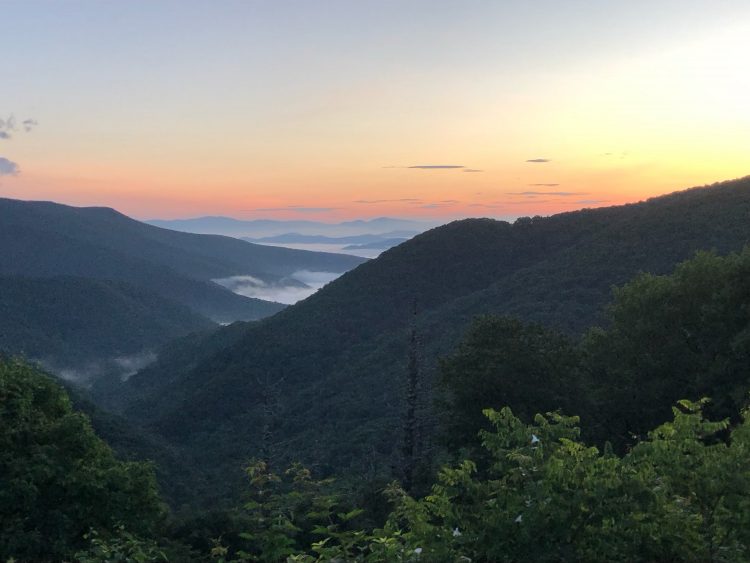
Sunrise over the Black Mountains (named for the abundance of dark-colored spruce and fir trees at higher elevations).

Sunrise over the Black Mountains (named for the abundance of dark-colored spruce and fir trees at higher elevations).

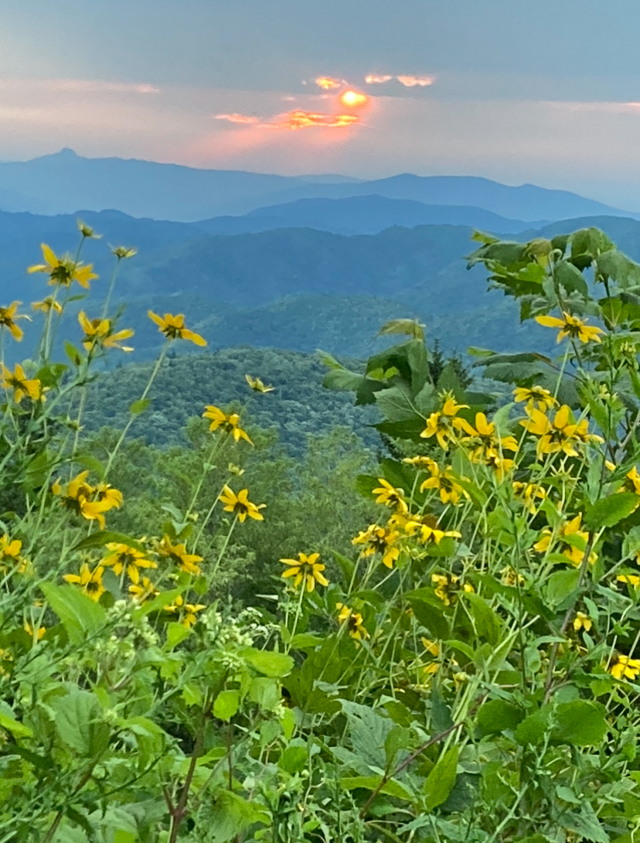
Beep, beep, beep! 4:45am comes early, but when we’re chasing a sunrise, nothing can stop us. We drove to Ridge Junction Overlook, through the fog and clouds, and watched the sunrise. Since we’re lifelong learners, we had to explore the surrounding wildflowers, too.

Museum ornithologist John Gerwin holds a banded Hermit Thrush while the group learns how to determine the age based on the feathers and body conditions of the bird.

Museum ornithologist John Gerwin holds a banded Hermit Thrush while the group learns how to determine the age based on the feathers and body conditions of the bird.

Next, we joined John Gerwin, NCMNS ornithologist, to catch songbirds in mist nets. He taught us about banding, tracking migration patterns, and releasing birds. We have all improved our bird watching and listening skills.

John Gerwin releasing a bird.

John Gerwin releasing a bird.

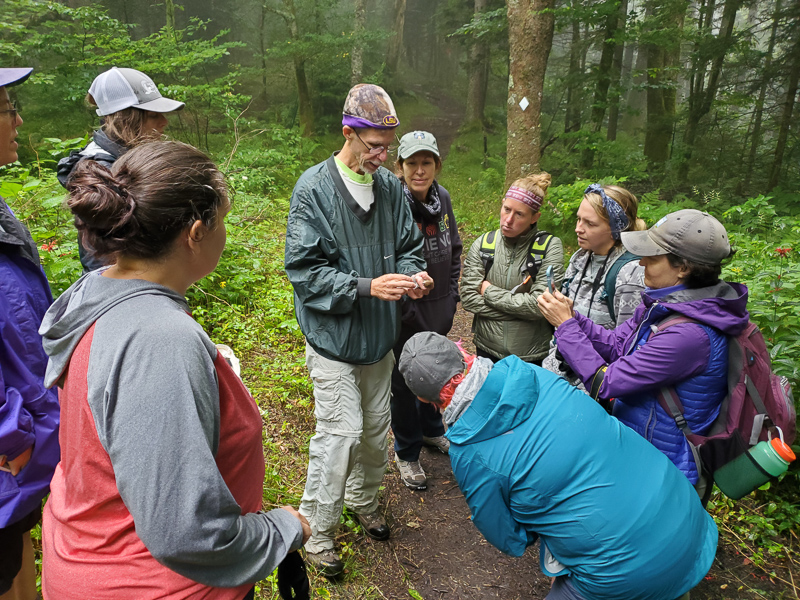
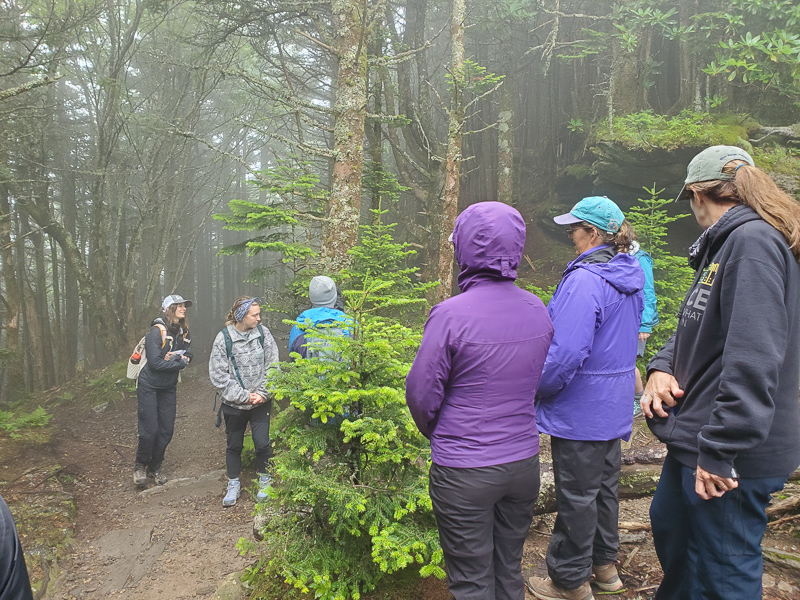
The adventure continued as we traveled farther into the clouds. Our mission was to summit Mt. Mitchell, highest peak east of the Mississippi River. This alpine ecosystem greeted us with Frasier firs, wind, cold, and lots of rain. This didn’t stop us from exploring the surrounding forest and discovering some salamander, lichen, and spider species that were new to us

Eryn teaches us about her expert topic, the Fraser Fir Tree, and their importance to the unique, high elevation spruce-fir forests found at Mount Mitchell.

Eryn teaches us about her expert topic, the Fraser Fir Tree, and their importance to the unique, high elevation spruce-fir forests found at Mount Mitchell.

After we returned to the van and peeled off all of our wet layers, we spent the afternoon choosing our own adventure. We visited Setrock Creek Falls, searching for salamanders and crawfish. Fun fact: crawfish carry their young on their underside even after they’ve hatched. South Toe River provided us with very cold water for snorkeling and trout-watching. While drying his mist nets, John caught a chipping sparrow, providing us more opportunity to learn about this species. An evening campfire gave us additional time to reflect and enjoy each other’s company. As we approach the halfway point, we all agree that this has been an excellent experience, and we cannot wait to see what’s on the other side.

Blue Ridge

“A Day of Surprises”

Surprising our fearless leaders, the group was ready to go about 30 minutes early this morning. Leaving Stone Mountain, we traveled down the Blue Ridge Parkway stopping to observe the natural beauty along the way.

Ranger Jonathan Bennett regales us with the story of how Linville Gorge got its name.

Ranger Jonathan Bennett regales us with the story of how Linville Gorge got its name.

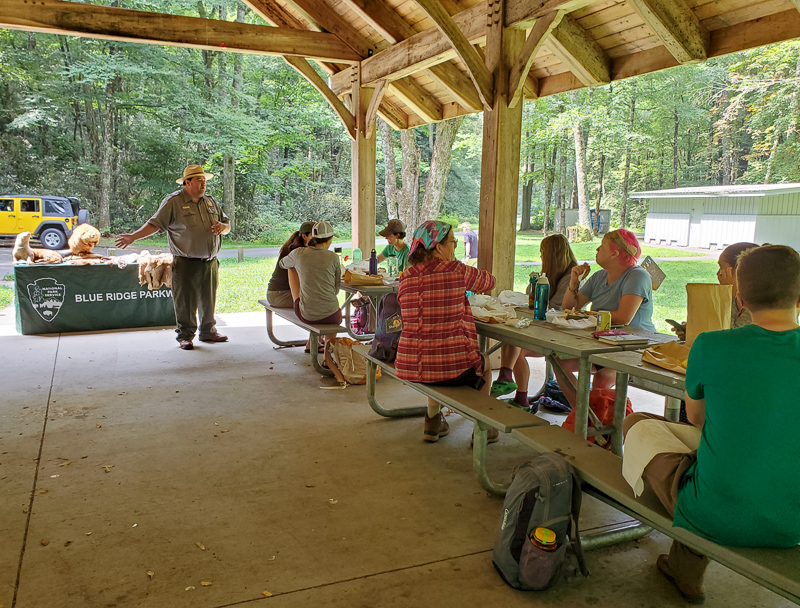
At the Linville River we ate lunch (and fabulous desserts). Ranger Jonathan Bennett entertained us with a rousing history of the Parkway, and more specifically the Linville area itself. Of great note were his sound effects (particularly the clip clop of horse hooves).

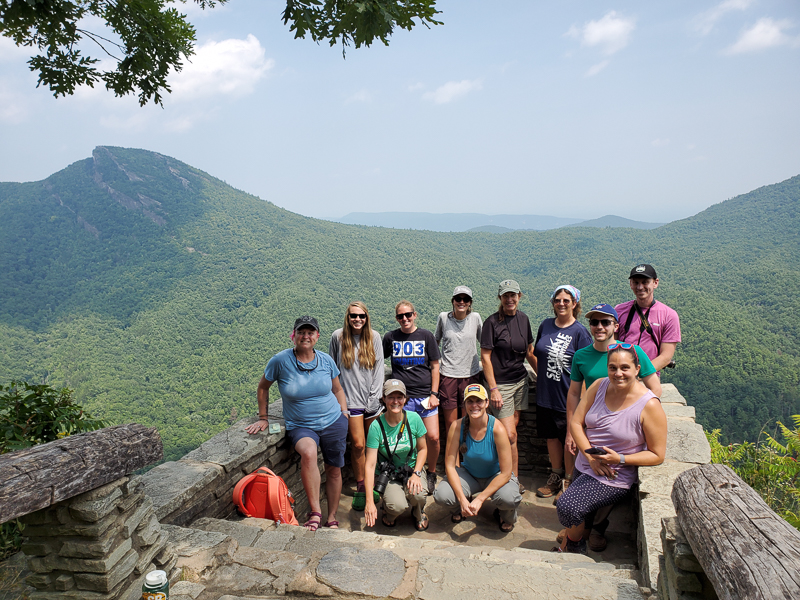
A spectacular group of NC Educators overlooking Table Rock from Wiseman’s View in the Linville Gorge Wilderness Area.

A spectacular group of NC Educators overlooking Table Rock from Wiseman’s View in the Linville Gorge Wilderness Area.

We then journeyed up to Wiseman’s View and took in the breathtaking view of Linville Gorge. Words cannot express this view, go see for yourself! Watch your car’s suspension though.

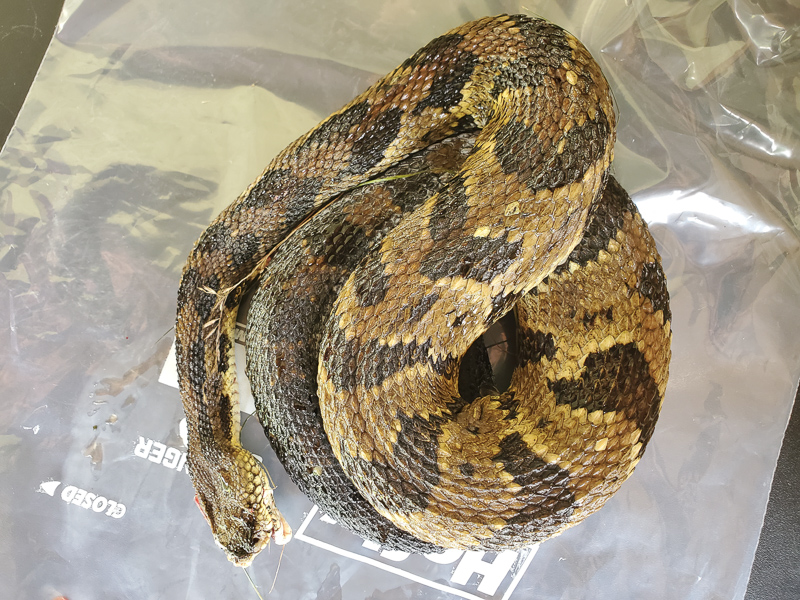
At the North Carolina Museum of Minerals we met up with Ranger Bennett again, where he showed us a recently deceased rattlesnake specimen.

Dead on the road Timber Rattlesnake, collected by the National Park Service to be used for genetic studies.

Dead on the road Timber Rattlesnake, collected by the National Park Service to be used for genetic studies.

We finished the day at Briar Bottom campground where we set up camp. While dinner was prepared, John Gerwin (fantastic ornithologist) prepared us for our birdwatching adventure tomorrow.

Early to bed, early morning tomorrow!

Blue Ridge

“The Highs and Lows of Stone Mountain”

We completed a 3.3 mile hike on the Stone Mountain Loop trail after breakfast. Along the way we found an brightly colored red eft, the terrestrial juvenile phase of the Eastern Red-Spotted Newt, on the trail. We determined it was a salamander rather than a lizard because it had no scales and no claws. FYI, all newts are salamanders, but not all salamanders are newts. Newts are toxic to fish and small mammals. Adult males have something called nuptial pads, which are raised rough ridges, on the inside of their hind feet during the breeding season to help hang onto the females.
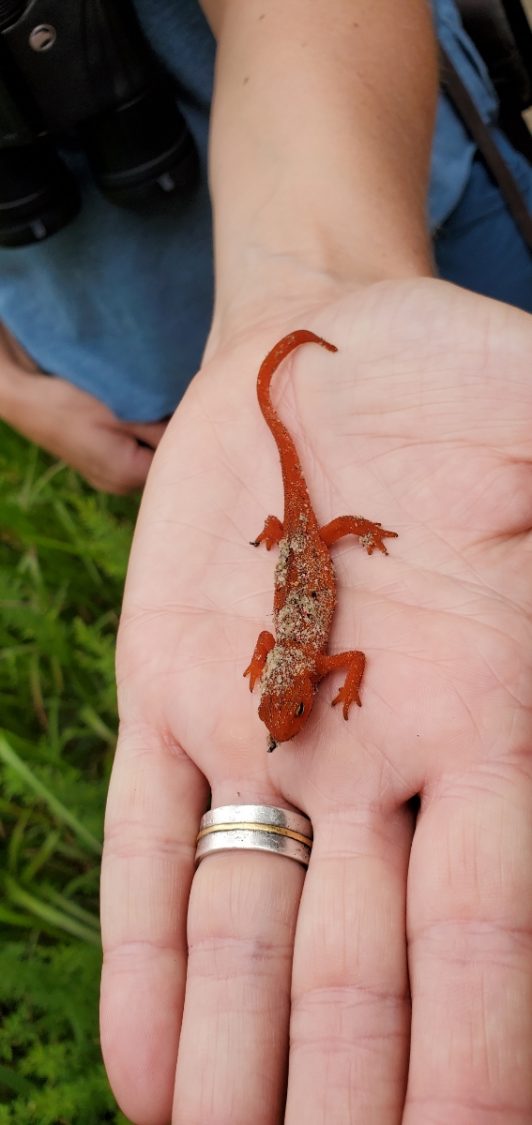
Bright red salamander with sand stuck to its back held in an open palm. The salamander is about 3 inches long from nose to tail tip.

Eastern newt in the red eft life stage encountered in Stone Mountain State Park

We snacked on the summit of Stone Mountain while we observed the minerals in the igneous rock and discussed the processes that we thought were responsible for the creation of the granite dome, including continental collisions, magma cooling underground millions of years ago, and tons of weathering and erosion.
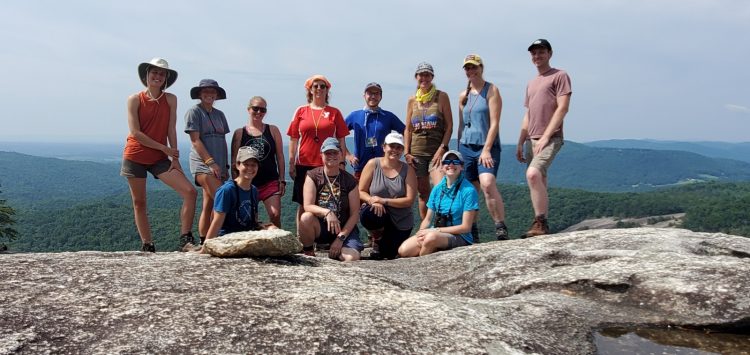
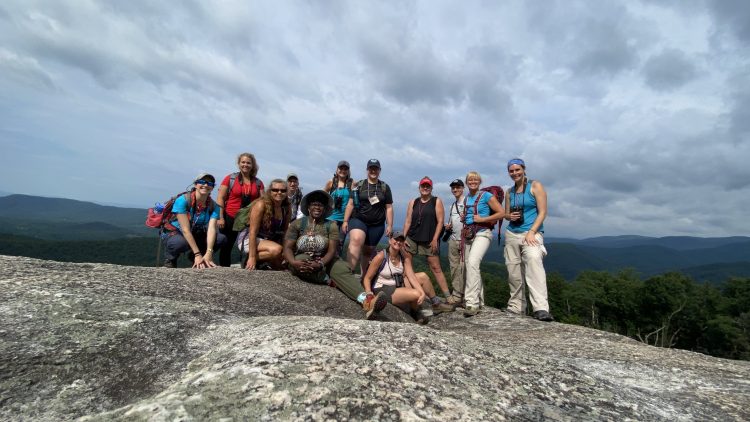
12 adults standing or sitting in two rows on top of a rock face of Stone Mountain (North Carolina) overlooking the Blue Ridge Mountains

The Blue Ridge Institute poses atop Stone Mountain, NC.

After lunch, we met with TR Russ, one of the eight non-game fisheries biologists in the state that work for the NC Wildlife Commission. He passed around a stone roller fish preserved in alcohol, as well as a paddle fish, just 2 of the more than 200 species he works with!

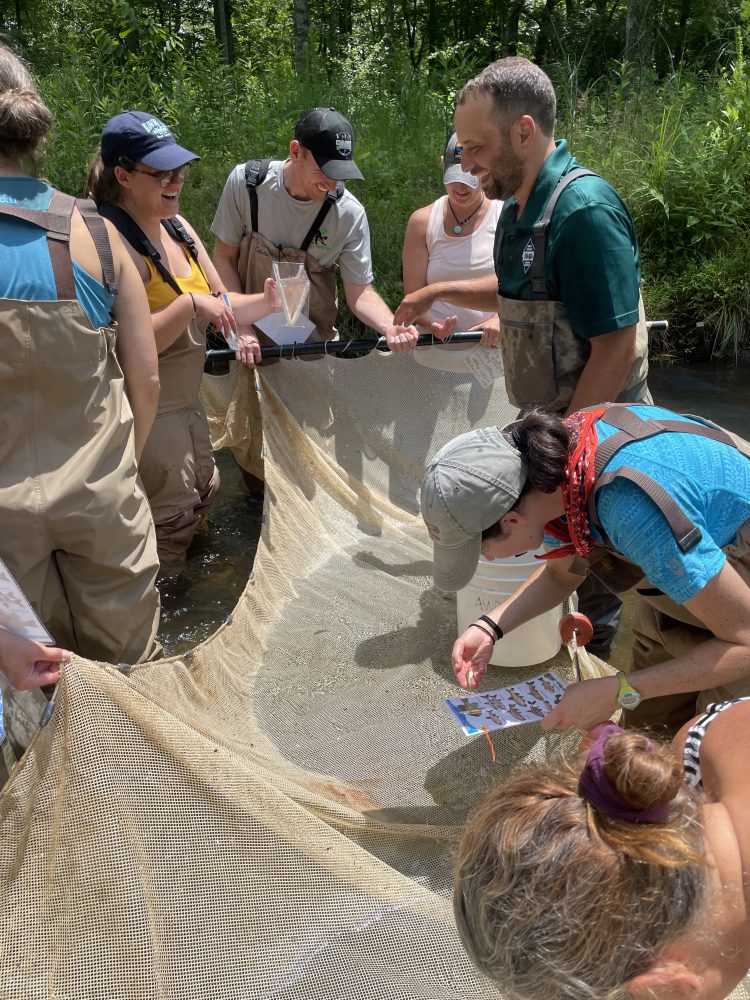
Using a backpack electroshocker and a swine net, we collected (for observation only) a handful of species of fish, along with a few crayfish/crawdads, 2 with a leeches attached to them. TR found a horsehair worm, the stuff of nightmares, a parasite that burrows into a cricket’s body, driving it crazy and drawing it to the river, where it then EXPLODES out of the poor creature to continue its life cycle in the water.

We then went snorkeling to observe the same fish within their natural habitat. The heat and humidity was bad today, so the cold river water felt refreshing.
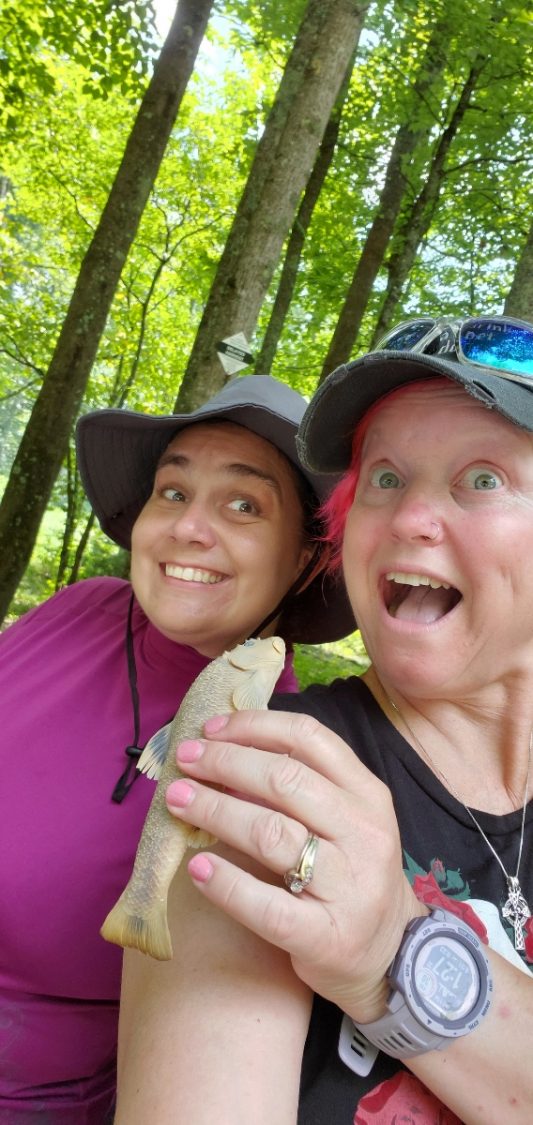
Two people pose for a selfie holding up a small fish that is mostly a light brown color.

A quick selfie with Lenae, Becqui, and a striped jumprock fish while exploring the Roaring River at Stone Mountain State Park

This was followed by a visit to the bottom of Stone Mountain Falls, a 200-foot tall cascade. The problem is, to get to the Falls you have to climb down a flight of 300 stairs…and back up again.

We also learned to use the Seek app, which is a very resourceful tool in identifying species of flora and fauna. And experts within our group presented on topics of the hemlock wooly adelgid, the southern flying squirrel, and the raven. We received a bookmark full of adelgid information, played a group game featuring flying squirrel facts, and created a make and take modeled after the amazing raven.

All this in our first day! And what a day it was.
Blue Ridge

“We Are From”

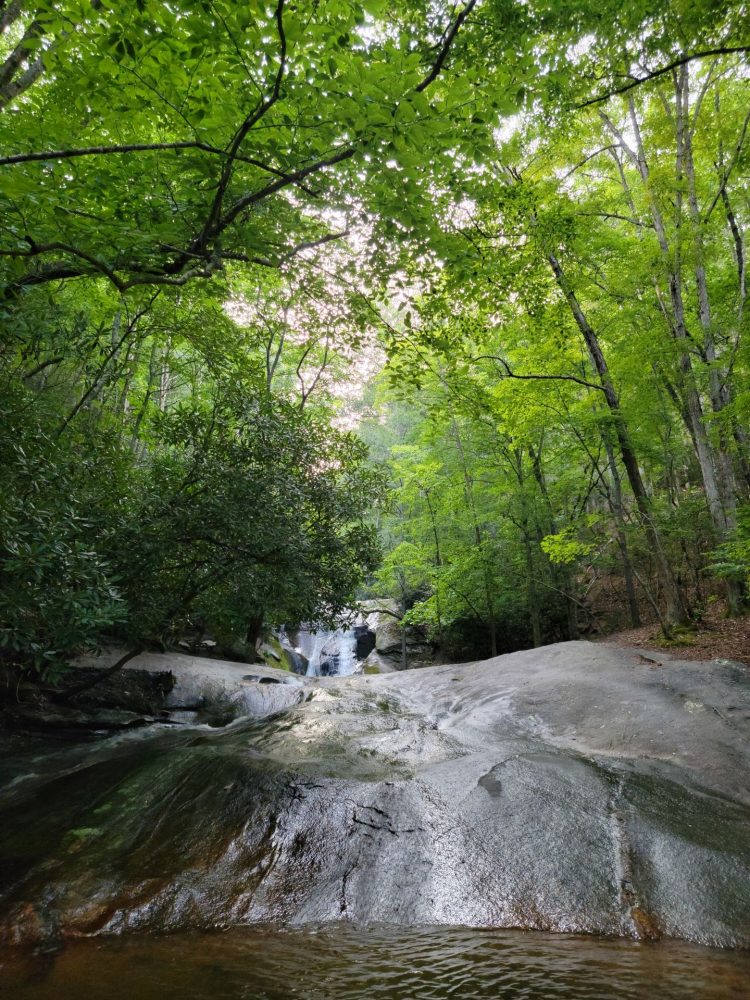
Foreground is a pool of clear water. Rocks slope upward from the pool towards a cascading waterfall. Pine trees and rhododendron frame the falls and pools on either side.

Widow’s Creek Falls at Stone Mountain State Park

We are from daypacks.
From Crazy Creek chairs and Nalgene bottles.
We are from North Carolina (mountain, piedmont, and coastal plain).
We are are from white pines, five needles per fascicle, open cones, fast-growing.
We are from group norms and trip goals.
From Melissa, Megan, and Chris.
We are from lifelong learners and explorers.
From “choose your own adventure” and “leave no trace.”
We are from Mother Nature and unplug, recharge.
We are from schools and museums.
Trail mix and Clif bars.
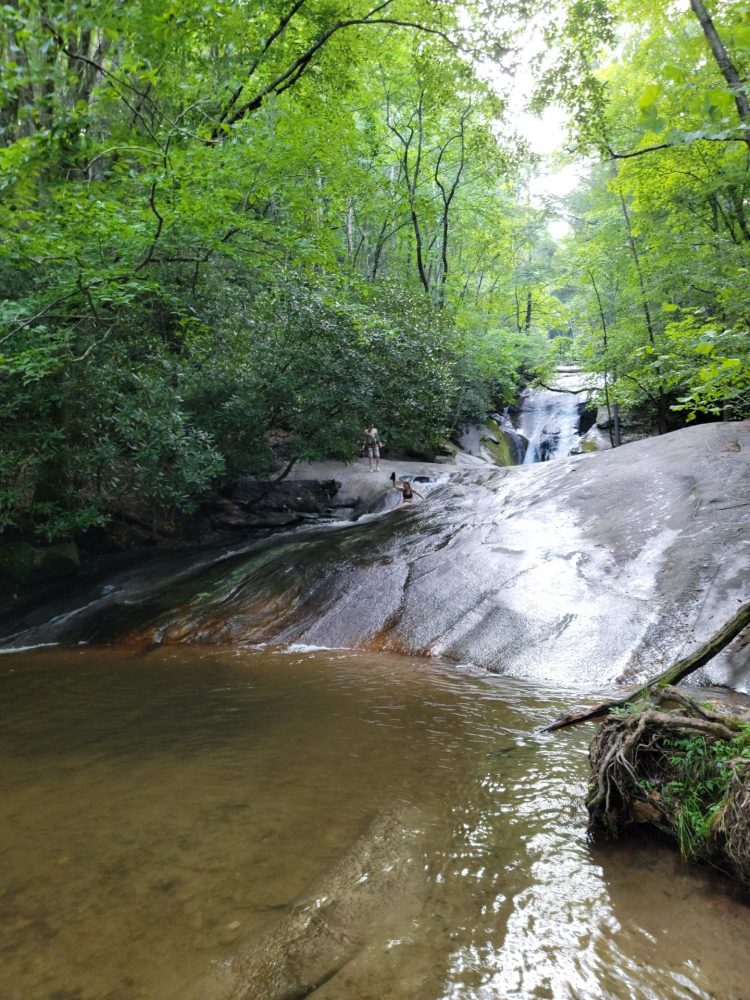
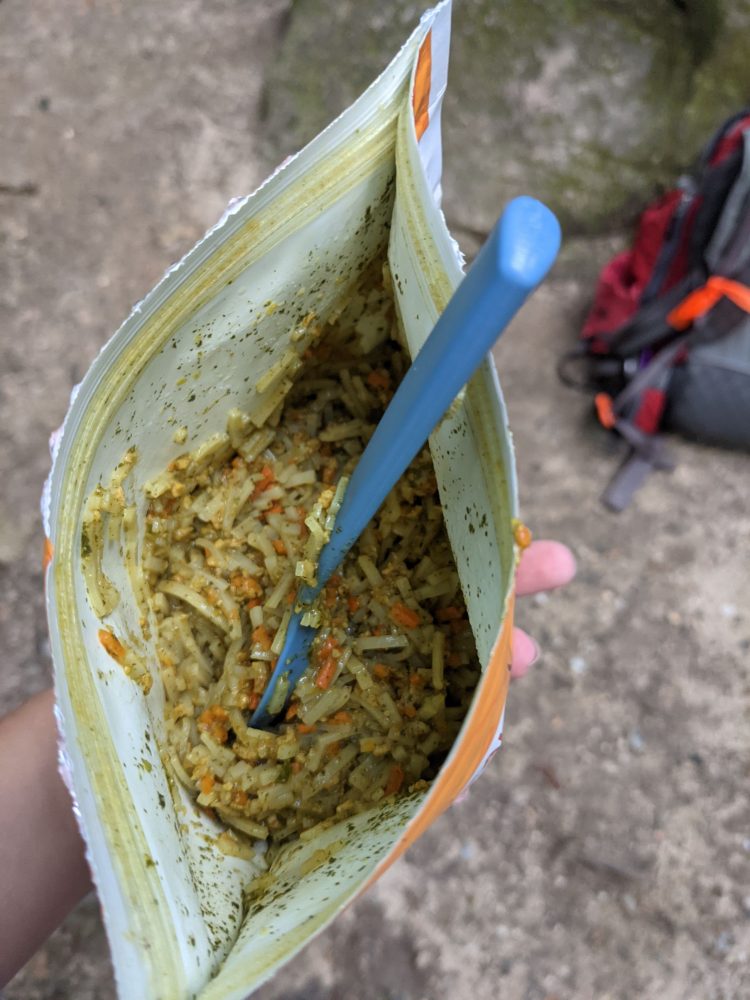
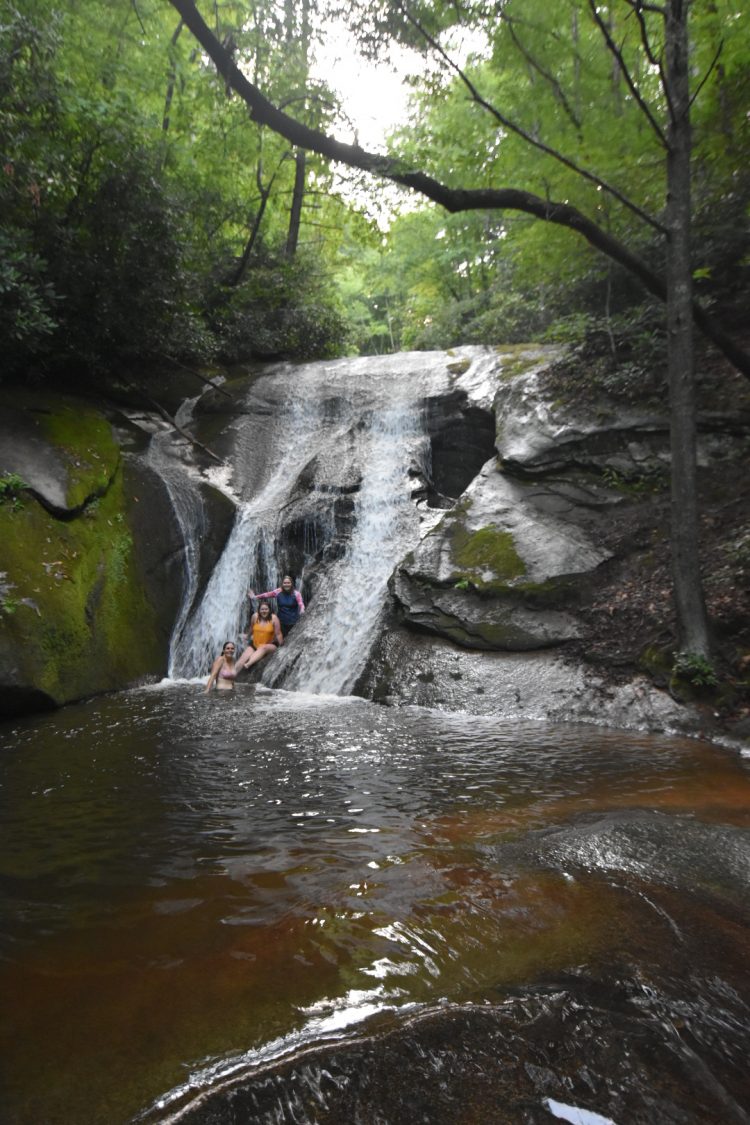
From eating our first meal in a bag to Chris showing us how to slide down Widow’s Creek Falls.
From using our five senses to notice, wonder, and reminisce.
Nature journals, data collection, cell phone pictures, and group stories.
We are from different backgrounds and experiences, but we all share the desire to inspire new explorers.

Foreground is a pool of clear water. Rocks slope upward from the pool creating a natural waterslide. A person is standing at the top of the slide, and another person is sliding down. Pine trees and rhododendron frame a waterfall and pools on either side.

Waterfall sliding at Widow’s Creek Falls at Stone Mountain State Park, NC

Looking down into a plastic zip top bag containing a freeze-dried meal that has been rehydrated. A spoon is sticking out of the bag towards the camera.

First meal of the trip, rehydrated meals in a bag!

Blue Ridge

“Seeing the World Through Each Others’ Eyes”

“It’s been a rough year for all of us – teachers, students, and parents alike. Some of us fit in all 3 categories. Some of us have endured personal trauma or have been close to colleagues who have. The loss is overwhelming, and I’m not solely talking about loss of life. I’m speaking of a deeper loss we can all share. A loss of freedom and exploration; a loss of continuity and tradition; a loss of social interactions and mental wellness; a loss of smiles, hugs and high fives; a loss of normalcy. Yet throughout this loss, I feel we have gained something else. I have been amazed at how we have united to support each other emotionally and spiritually. I have seen everlasting friendships formed through synchronous trials and tribulations. We’ve all learned quite a bit more about technology than we thought we’d ever learn in our lifetimes. We’ve learned our own strengths and weaknesses, and how to survive on both.

This “adventure” has reminded me that there is more to these kids than reading fluency and math strategies. We were suddenly forced by the universe to adapt to our new surroundings without warning, and what we discovered while in this new phase was ugly, yet simultaneously wondrous. We got an 18-month long sneak peek into our kids’ lives, inside their homes, their personal relationships – we got to see the world through their eyes

One thing that remained consistent throughout virtual or face-to-face teaching was spreading my love of hiking and the outdoors to my kids, even to students in other classes. I would share my adventures on the trails (along with photos) with my students, especially if it was something really cool (like rappelling off of an 80’ cliff, ziplining through the trees, or summiting a peak alone at sunset) and explain to them jubilantly how I was conquering my fear of heights while immersing myself in nature. It lit up their faces. I want to continue to bring that joy and wonder to my students, to instill that curiosity, to see the good in the world – through my eyes.

When school ended in May and we said our goodbyes, all I could think about was the one thing that got me through this school year – anticipating the Educators of Excellence Institute in the Blue Ridge Mountains this summer. Learning more about my passion in an environment that has such meaning to me caused me to spend months preparing for this unique experience with fewer than a dozen other teachers from around the state. This, to me, is not work. This is my “play.” This is how I bring nature into the classroom, how I show them to explore. This is how we make connections and see the world through each others’ eyes.”

~Becqui Masters, First Grade Teacher, Central Elementary School, Pasquotank County


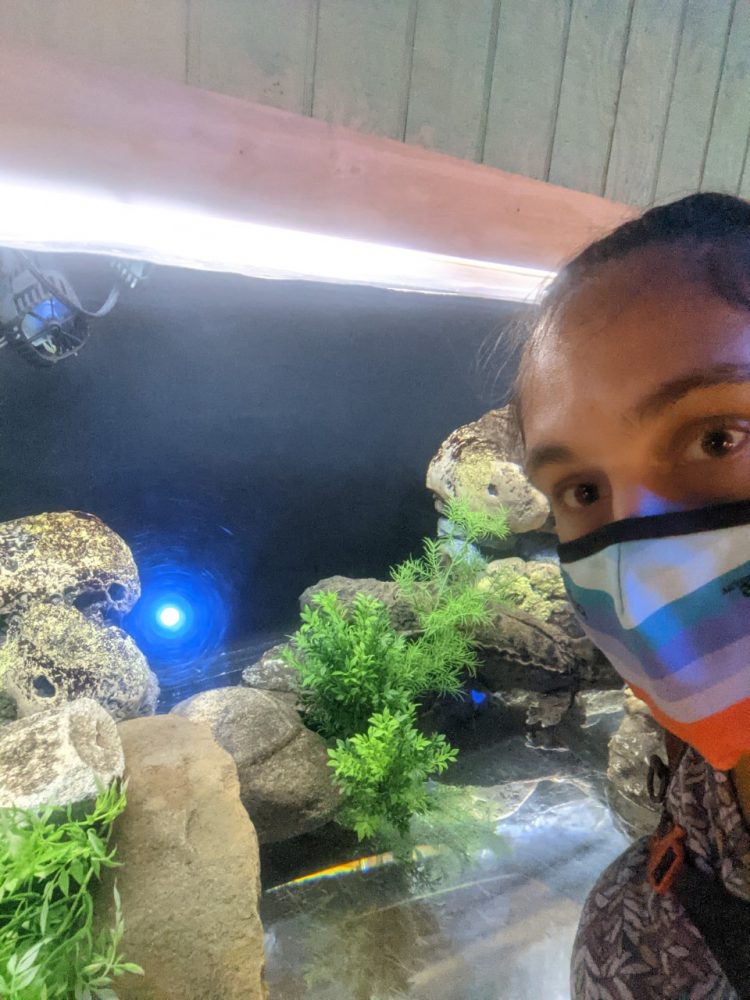
Lenae Scafidi, Science teacher at Iredell High School in Iredell County, has also been eagerly anticipating her Educators of Excellence Institute by exploring with her family along the Blue Ridge Parkway. She heard we’d be looking for hellbenders and hiking, so she got a head start!

A masked teacher watches a hellbender in a tank

“Hunting” hellbenders at the Western NC Nature Center


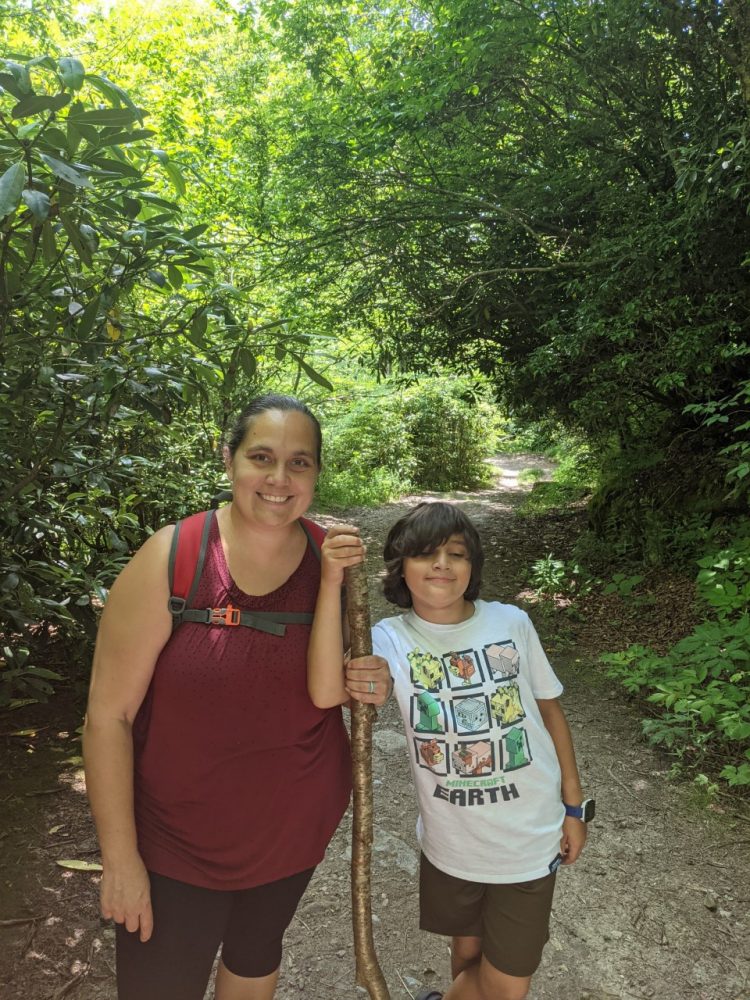
Teacher and her son hike in a mountain forest along the Blue Ridge Parkway

Lenae had the opportunity to hike with her son earlier this summer along the Blue Ridge Parkway.


Blue Ridge

“Birds in the Mist (Net)”

“Thank God I have seen an orange sky with purple clouds. How easy it is to forget that we have the privilege of living in God’s art gallery.”—Erica Goros

We crawled out of our tents before the sun had risen and the owls were still hooting. Why did we get up so early? To see a beautiful sunrise along the Blue Ridge Parkway and to get an early start on our birding adventure.

Sunrise view from the Blue Ridge Parkway near Mount Mitchell

Sunrise view from the Blue Ridge Parkway near Mount Mitchell

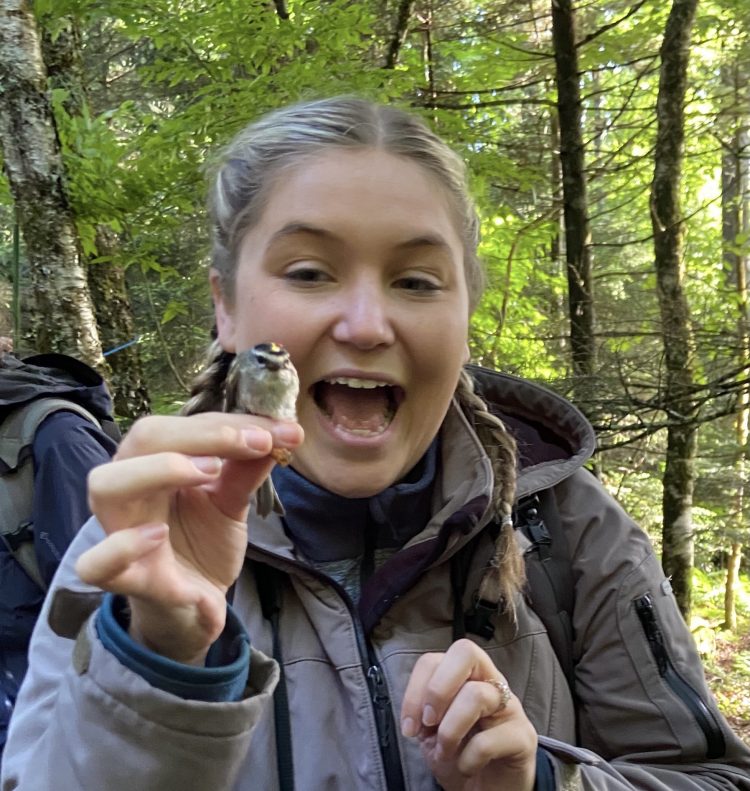
After a beautiful sunrise (that we had to be dragged away from), we made our way to an elevation of 5,100 ft on the Big Butt trailhead to start banding birds. Ornithologist John Gerwin taught us about his research on the Hermit Thrush and then we pulled out the nets to actually catch and band some. We used recorded bird calls and a wooden decoy to draw in a male bird, and it was only a matter of minutes before we had one caught in our spiderweb-like net. Once we had him in hand we confirmed his sex, took his weight, aged him by looking at his tail feathers, and added two different types of bands to his legs. After a morning of calling and netting birds we had tallied a Hermit Thrush, Dark-eyed Junco, and Golden-crowned Kinglet.

Sarah with a Golden-crowned Kinglet that we caught in the mist net.

Sarah with a Chestnut-sided Warbler that we caught in the mist net.

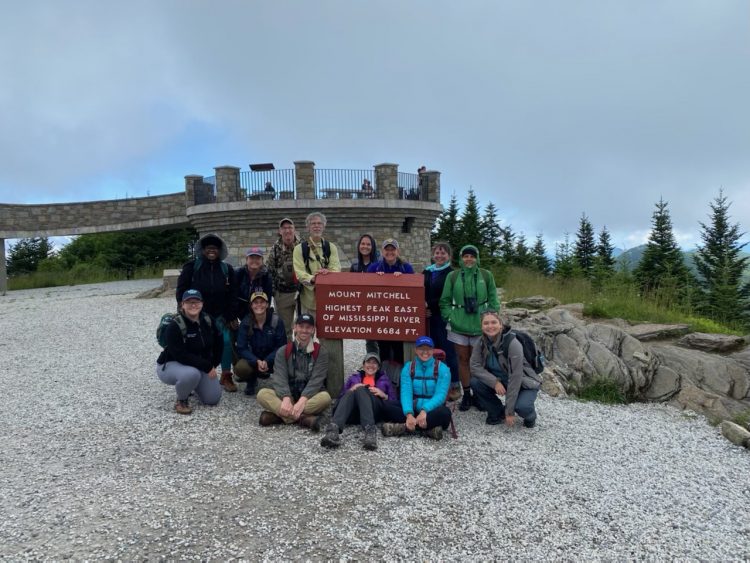
Although bird banding was amazing, the draw of going to the summit of the highest mountain east of the Black Hills of South Dakota led us to our next destination, Mount Mitchell. Once we arrived at the summit, we learned about the history of Mount Mitchell and the establishment of North Carolina State Parks. We were joined by Amy Tomcho, local birder and Audubon representative.  We then took a hike along the summit nature trail where we learned about salamanders, owls, and the spruce-fir forest.

The group at Mount Mitchell

The group at Mount Mitchell.

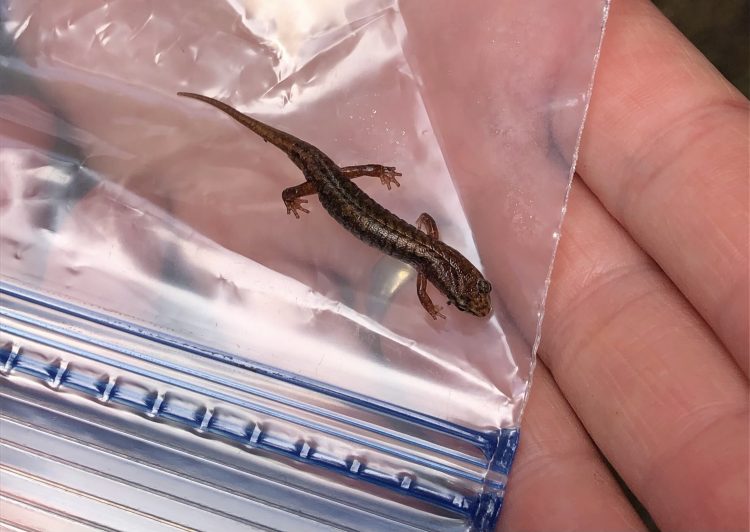
One of many salamanders we caught!

One of many salamanders we caught — a pygmy salamander!

We ended our day with nature journaling, hunting for salamanders, exploring the South Toe River, and an amazing group dinner at the campground.

Blue Ridge

“Inquiry Fever”

Inquiry Fever:  The fervent desire to explore, observe, and learn.

We all have “Inquiry Fever”!  The excitement is contagious.  We spent the day in Stone Mountain State Park, starting with a hike up to the summit for a geology lesson on how the region was formed.  Along the way, we encountered a pair of Pileated Woodpeckers, a Red-spotted Newt, a deceased Eastern Red Bat, fence lizards, a goldfinch, and so much more!!

Next, we went to Roaring Fork River and met representatives from the NC Wildlife Commission. We put on waders and wetsuits and went seining and snorkeling in the river in order to identify a variety of fish, including a Brook Trout, Smallmouth Bass, and a Redlip Shiner.  We were also able to identify three different kinds of crayfish. It was a cool experience — literally — the water was quite cold! To cap off the afternoon, we hiked to Stone Mountain Falls and splashed in the water there.

We are all learning from each other and especially from our leader scientists.  It is awesome to be among like-minded educators who are willing to stop and explore!  For example, we spent a significant amount of time observing and inquiring about two Broad-necked Root-borer Beetles laying eggs.

We are now gathered together at camp working on our projects and smelling delicious burritos cooking.  Can’t wait for tomorrow’s adventures!

Blue Ridge

“Salamanders Team in the Stream”

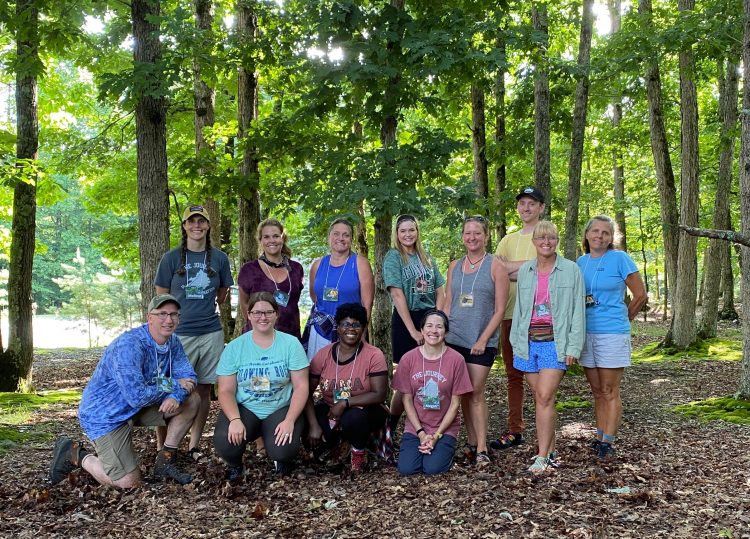
Group of teachers in the forest.

Cohort #1: Educators of Excellence

The day started off rainy and dreary but as we packed the vans and headed towards North Carolina’s Stone Mountain State Park the skies cleared. During our trip we listened to a podcast “Ologies — Cervidology.” “Cervid” means neck and is the study of deer. We learned some crazy things like the fact that deer will sometimes prey upon baby birds.

Upon arriving we quickly unpacked the tents and set them up; some of us for the first time ever! We spent the early evening getting to know each other through poetry and self-introduction. We also covered the schedule for our trip and norms.

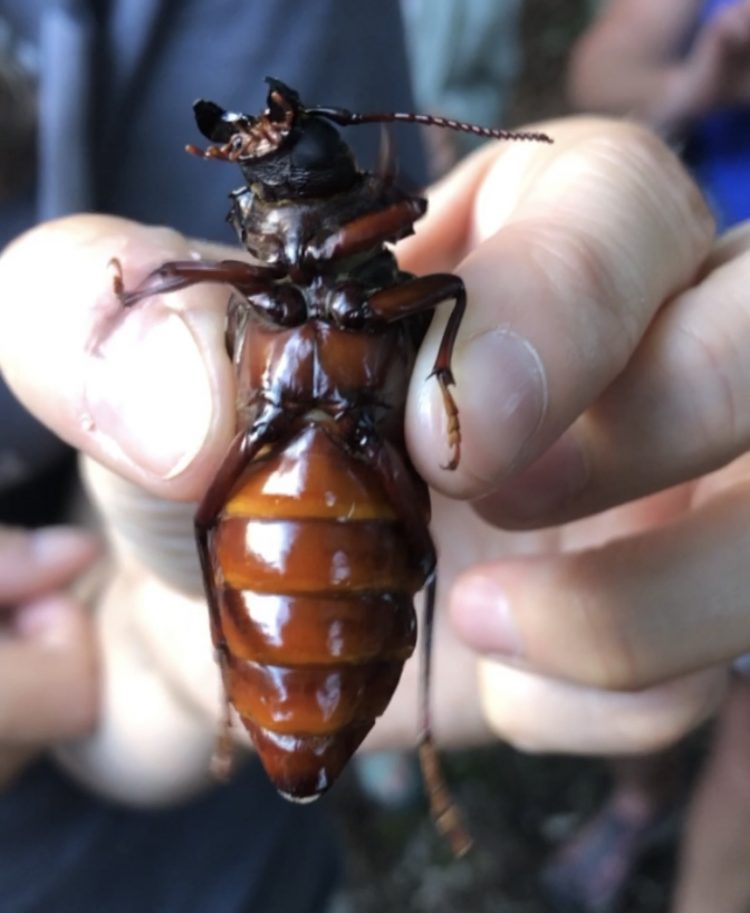
We spent time getting in tune with our senses and observing the natural wonder all around us. After some exploration, we found a Leaf-footed Bug, a Broad-necked Root Borer Beetle and a raven, and one group found an Eastern Box Turtle. Nature is all around us!

Broad-necked Root Borer Beetle.

Broad-necked Root Borer Beetle — check out those mandibles!


We enjoyed a camp prepared dinner and took a quick journey to the falls to swim in the brisk water before tucking in for the night.

Melissa and two Sarahs from Team Salamander appreciating Widow Creek Falls.

Melissa and two Sarahs from Team Salamander appreciating Widow Creek Falls.

Blue Ridge

“The Mountains are Waiting”

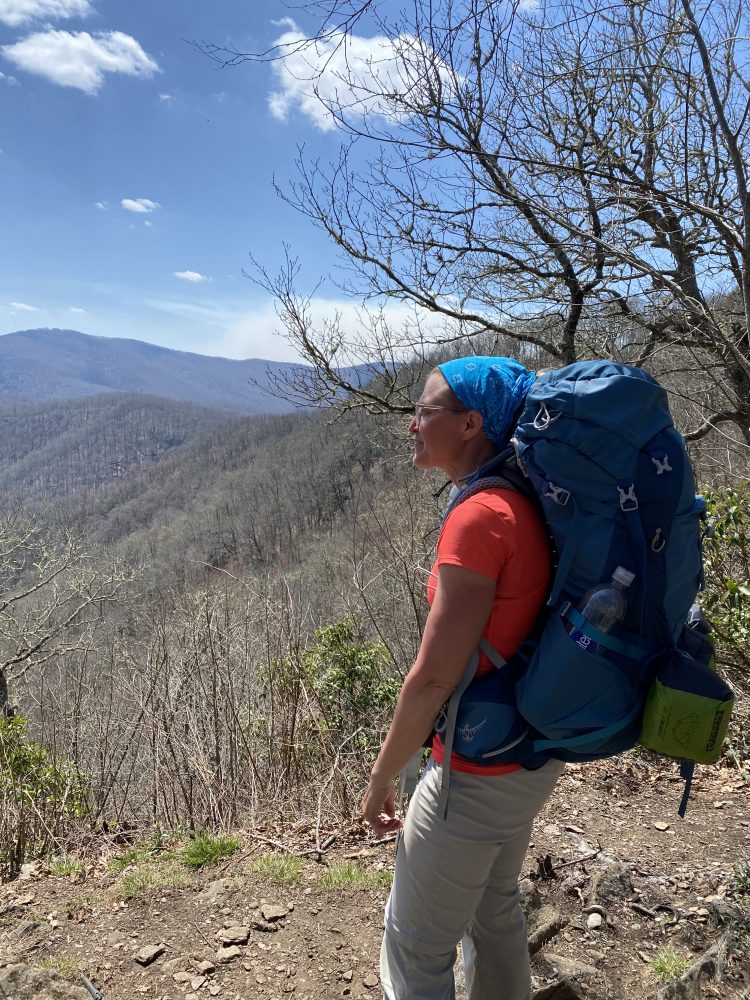
woman backpacker surveys a distant mountain range

The Educators of Excellence are all looking forward to our upcoming Blue Ridge Institute July 8-16, 2021. Here, Wendy Hall surveys the mountainous landscape.

“As classrooms were packed and cleaned an elite group of teachers were doing other things.  The school year had come to a close but select teachers from North Carolina were preparing for the next adventure, exploring the Blue Ridge Mountains. These educators are a part of the North Carolina Museum of Natural Sciences’ Educators of Excellence Program and will be spending over a week together in the North Carolina Mountains. Along with closing down their classrooms the notable nine— Wendy Hall, Stephanie Ingram, Amy Jordan, Sarah Laws, Lindsay Smith, Sarah Trinidad, Bill Wade, Nikki Walker, and myself– began preparations to explore the great outdoors. Sarah Laws used her creativity to create a flyer to promote the trip. The flyer contained information so that her students and others could follow her journey.  Others collected camping gear, trekked along hiking trails, researched habitats, explored wildlife manuals, made lists, and tried to avoid reading all the articles about recent bear shenanigans.

Somehow the pending trip had me looking at nature in a new way. My morning walks became more of an outside classroom where the breeze felt different, the sounds of chirping birds became louder and various vegetation left me with a sense of wonder. Somehow just the thought of being in nature for an extended period of time, had initiated a greater appreciation of nature and the vibrant world around us. I can only imagine how much more this curiosity and delight will be heightened as we hike through the Blue Ridge Mountains. This sense of awe and wonder is what I desire to encapsulate and then share with my students, colleagues, and friends along the journey and into the upcoming school year.  I am sure that I speak for the team when I say that we would love to have you travel with us via our blog and be a part of all the wonderful adventures yet to come. The Mountains are waiting.

~Talicia Smith, Science Teacher, Douglas Byrd Middle School, Cumberland County


“I am so looking forward to my time this summer as a part of the Blue Ridge Institute. I was talking and dreaming about it all through Spring Break when I backpacked on the Appalachian Trail for 4 days! Two of my friends and I hiked about ten miles a day and camped each night. It was fantastic to walk from Winding Stair Gap to the Nantahala Rec Center. While I did, I talked about all the natural aspects surrounding us that I would hopefully better understand after experiencing the Educators of Excellence program and learning from the experts. In addition, during this trip, I got my trail name. I was named, “Charmed” and it’s a fun story that you should feel free to ask me about sometime!

In addition, my foster child was moving with relatives at the end of the school year and his last request was for us to “hike a really big mountain.” So one weekend in May, we did the six miles to the top of Mount Mitchell for his final hike with our family! That’s the highest peak East of the Mississippi (6684 feet), so we were glad to fulfill his request together!

It will be great to connect with other teachers and learn about our amazing state of North Carolina over the course of nine days together immersed in nature.

~Wendy Hall, First Grade Teacher, Fairview Elementary School, Union County”

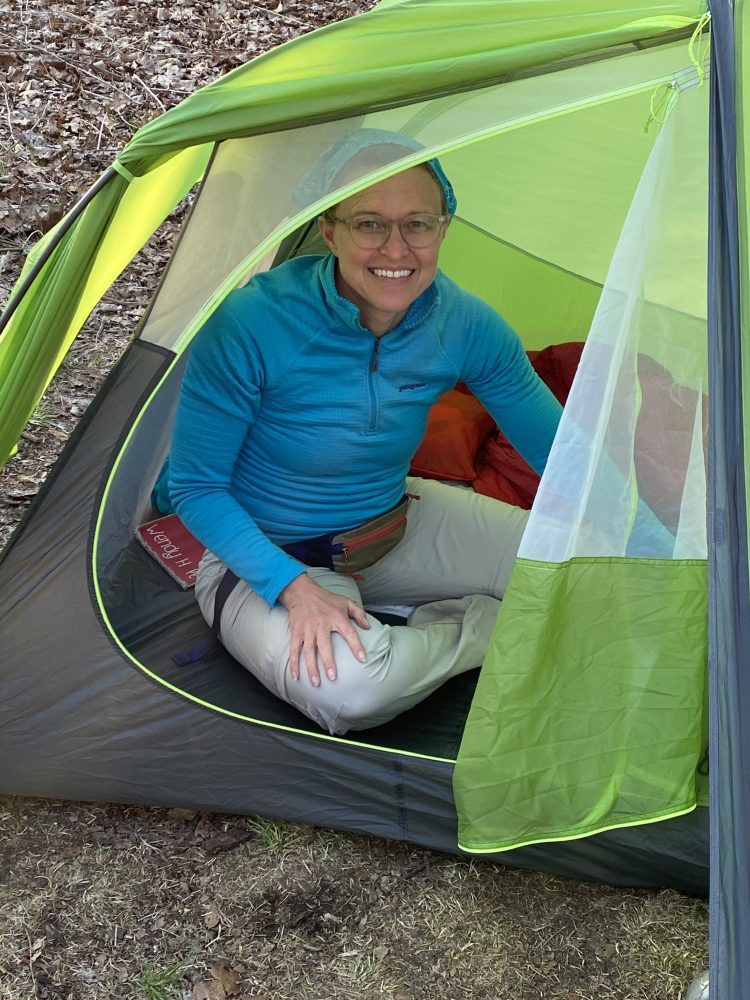
woman inside a green tent

Wendy practices camping during her spring break along the Appalachian Trail. Teachers on our Blue Ridge Institute will also camp outdoors in tents during our trip.


While we won’t be backpacking to get from point A to point B as we travel the length of the Blue Ridge Parkway in North Carolina, teacher participants in our Institutes can expect numerous hikes, as well as camping in tents, and daily educational adventures as we meet researchers and experts in each location.


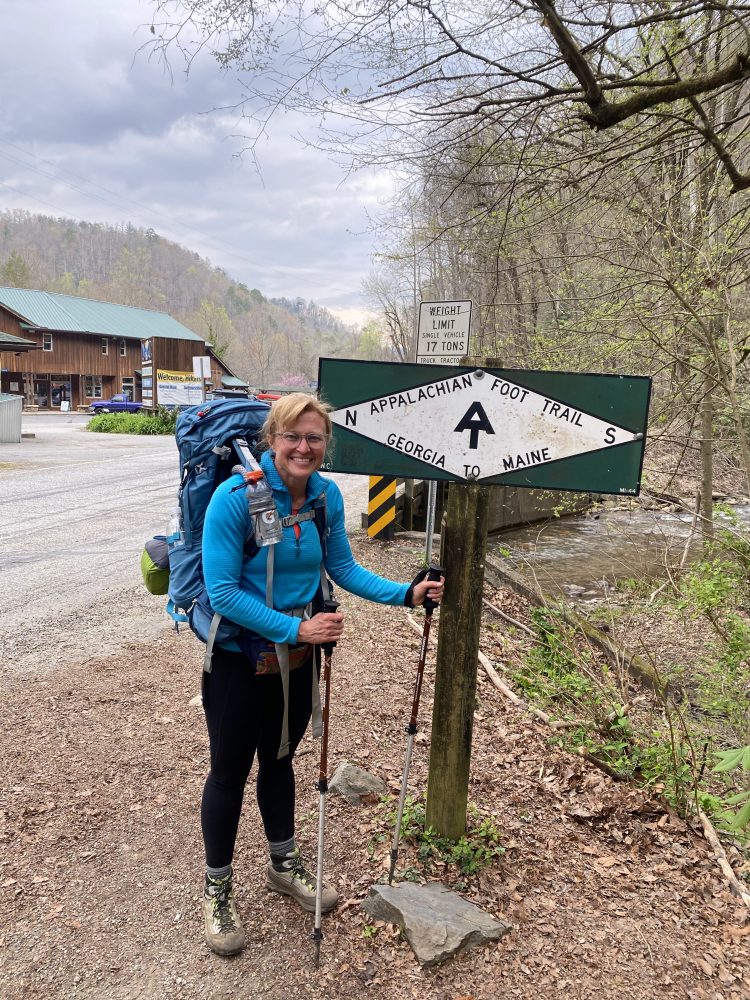
woman with backpack in front of sign post for Appalachian Trail

Wendy poses with the Appalachian Trail sign.