Yellowstone

“A Full Day”

We started our day off with a walk around Mammoth Terraces, where hot springs were creating small puddles of water and mini waterfalls along the travertine rocks. Small rills were forming in the soft travertine that are similar to columns and stalactites in a cave.
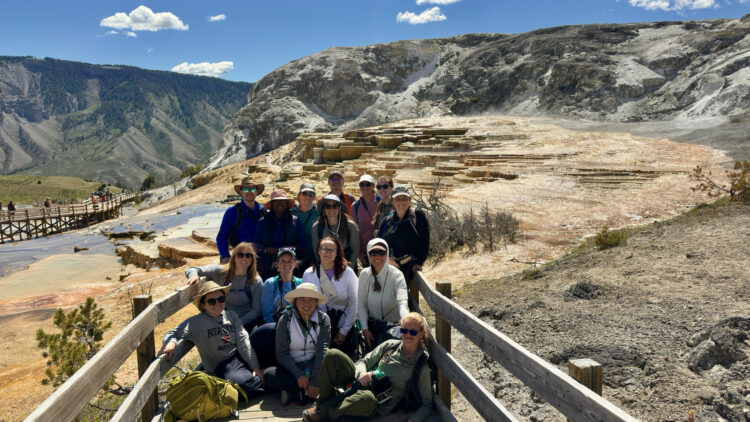
Group at Mammoth Terraces

We measured the water temperature from a safe distance with an infrared thermometer, and recorded values of 170 degrees Fahrenheit. For reference, hot tubs are typically around 102-107 degrees Fahrenheit. Although it’s tempting, one should never touch this water, because it would lead to severe skin burns and even death.
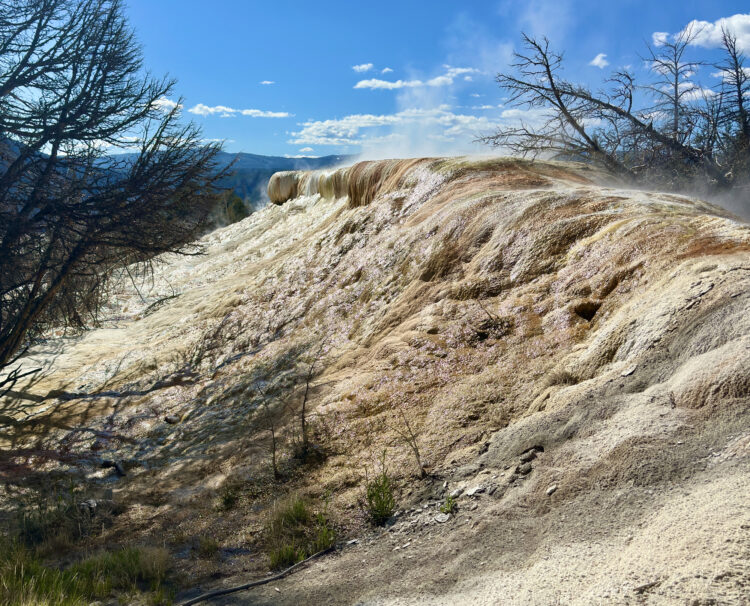
Narrow Gauge Terrace

During this hike, we found a beautiful, light-blue, bubbling puddle of water near the Narrow Gauge Terrace to inspire us while nature journaling. We observed an elk grazing and a mule-deer nursing two speckled fawns. We also practiced identifying Douglas fir trees, Rocky Mountain junipers, and limber pines. Mammoth Terraces are a must-see for anyone interested in geology or biology, and we all left the hike feeling energized for our next adventure.

A poem from the terraces:

A rock like hot snow, deposited by water’s flow.

Thermophilic critters coat the bank, elk tracks in the soft rock sank.

Mysterious terrace of heat and slime, shifting and changing throughout time.

Rolling hills all around, flora and fauna still abound.

A timeless yet fleeting world, from Earth’s depths is hurled.
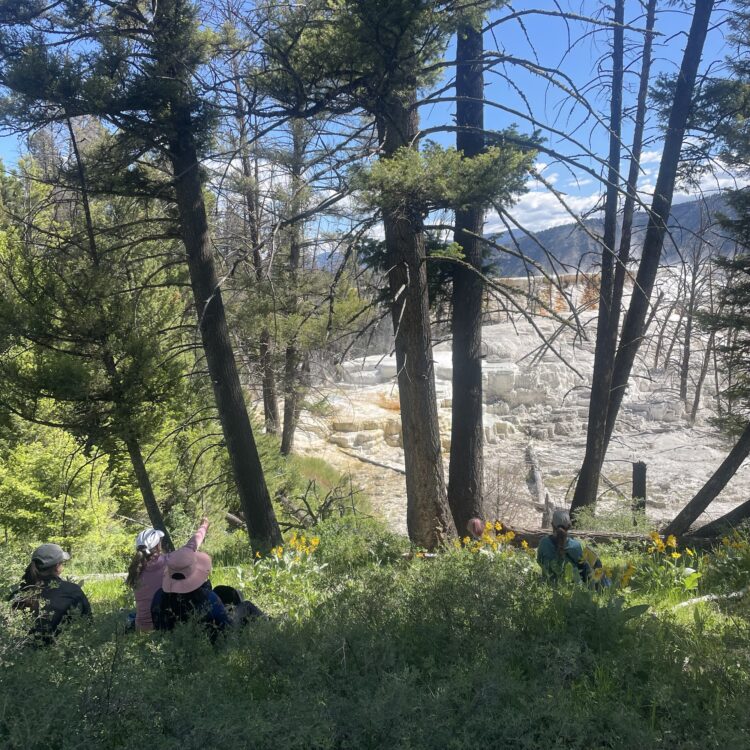
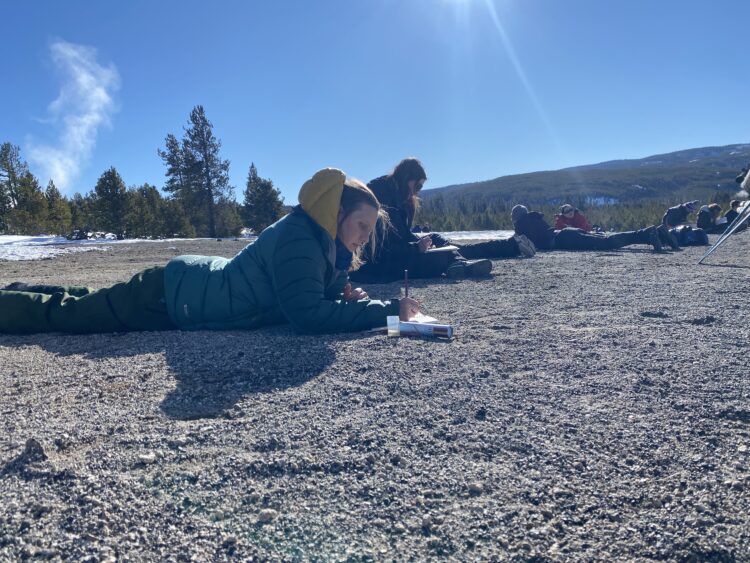
Group journaling along a trail near Mammoth Terraces

After lunch we headed out with Ranger Avery from the park’s education department to do a pika survey. After scrambling over and around massive rocks, we spotted one pika on the trail and counted several more when we heard their “eep” calls!

On our evening wildlife watching drive to Cooke City we observed large herds of bison cows with their rusty-colored calves along the river. We ate amazing pizza at Miners Saloon and headed back towards Mammoth. On the way, we were stopped by bison crossing the road and were able to observe two speckled, juvenile bald eagles. We also saw nature in action as a coyote carried off a dead baby calf the same size as itself for its dinner. 
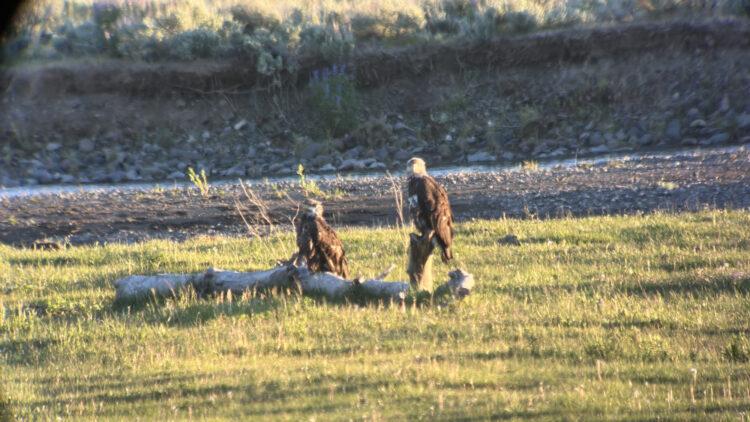
Two juvenile bald eagles

Content warning: the following clip contains video of a coyote carrying a dead bison calf
Coyote carrying bison calf
Yellowstone

“Welcome to Yellowstone”

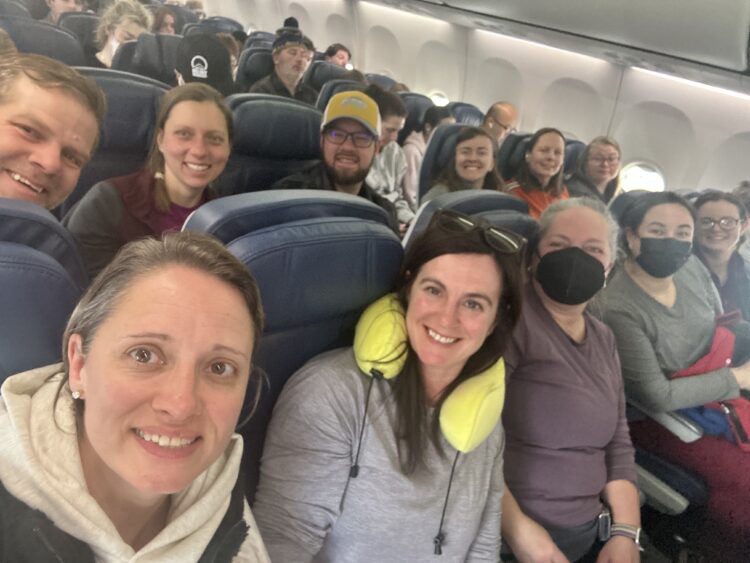
We were on our way at 4 this morning, flying out of Raleigh by 6 am. Melissa met the team in Bozeman, MT. After grabbing lunch and supplies we headed to Yellowstone National Park.

On our way we saw osprey, bald eagle, elk, pronghorn and white tail deer. We observed geologic features such as a dike (a place where magma filled a crack in existing rocks and solidified). And we discussed a glacial cirque (or bowl) on Electric Peak.

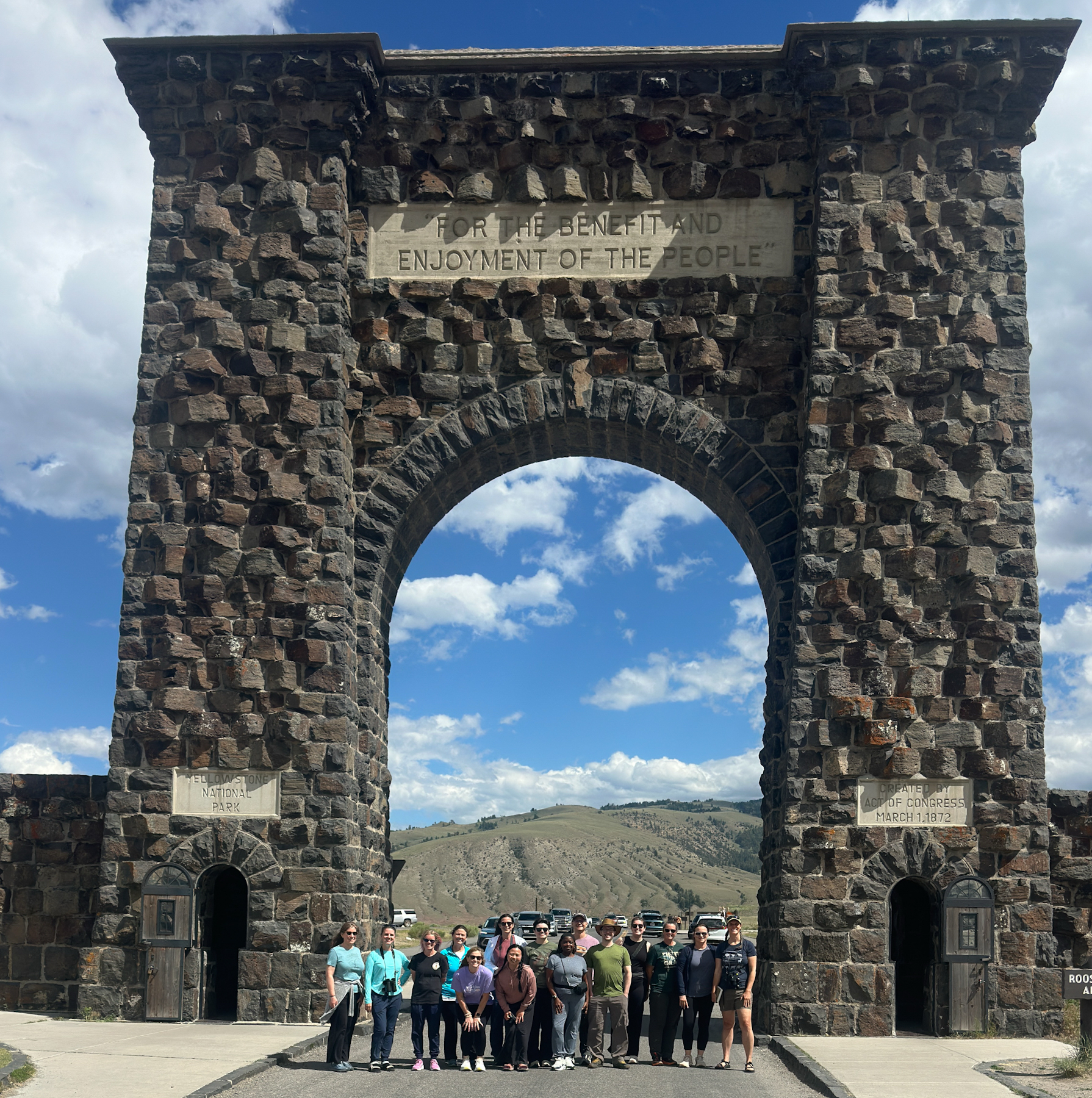
15 people standing under stone arch
Group at the Roosevelt Arch

We stopped for a photo opportunity at the Roosevelt arch. We reflected on John Muir’s quote as it relates to our group:

“Climb the mountains and get their good tidings. Nature’s peace will flow into you as sunshine flows into trees. The winds will blow their own freshness into you, and the storms their energy, while cares will drop off like autumn leaves.”

After checking in we ventured on a walk through an aspen grove and had our first group meeting, where we talked about some of the cares we are leaving behind, what cares we could let drop off behind us.

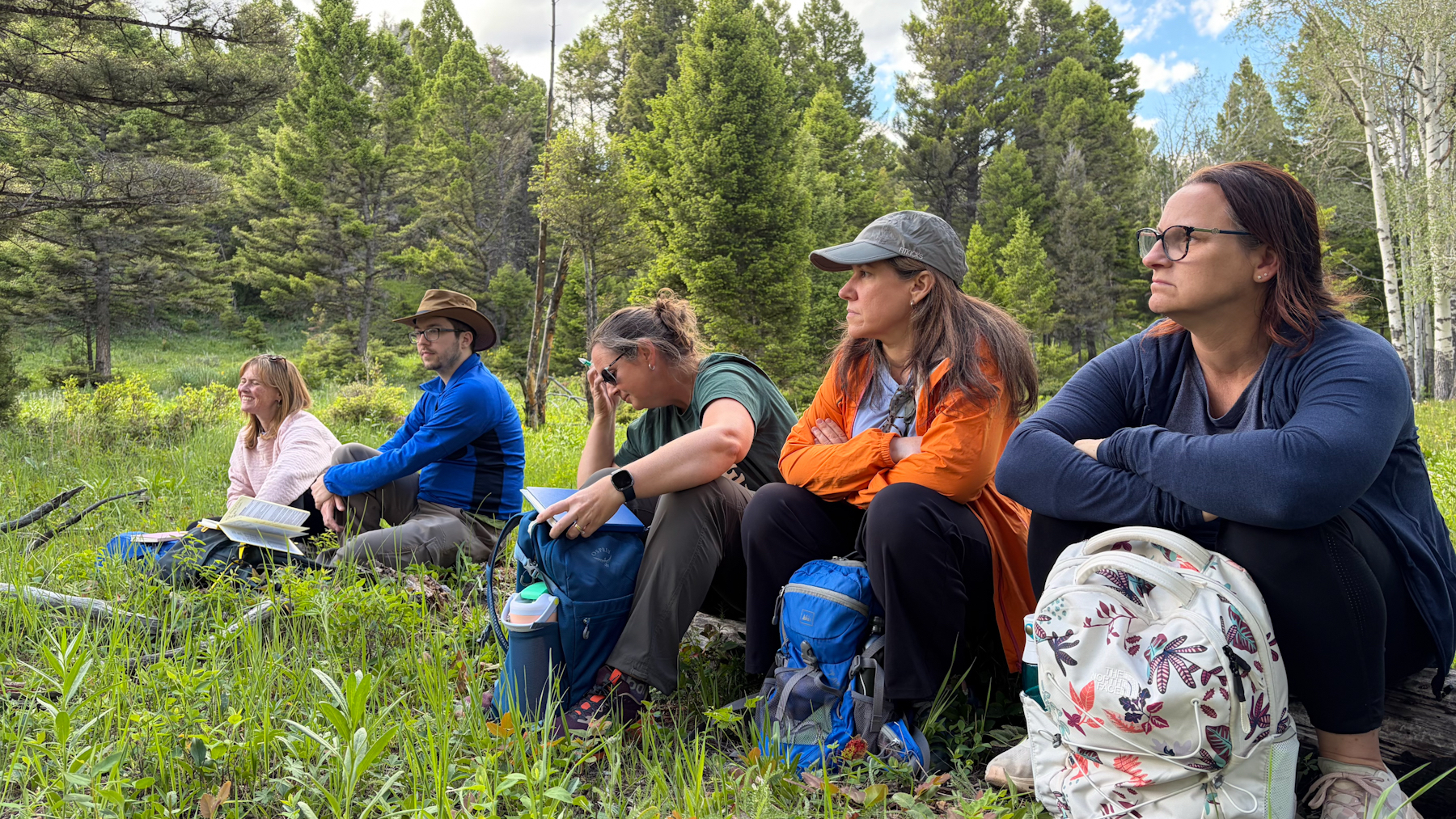
Row of people sitting on a log in a meadow
At our group meeting

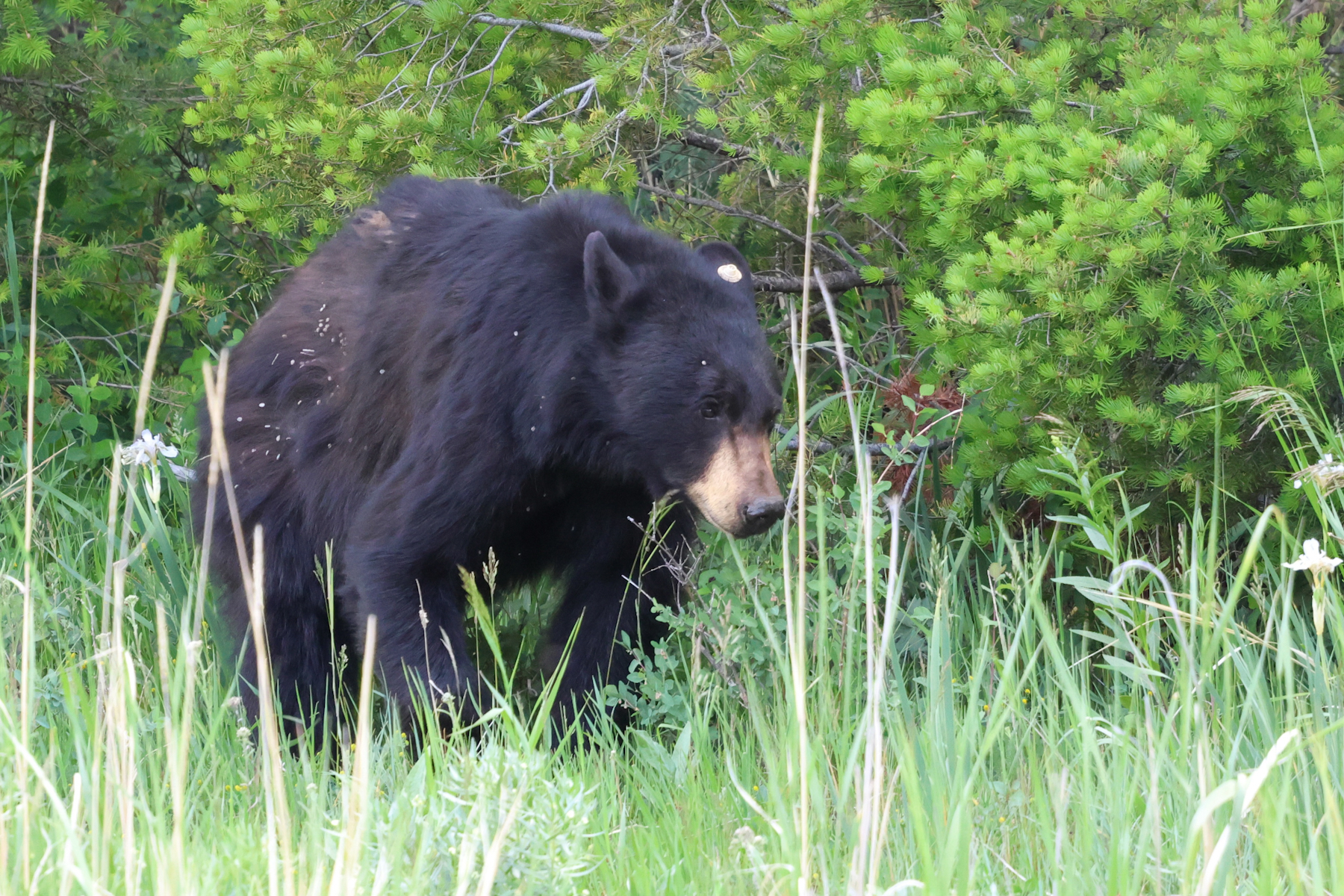
We also had our first wildlife highlight of the trip: a black bear meandering through a meadow.

Black bear in meadow
Black bear

After dinner we did a short hike to Wraith Falls. We had an amazing first day!

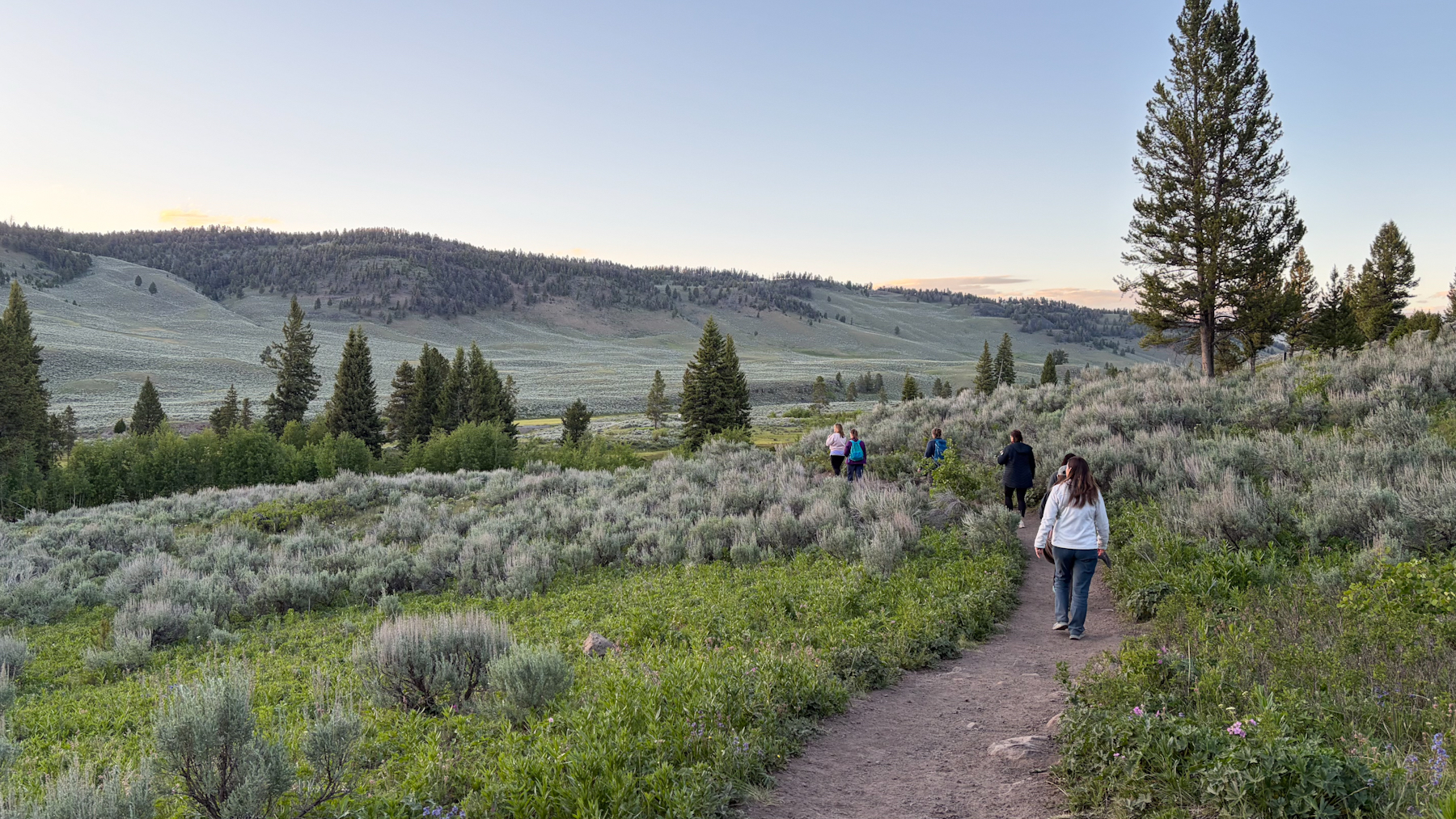
Walking on a trail
Hike to Wraith Falls
Yellowstone in Winter

“The Last Morning”

Can you believe it? This was our last morning waking up to a sky covered in stars, looking out the car windows eagerly looking for wildlife, and losing feeling in our fingers and toes. We spent our last morning as students of Ranger Mike at the Mammoth Terraces. Just like our students, we got distracted easily when Melissa spotted a Northern pygmy-owl. It was hard to focus with the excitement of the owl sighting, but we were able to record the temperature and pH of the hot spring under Ranger Mike’s guidance. It was a great educational experience to end our journey.

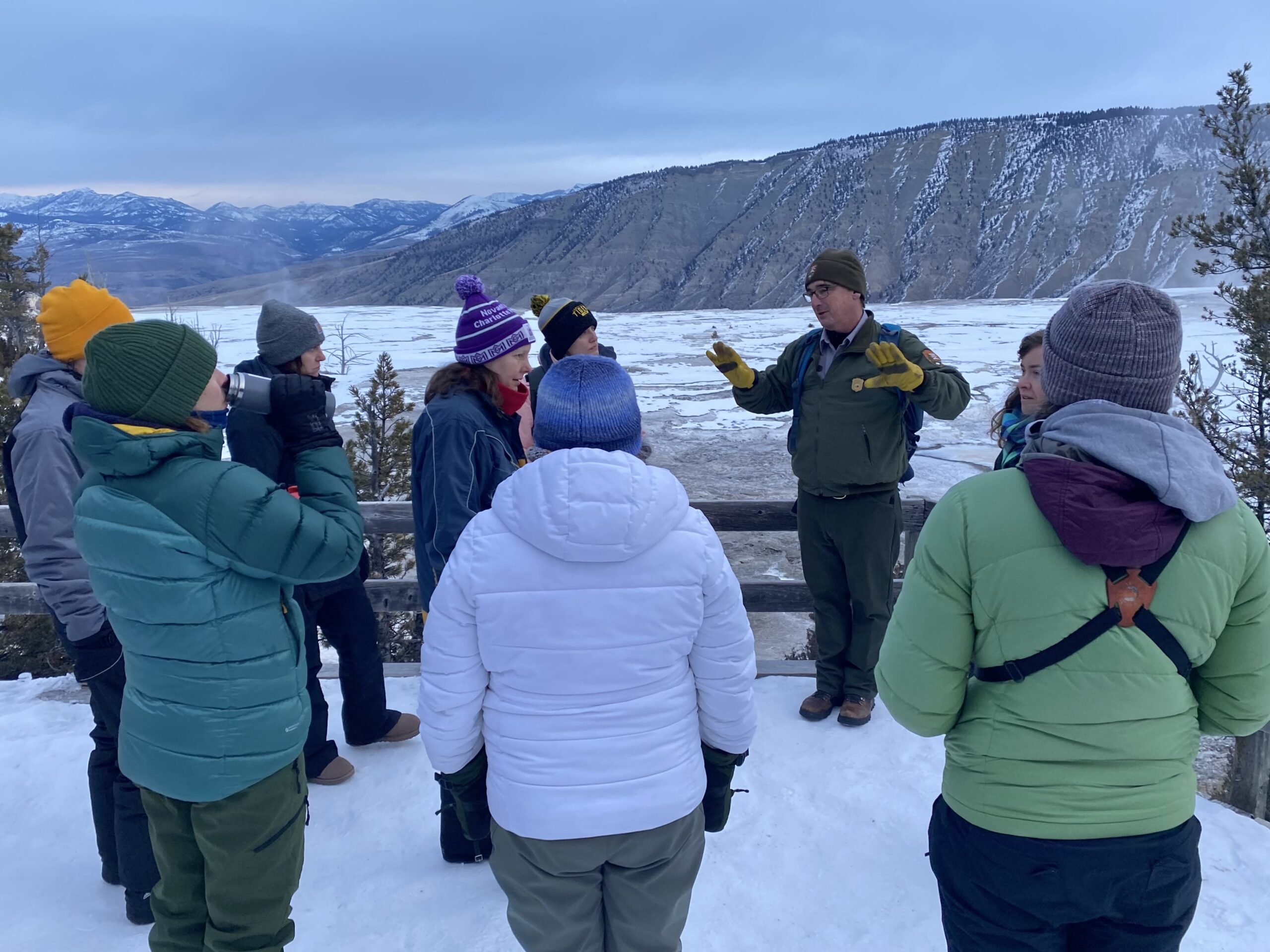
a group of people talking in snow
Learning about the Mammoth Terraces with Ranger Mike.

We waved goodbye to Yellowstone as we made our way back to the hostel to pack up and head to the airport. The drive to the airport gave us a nice send off surprise: we finally had falling snow!  It sparkled and shined as it landed on the evergreens and rock outcrops. Our wonderful leaders, Emma and Sam, got us safely to the airport in plenty of time to make our journey back to North Carolina.


Our last dinner together provided an opportunity for us to reflect on our experience. We spent time revisiting the goals we set for the week:

  • To learn about the winter adaptations of Yellowstone’s wildlife.
  • To practice our wildlife observation skills.
  • To learn about the geology that shapes this park.
  • To develop or deepen our appreciation of Yellowstone and its leading role in conservation.
  • To be inspired by the severity and serenity of winter.

Although we did not see every animal on our checklist, we gained so much more knowledge, community, and beauty than we ever could have expected.

We all left behind a piece of our hearts in Yellowstone, yet we plan to bring back many things—a sense of wonder and curiosity, time for silence and serenity, an understanding of the importance of conservation and history, and the lifelong bond that links us together and also with Yellowstone.

We are so full of the many moments that built these bonds whether it was the laughter that connected us over silly moments or the intrigue we shared as we huddled to look through scopes to spot wildlife. Yellowstone is truly a magical place. Each and every one of us are excited to bring this connection back to our classrooms and communities. See you all soon!

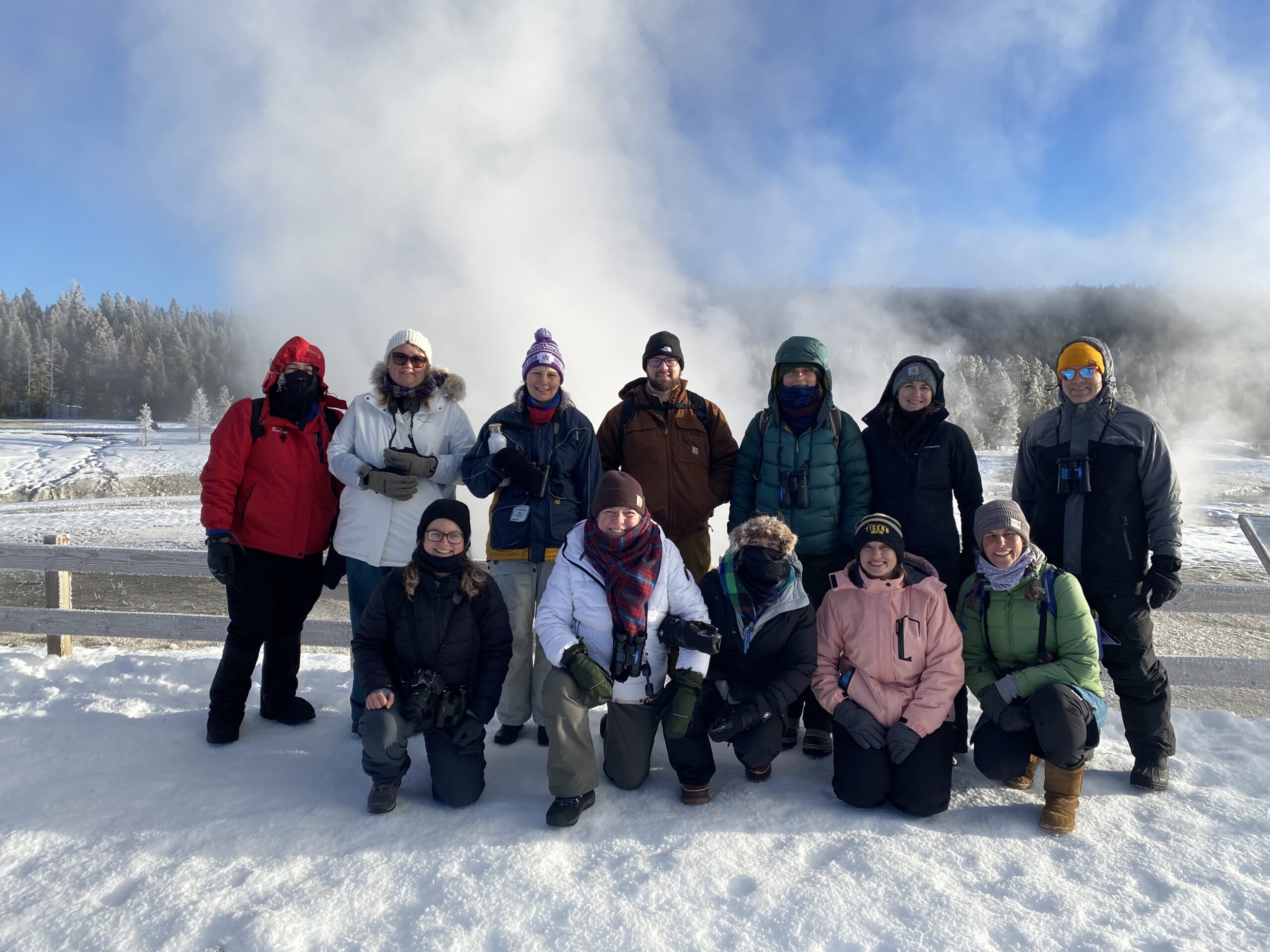
A group of people with steam behind them and snow below them
The group in the Upper Geyser Basin.
Yellowstone in Winter

“Is today the day?!”

Today we got up early and headed out to the Lamar Valley to see what wildlife we could find. First we returned to the lookout point where we met Kira on Thursday to listen for the wolves. But, alas, it was a mostly silent stop. It’s amazing how loud cars sound when moving through a natural landscape instead of moving through the towns and cities we live in!

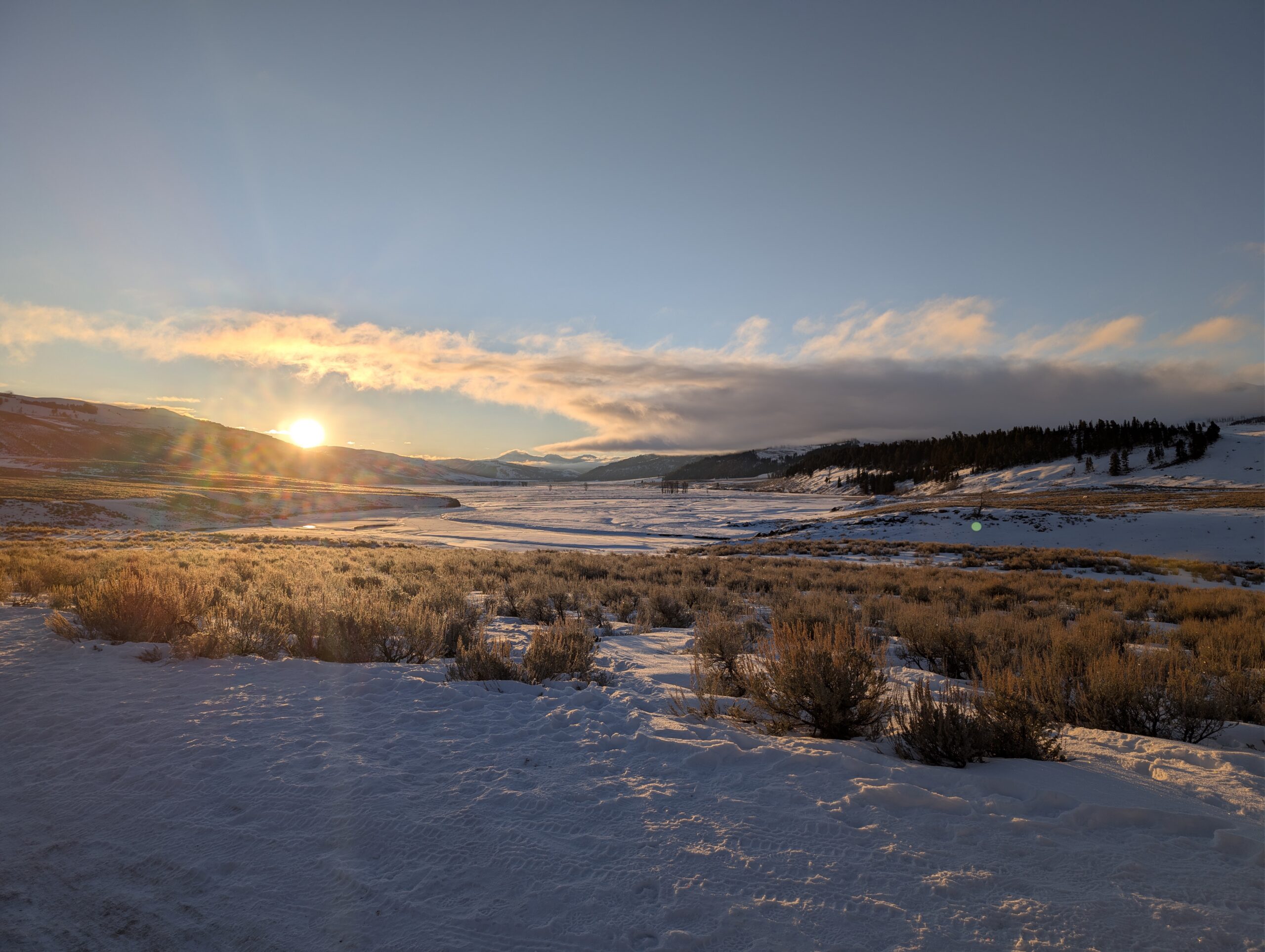
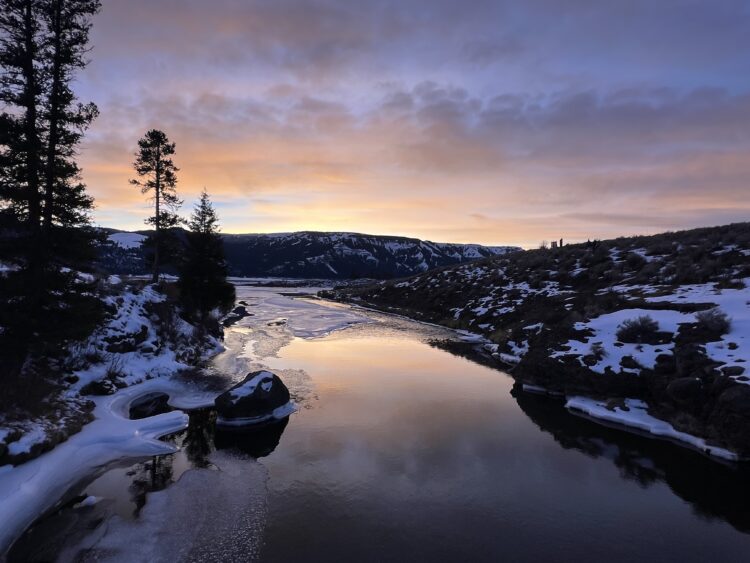
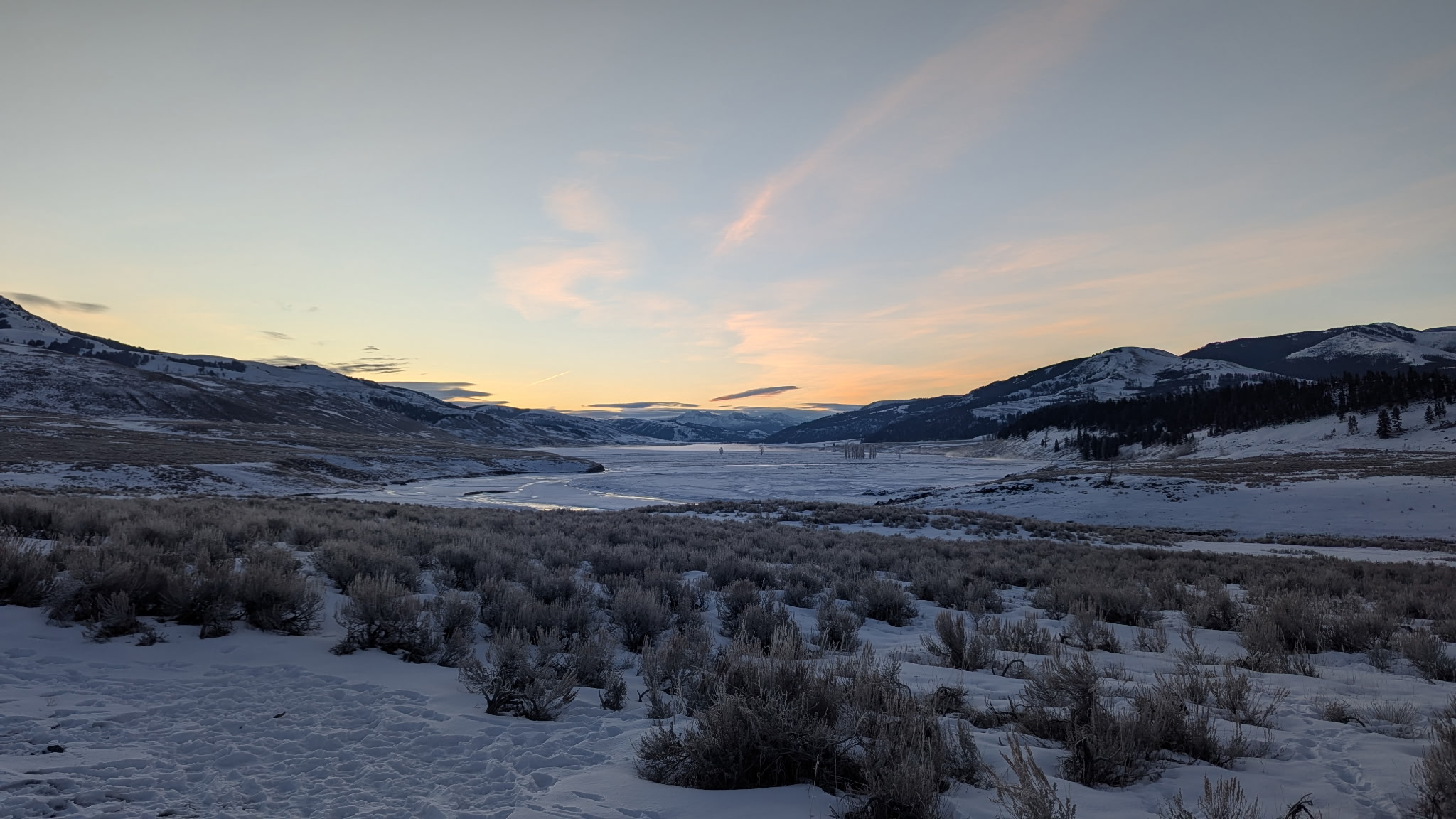
Sunrise over the Lamar Valley.

We made a few more stops before sunrise around 8:10 am. At one stop, Melissa pointed out the rendezvous point of the Junction Butte wolf pack, located by its proximity to the “Marge Simpson” tree (a tree that appears oddly similar to the shape of Marge Simpson’s hair). This area is used by the pack in the summer when their pups are growing, as it’s very close to their denning site. 

We continued on our journey, singing the Disney tune “I’ll Make a Man Out of You” from Mulan. But instead of “let’s get down to business,” we created new lyrics to match our goal of sighting a wolf, and sang, “Is today the day that we spot a wolf?”

Today seemed colder than yesterday even though the sun was out. The actual temperatures hovered under 12 degrees Fahrenheit and our cold toes offered confirmation of the chill.  By lunchtime it was warmer and we were able to eat without our gloves. The temperature soared up to a whopping 22 degrees Fahrenheit in the afternoon. 

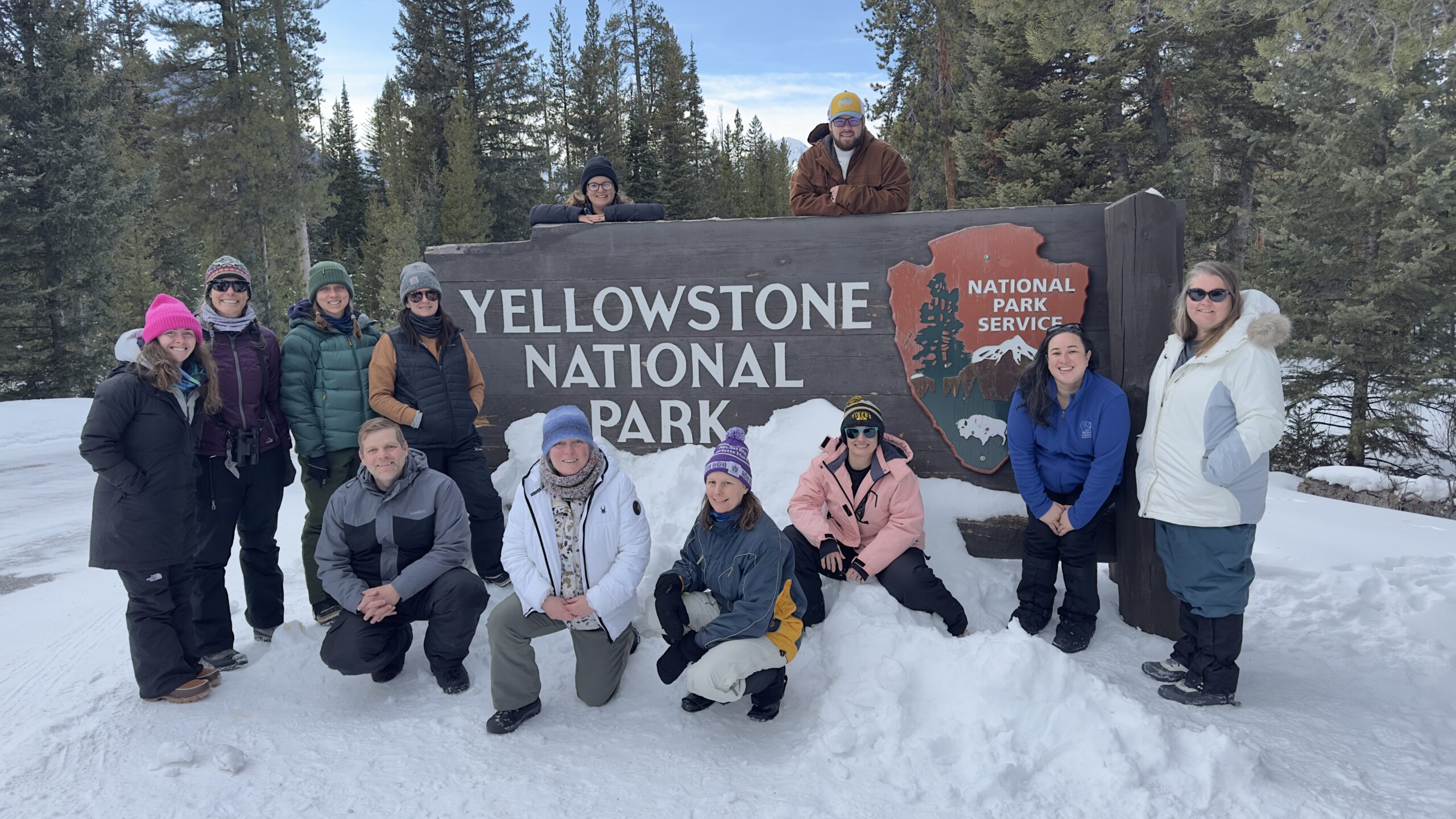
The group at the Northeast Entrance.

Throughout the day we searched for creatures large and small and helped each other find the animals using the clock method. The clock method is a way of helping each other locate wildlife by using the numbers on an analog clock face to indicate what direction we should look. We saw a golden eagle sitting on a branch and yawning. Close to the eagle were some American dippers standing in the icy water as they gathered food from below the shimmering surface. The ever-present bison nibbled on some grassy patches showing through areas of melted snow and occasionally wandered across the road in front of our cars. We saw bighorn sheep that kept their backs to our scope. Some camouflaged elk were barely visible under the trees east of the Roosevelt area.  Six coyotes traveled across the frozen landscape, catching small prey and taking care of their “business” as all living things do. A moose tried to play hide and seek with us by standing behind a tree. 

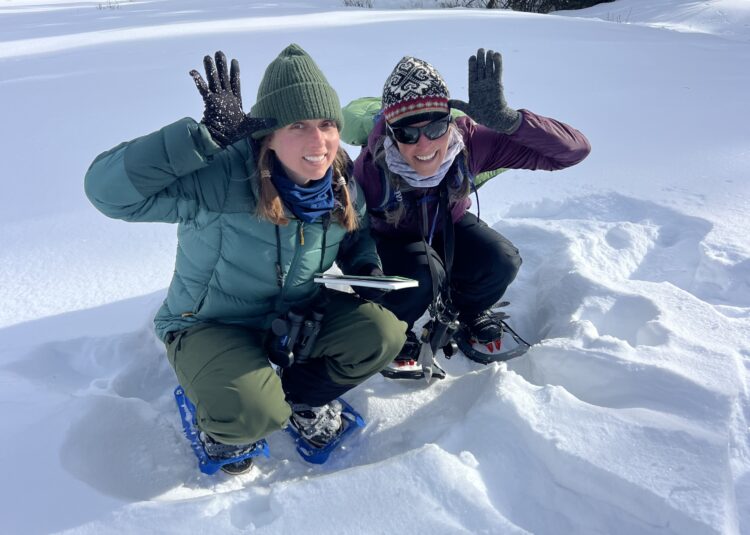
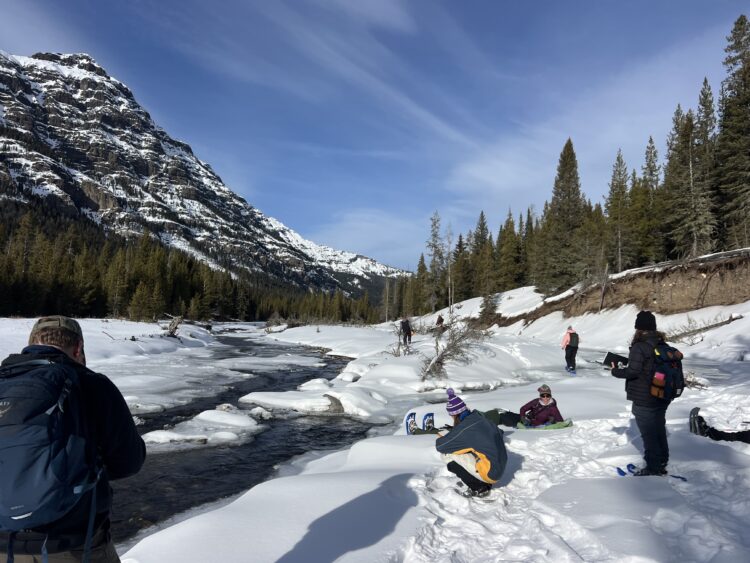
After lunch we visited sites along the main road looking for more wildlife before heading east through the park to find a good spot to go snowshoeing. We trudged through fresh snow and created our own path. The snow was waist deep and most of us stayed above ground, while Josh and Holly found ways to explore the subnivean environment. We found many tracks and even found a moose bed and bathroom. 

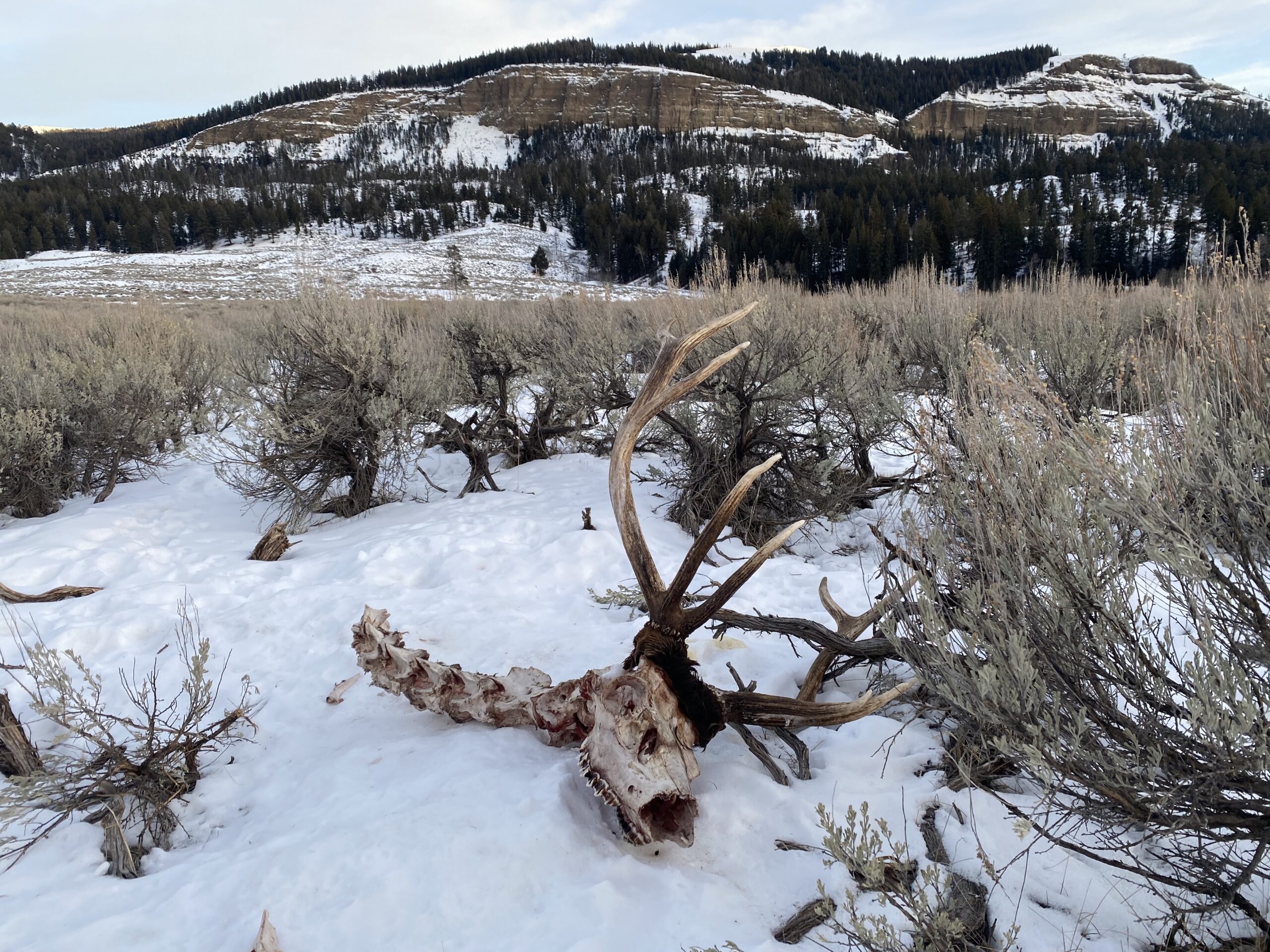
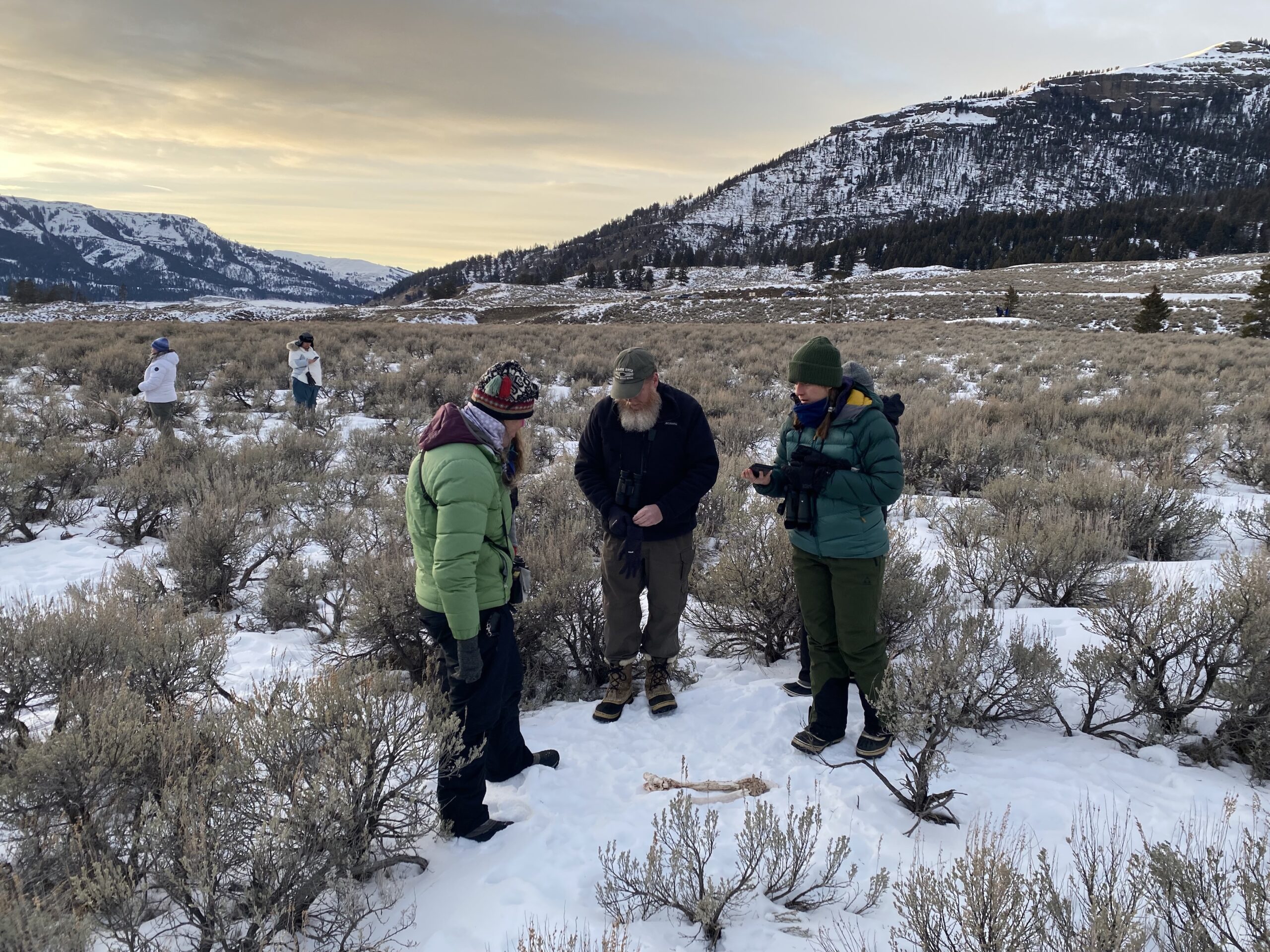
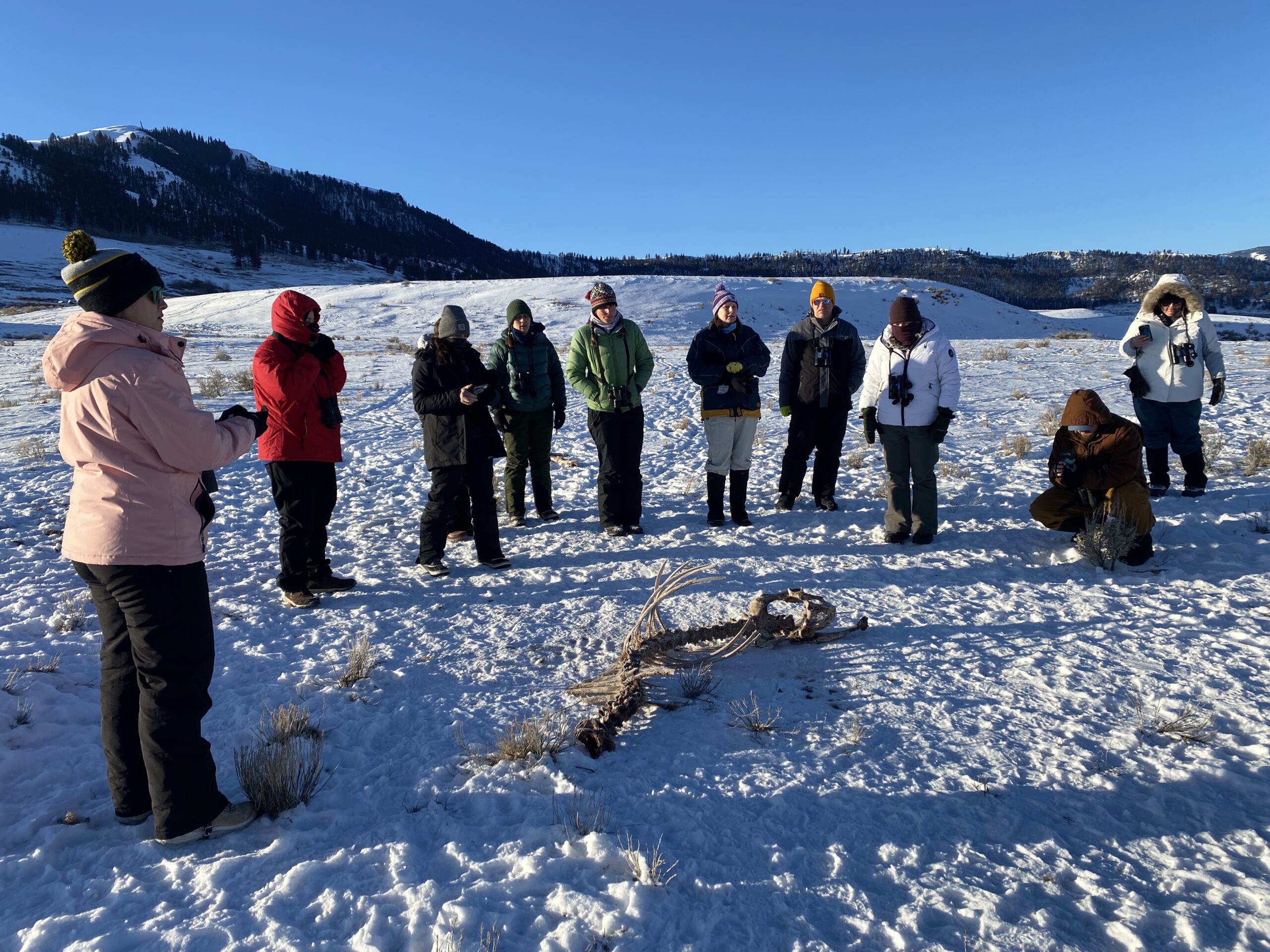
On the drive home we found an elk skeleton. We scoured the sagebrush for additional bones that were separated from the body by wolves. We found several bones and discussed the wolf behavior that resulted in this distribution of body parts. 

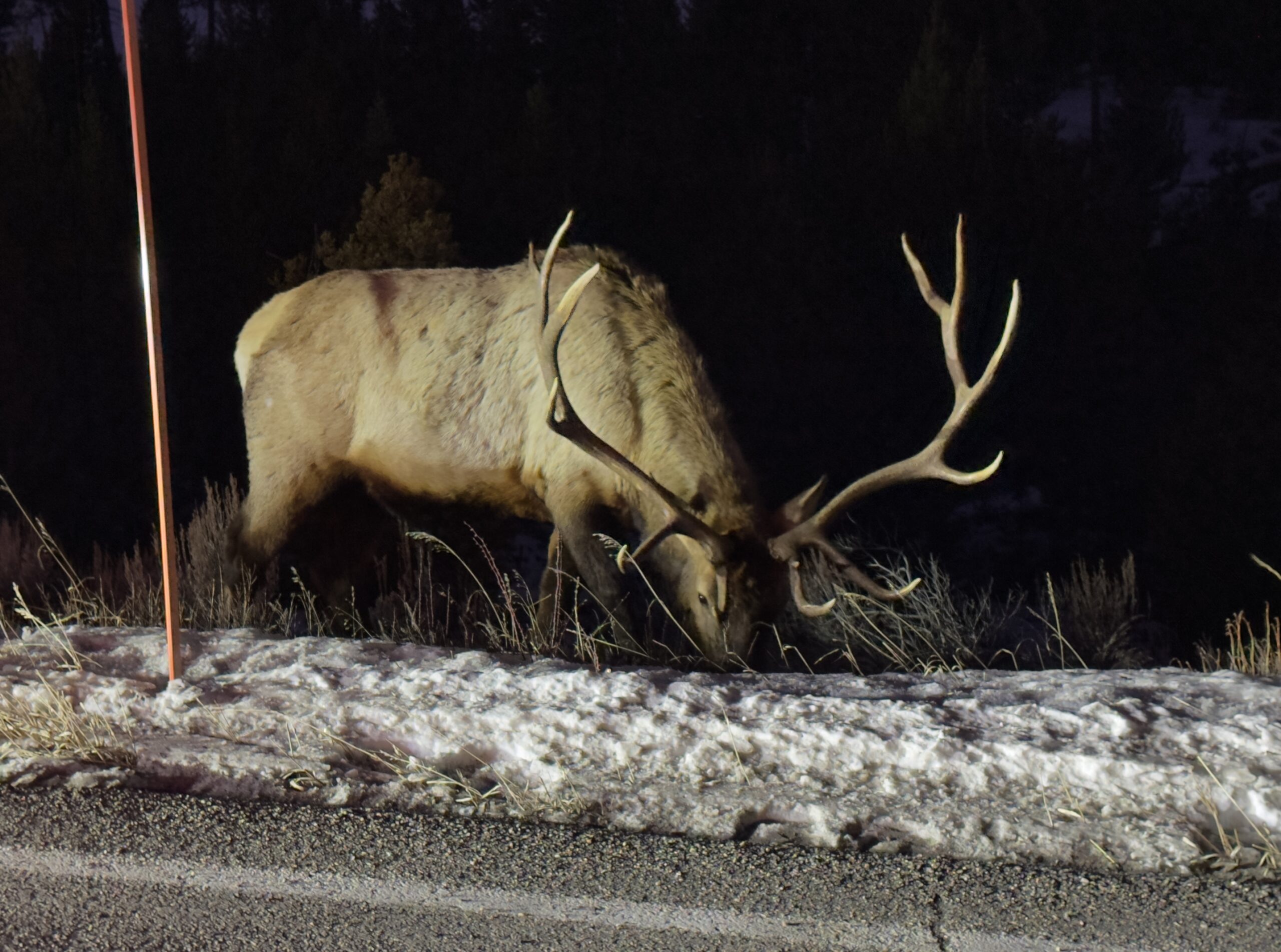
As we left the park tonight we encountered a surprise goodbye from a bull elk with 13-point antlers. Shoutout to Colton from Mr. Reed’s class – this is for you!

Our last wildlife sighting of the night was a large bull elk.

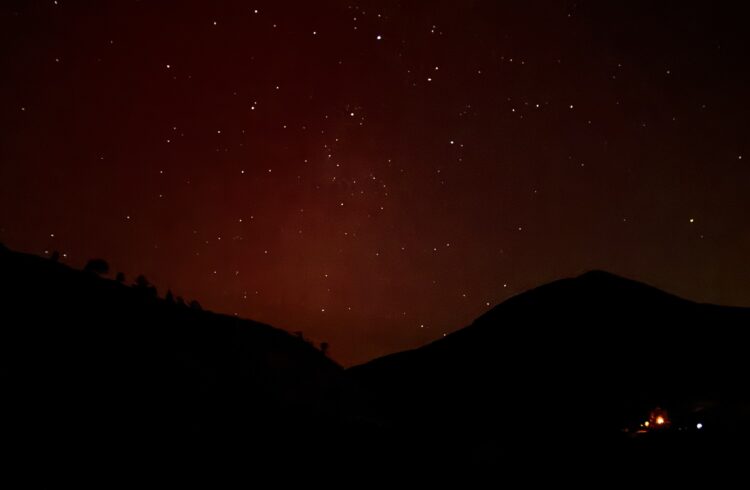
We arrived back at the cabin and found that the Aurora Borealis was shining overhead. It has been a fantastic last full day at Yellowstone – even if today was not the day for wolves.

Yellowstone in Winter

“Another Full Day”

Top three animals spotted by North Carolina teachers while traveling through Yellowstone in winter?

Survey says….

#1 Bison
#2 Coyotes
#3 Common ravens

Top three animals that North Carolina teachers want to check off their list while traveling through Yellowstone?

#1 – Gray wolves 
#2 – River otters 
#3 – The elusive ermines 

Our day started with breakfast at 5:30 am and then a pass through the Roosevelt Arch before the sun was up.

sunrise over snowy landscape
Sunrise in Lamar Valley.

We have learned that spotting wildlife is not for the faint of heart — patience is definitely a virtue in this line of work! We made several passes through Lamar Valley looking for wildlife, spotting many coyotes along the way. But the real star of the show this morning was how the ice glittered across the valley as the early morning sun rose. Our most impressive find was a bison carcass that had been picked clean by predators and scavengers. Our group made passes across the area like crime scene investigators, looking at every bite mark and clump of hair. It was truly learning brought to life for us.

People standing around a skeleton
Group looking at bison carcass.

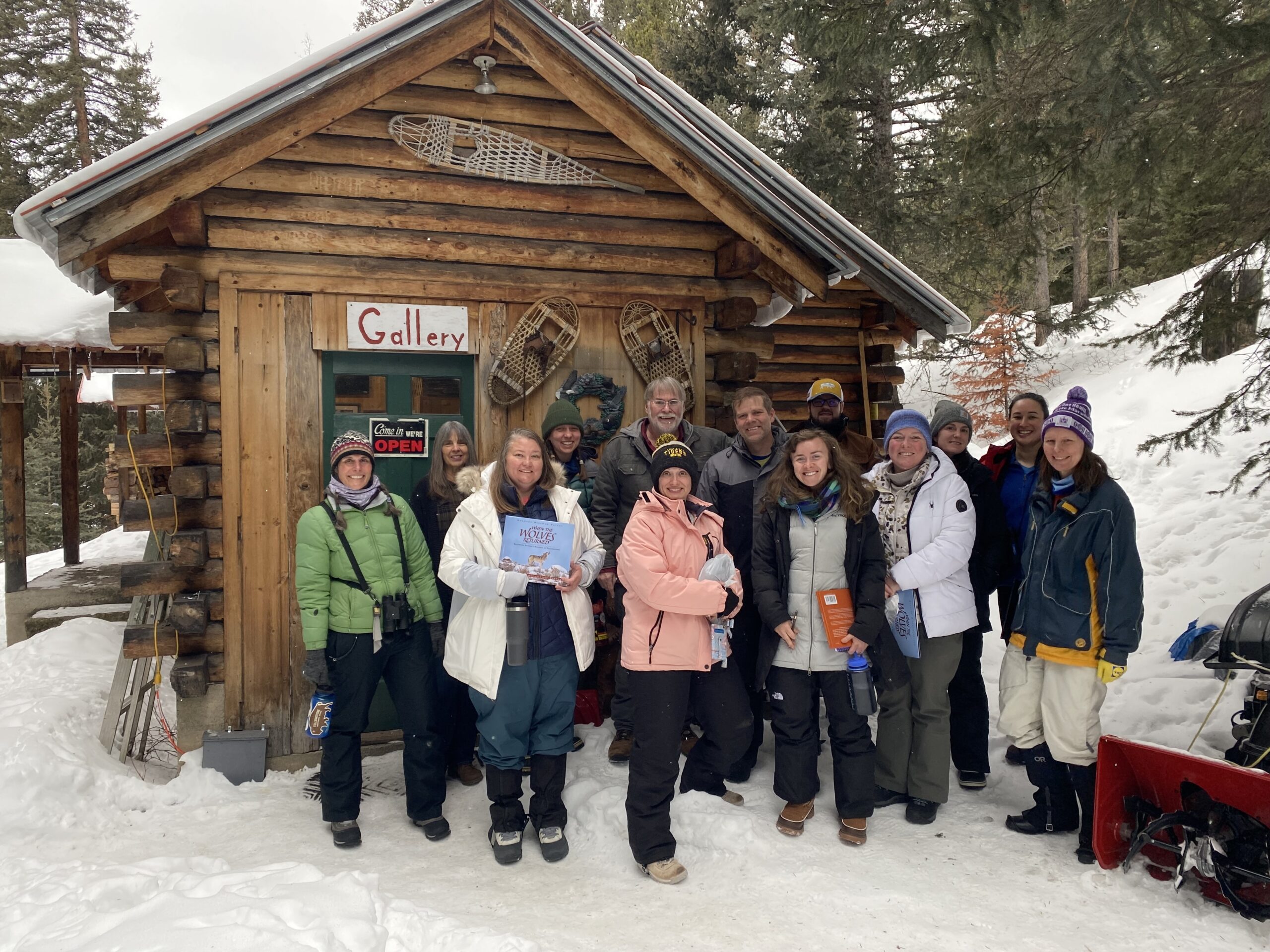
We moved through the park and made our way to Silver Gate to meet with acclaimed naturalists and wildlife photographers Dan and Cindy Hartman. Mr. Hartman spoke with the group about his work, especially photographing and filming great gray owls and pine martens. The group thoroughly enjoyed time bird watching around the Hartman’s home.

Group of people in front of log cabin
Enjoying a morning learning from Dan and Cindy Hartman.

We finished our day animal spotting. No luck with wolves, but we did catch another look of the mountain lion and her cubs on the side of Mount Everts and saw herds of pronghorns and bighorn sheep outside of Gardiner. 

The group also took a dip in the Yellowstone Hot Springs, a local place that utilizes heated water from a hot spring in its pools.  Another full day. Fingers crossed that we can mark more animals off the list tomorrow!

People in a hot pool
At the Yellowstone Hot Springs.
Yellowstone, Yellowstone in Winter

“Screensaver or Real Life?”

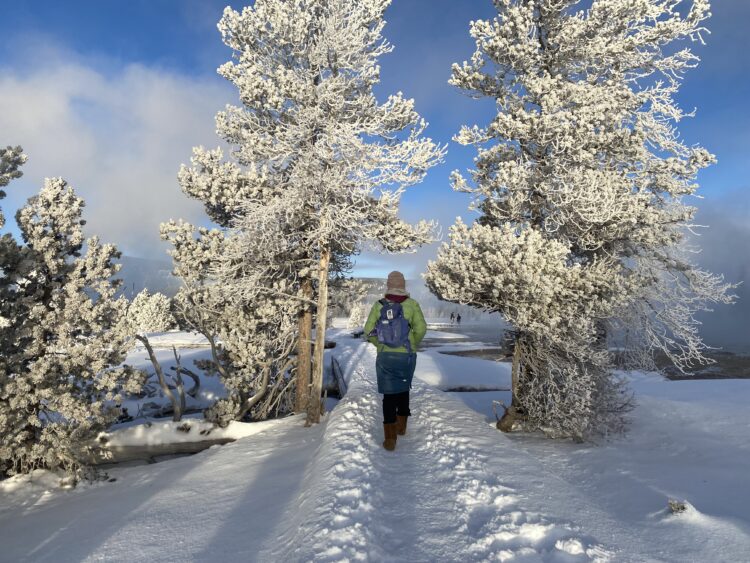
We woke up early from our home-away-from-home at the Old Faithful Snow Lodge. It was a frigid -3 degrees Fahrenheit as we waited, silently anticipating Old Faithful’s eruption. At 7:31 am Old Faithful made an appearance, spreading a sense of awe within the group. Today was filled with trees of rime ice, nature reflection, geysers, rainbows of colors, and so much more. 

Our walk through the Upper Geyser Basin had so many surprises. We saw Grand, Beehive, and Castle geysers and ended up looking like some of the rime ice trees as our hats and hair froze around us. 

We listened for geyser gurgles, looked at the steam, and saw diamond dust. Anne Coe, an American contemporary painter, summarized the Geyser when she said, “It is the place where the center of the earth finds an exit and gives us a glimpse of its soul” (1998). As we turned every corner, the beauty of the landscape reminded us of the photos we’re used to seeing on our computer screens. 

After the geyser basin walk, we loaded the snowcoach to continue our journey through geyser land. Only a few minutes down the road, we stopped to go for another hike. Sun shining on our faces, we made our way down the snow-covered trail to Thumper (also known as Black Sand Pool). We spent the moment reflecting on the sounds, colors, and feelings that Yellowstone has evoked in us thus far. We concluded that the uninterrupted beauty of Yellowstone has rejuvenated us all.  

Taking a moment of stillness to reflect on our experience so far.

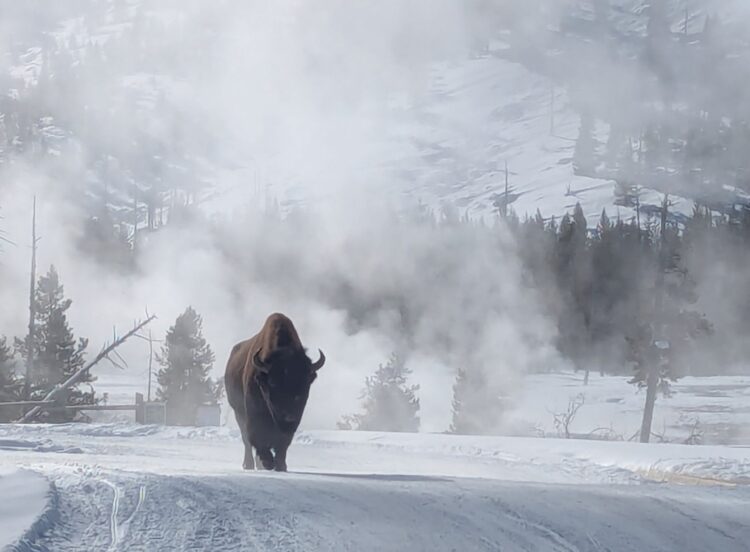
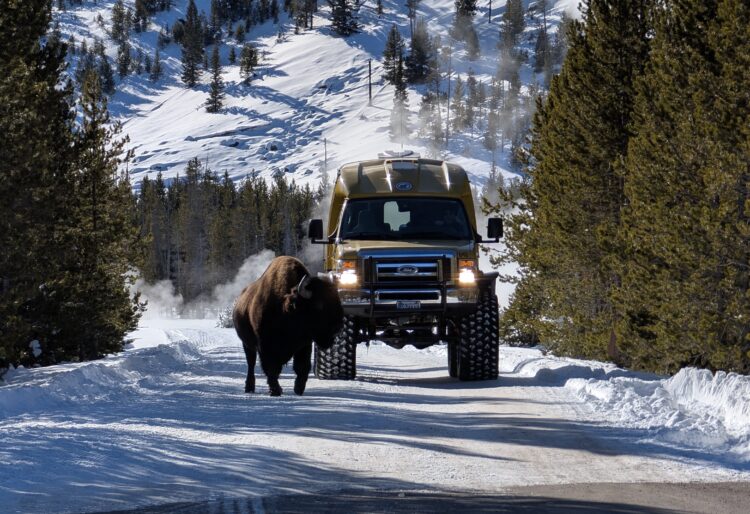
Coming back from the geyser, we found a large bull bison blocking our path to the snowcoach. Our fearless driver Norm went to get the snowcoach for us as we scurried quickly up the road, looking back over our shoulders constantly. We entered the vehicle quickly and breathed a sigh of relief to see the bison join another friend in a nearby meadow. 

The Grand Prismatic Spring was not quite what you might imagine, as the famous photos show what an aerial view would look like and we viewed it from the boardwalks surrounding the springs. Through all the steam, we were stunned to see tiny beetles about the size of a pinpoint thriving in the runoff from a hot spring. 

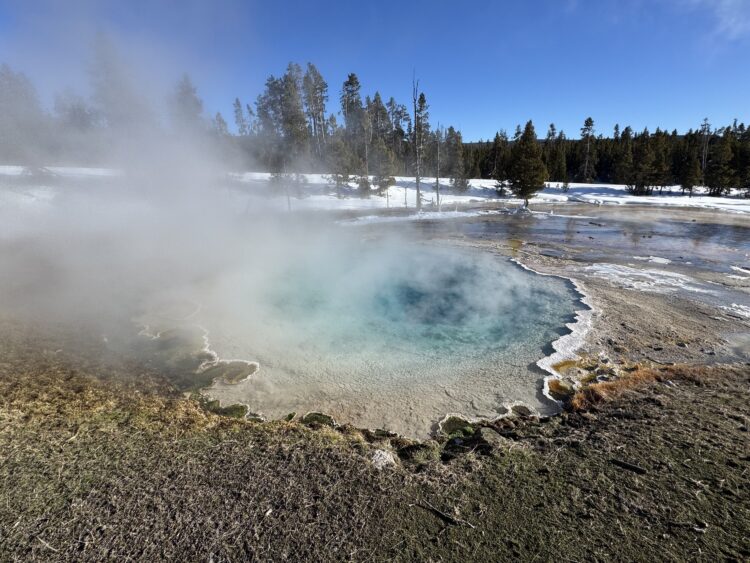
Silex Spring at Fountain Paint Pots had some of the most vibrant colors of the thermal features we saw. It made an artist’s palette pale by comparison, as different microorganisms give thermal features their beautiful colors. When we paused to take in the beauty, we noticed the steam makes an even more special effect: there was a radiant rainbow halo around our shadows when they were cast in a hot spring’s steam.

How many colors can you spot in Silex Spring?

After a brief delay as we waited for a red fox that seemed to enjoy sitting in the middle of the road, we arrived back at the lodge. After a long, busy two days, it was nice to settle into another cozy evening. We can definitely check the box off for geysers. Onto more wildlife tomorrow!

Yellowstone in Winter

“A Day at School… Yellowstone Style”

Imagine a school day that starts before the sun comes up, where the dress code is wear as many layers as you can, and animal spotting tells you to move from place to place instead of the tardy bell; where teachers’ passion and enthusiasm for their subject matter is met with students eager to learn. If you can picture such a day and such a place, then you would’ve been with us today as we toured the Lamar Valley.

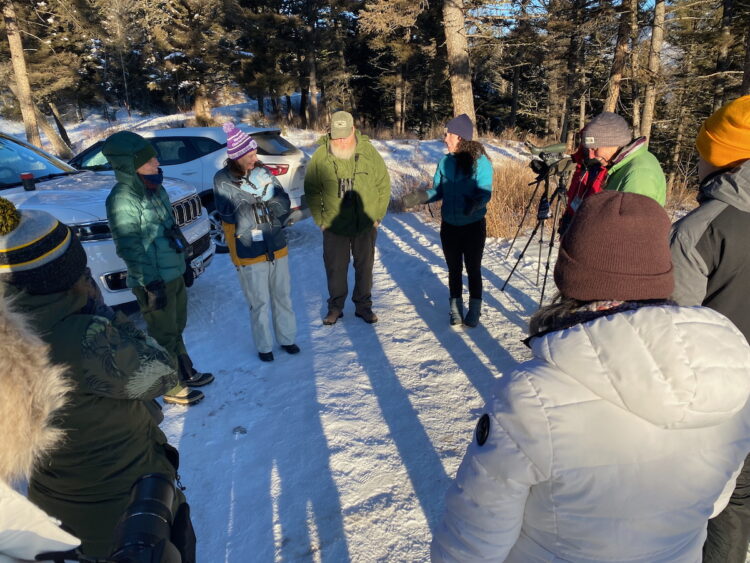
Our day started with a speedy pass through the Roosevelt Arch while the moon was still up. Our first “class” of the day was with Kira Cassidy, the program manager with the Wolf Project in Yellowstone. Surprise guest was Joe Madison with the Red Wolf Project in NC! No wolves spotted just yet…but we are holding out hope.

A group of teachers stands outdoors in a circle with two biologists that study wolves.

Wolf biologists Kira and Joe teach the group about their favorite subject matter.


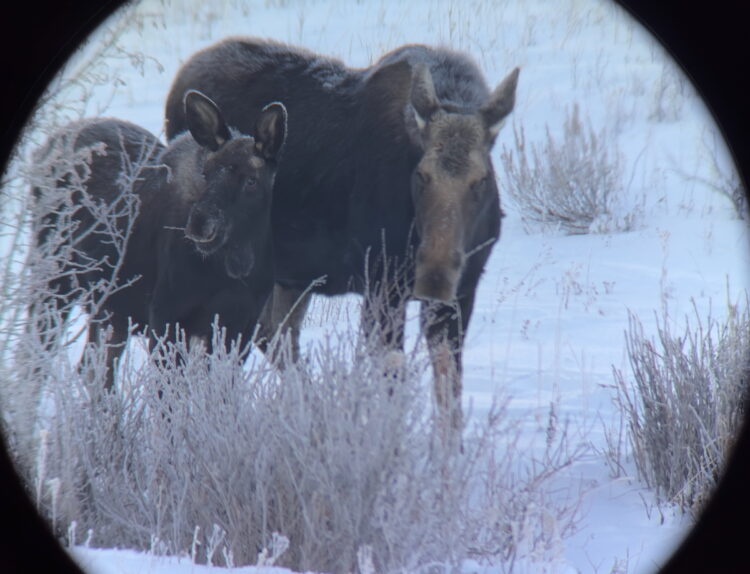
Second block was an Animal Science Field Trip. As we drove around Lamar Valley, sudden stops on the side of the windy roads were not uncommon. No….no one got car sick. We were on a scavenger hunt to spot the animals in the distance. With our binoculars at the ready, we got amazing views of an adult moose with a calf. Spotting bison was not a difficult task, especially when they were walking along the side of the road. A quick stop was made beside a river to catch a sighting of a majestic bald eagle flying over trying to catch up to the flock of mallards.

Adult moose with calf in a snowy field
Lamar Valley revealed many hidden residents today- here, an adult moose with calf.


We stopped in Lamar Valley, with an overlook across the Lamar River for lunch and animal watching. A pack of coyotes joined us. The pack consisted of 6-7 coyotes? No, more like eight, which is an unusual number in Yellowstone.

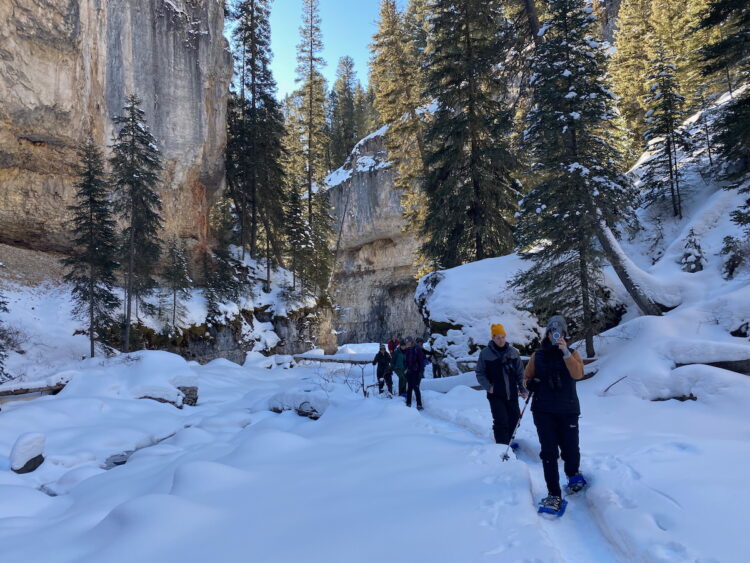
PE today consisted of snowshoeing at Pebble Creek, where we spotted a couple of grouse and were quizzed on our animal track identification skills. Matt gave his expert topic speech when we spotted an American dipper! Our snowshoe trek ended in a race – can you guess who won?

A group of teachers snowshoes through a rocky gorge

Physical Education has a whole new meaning at elevation and in the snow- the group learned new skills and had fun while snowshoeing.

Instead of bus traffic holding us up from going home, we hit a bison jam!

After-school remediation consisted of reviewing tapes of eastern NC red wolf behaviors with expert Joe Madison.
A full day.

Yellowstone in Winter

“No Time For a Cat Nap”

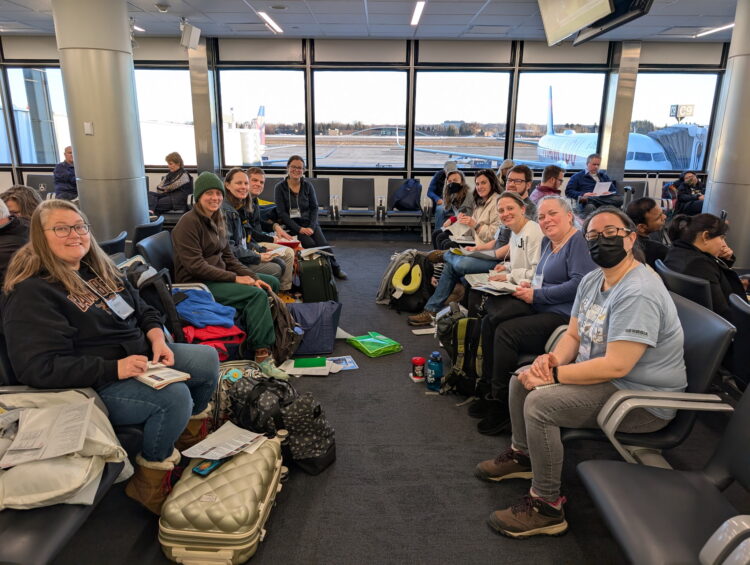
A group of teachers sits in the terminal at the airport waiting for their flight
Layover break on our way to Montana.

We started the day by meeting at the Raleigh-Durham airport at 4am, which meant that most of us started much earlier than that. One team member taught all day and then drove through the night to get here. Over 12 hours later, we received exciting news: the possibility of seeing something never before seen on a Yellowstone Institute trip!

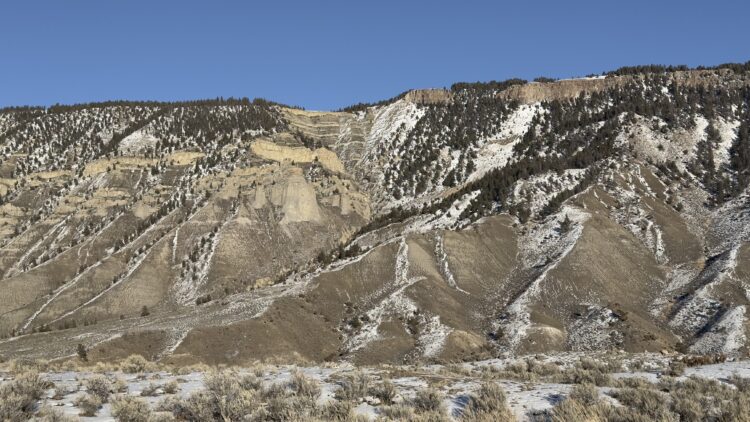
A dry, rocky ridgeline dusted with snow

Our treasured sighting of the day is right near the top ridge… very far away!

Can you see it?

We all came to Yellowstone with different goals and ideas, but there was one constant: to take in the serenity and grandeur of the park. We spent time worrying about packing warm enough clothes, preparing lesson plans for our subs, and wondering how long each day would be before each night’s overnight rest.

With all of the planning ahead of our first day, we’ve already had to practice adapting to a new schedule. We’ve learned that WE don’t run our itinerary – Yellowstone and its wonders do.

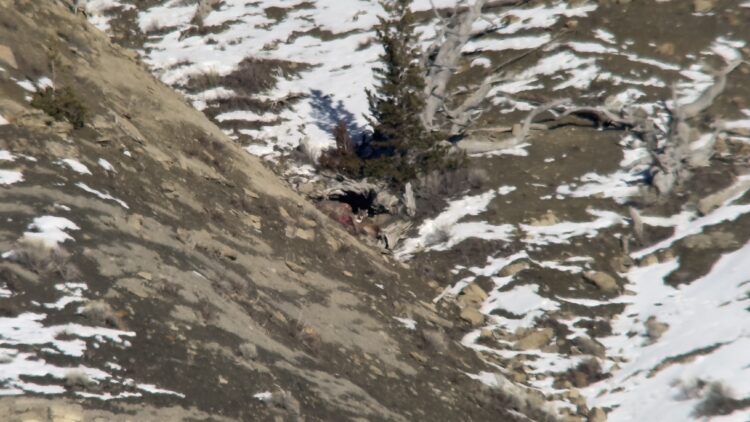
Let’s try again, can you see it now?

A distant view of a mountain lion eating an elk carcass on a dry, rocky slope

Look right in the middle – it’s a mountain lion on an elk carcass!

That’s right, we saw a mountain lion! Feeding on a carcass!

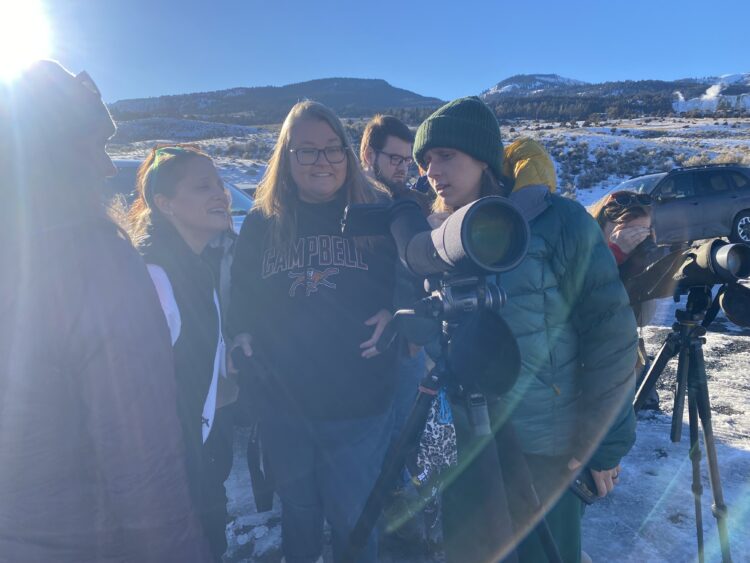
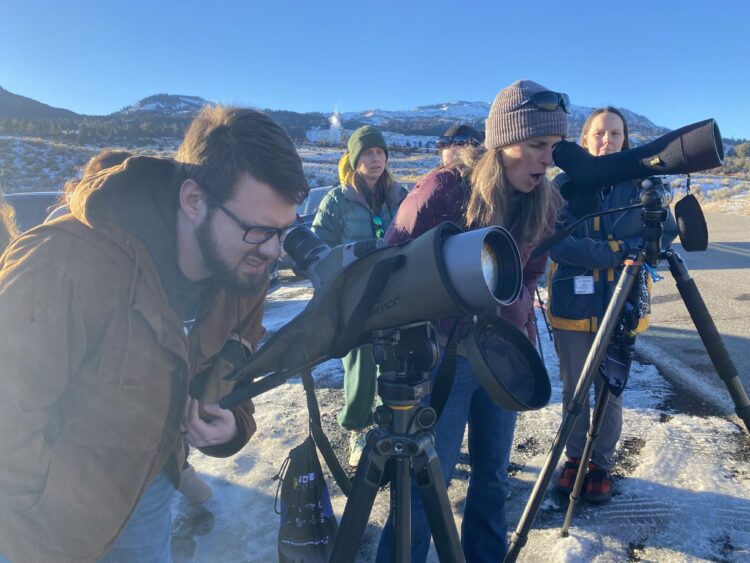
No matter how sleep deprived or ready to settle in we were, the mountain lion took precedence, and we got to see a once-in-a-Yellowstone opportunity. We gathered around the scopes to witness our first big moment of awe as a group.


Our first day couldn’t have started any better. As we reflected on our day during our first full team meeting, it made us realize this is only the beginning. Stay tuned for our next adventure…but we’re off to finally hit the sack!

Yellowstone

“Lessons From The Geyser Gazers”

 Our last day in Yellowstone began with a stroll through the Upper Geyser Basin. While walking the boardwalk, we had an opportunity to reflect on all the things we had seen and done. We recalled the calm and intentional bison, moving at a pace that made sense to them, the quirky pika that made their home in the talus slope, and the white pelicans moving and working in harmony to catch their prey.

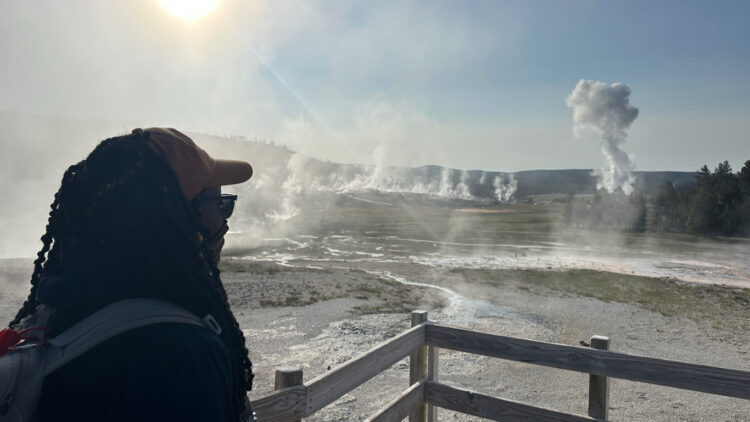
Kisha looking out at the steam on Geyser Hill

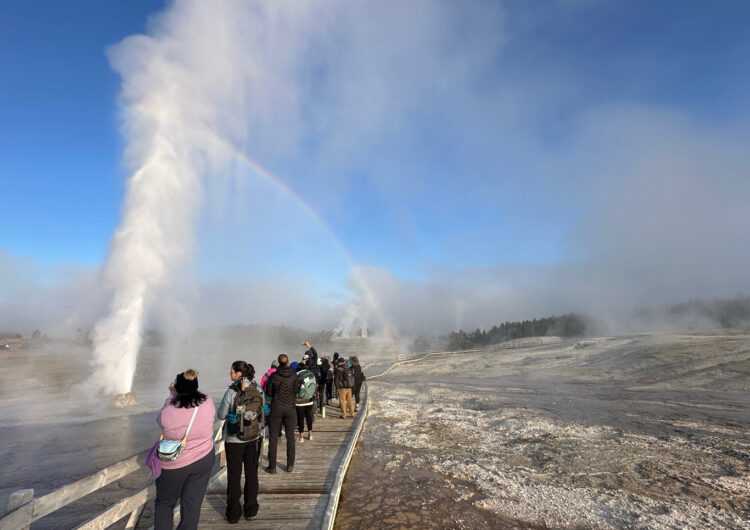
We eventually came across a few Geyser Gazers who were observing Beehive, a geyser that boasts an impressive 200-foot eruption. It was clear that the gazers had an immense love and reverence for the park. Their enthusiasm was contagious, and eventually everyone in our group was just as excited as they were!!! The highlight of the eruption was a double-rainbow that appeared during the display. Our group instantly realized why the Geyser Gazers do what they do!

Beehive and its rainbow!

Our interaction with the Geyser Gazers today yielded a few lessons for the group. Firstly, good things come to those who wait. The Geyser Gazers had to wait patiently for hours, but the final result was definitely worth it! Secondly, seek out like-minded individuals when pursuing your passion! It was clear that the Geyser Gazers had found their tribe, and that made their pursuit all the more enjoyable. 

After interacting with the Geyser Gazers, we feel that it is only right to issue a challenge to our readers: take time in the upcoming weeks to connect with your passion and seek out a support system to help you reach your goal! Sending love and light from Yellowstone!!

Yellowstone

“Visiting Grand Teton”

What a beautiful day. The sun is up and the trees stand strong, ready for the unpredictable wildness of Yellowstone. We couldn’t feel more alive and glad to be here.

Hello Grand Teton National Park! What a beautiful landscape you are! This incredible mountain range is formed by fault uplift and glacial erosion. These majestic mountains are still growing. Grand Tetons are known for their dramatic mountain scenery and diverse wildlife like pikas, bald eagles, red-tailed hawks, pronghorns, beavers, moose and many more creatures.

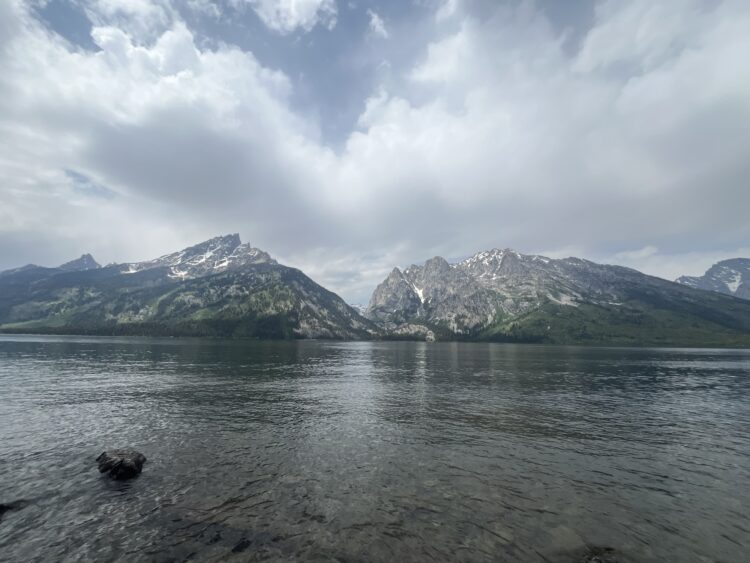
View of the Teton Range from Leigh Lake
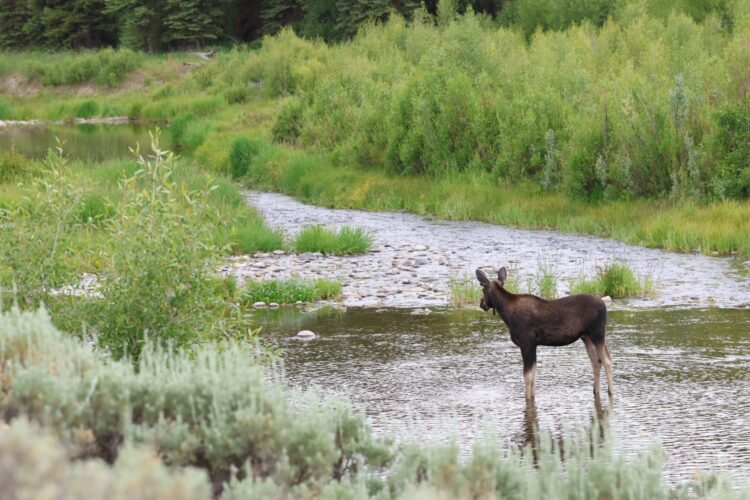
A young bull moose

There is moment in life that everybody needs to stop, breath, and contemplate life, reflecting about past, present and future, knowing that who we are right now is in permanent construction, and we can be remolded, deconstructed, and rebuilt  in any moment. It is our prerogative and decision to do it.

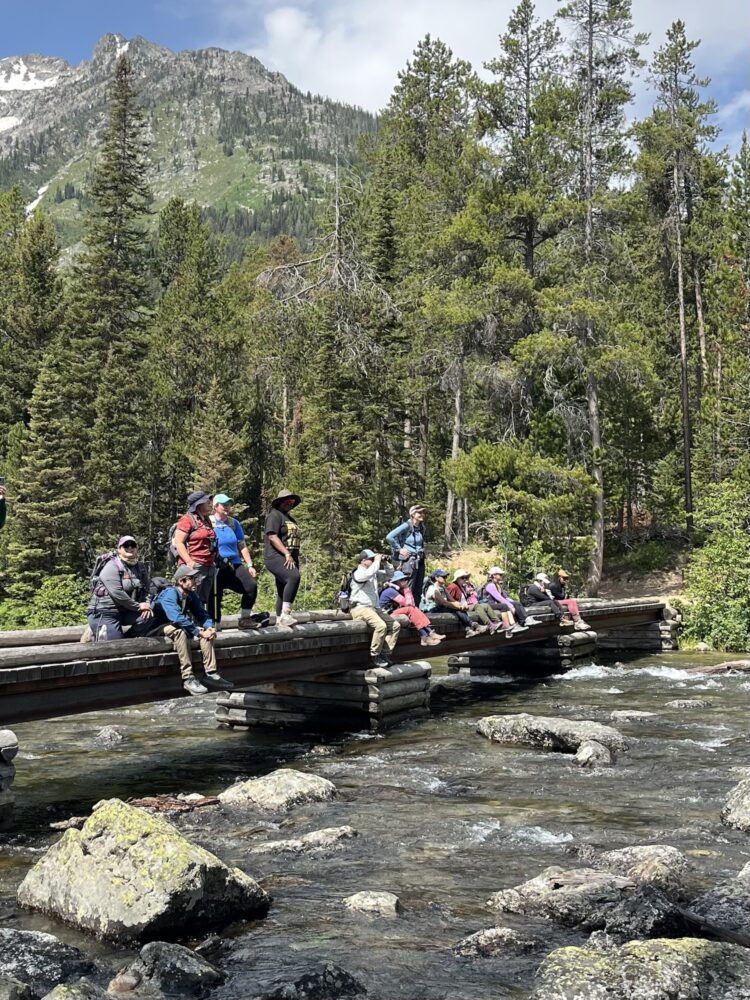
A quiet moment on our 2 mile hike

Here at Grand Teton time seems to stop. A place where there is no a beginning or end, where the sky, land and water interplays, and the magic of our surroundings overflows our expectations.

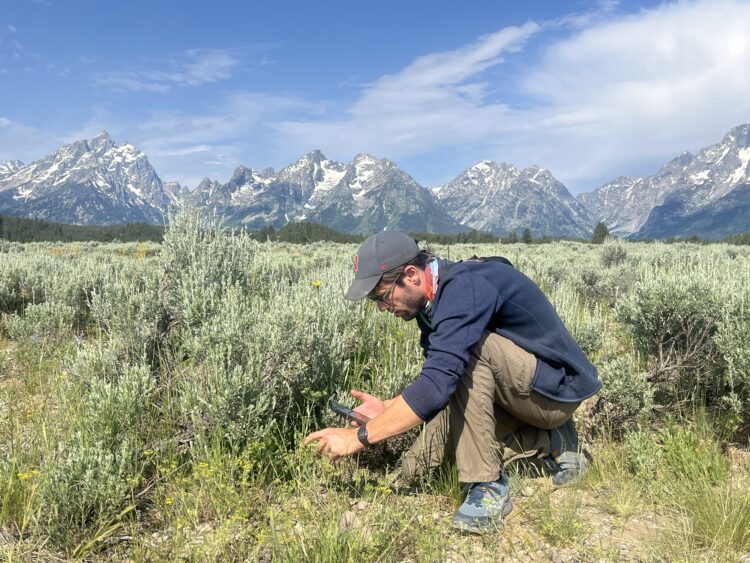
Fred stopping to look at insects

At Laurence Rockefeller Nature Preserve, there is an incredible hidden gem – their visitor center. This center tries to draw on all your senses and immerse yourself fully in nature. A quote recorded on the wall there is: “The scales of nature will always seek equilibrium. A feather can tip the balance” -Terry Tempest Williams.