Yellowstone in Winter

“Our Children are Our Future”

We entered Yellowstone again in complete darkness and experienced the night sky. The number of stars far exceeds what most of us experience in North Carolina. From there we entered Lamar Valley just in time to view the sun coming up over the Absaroka mountains. It was the most spectacular view.
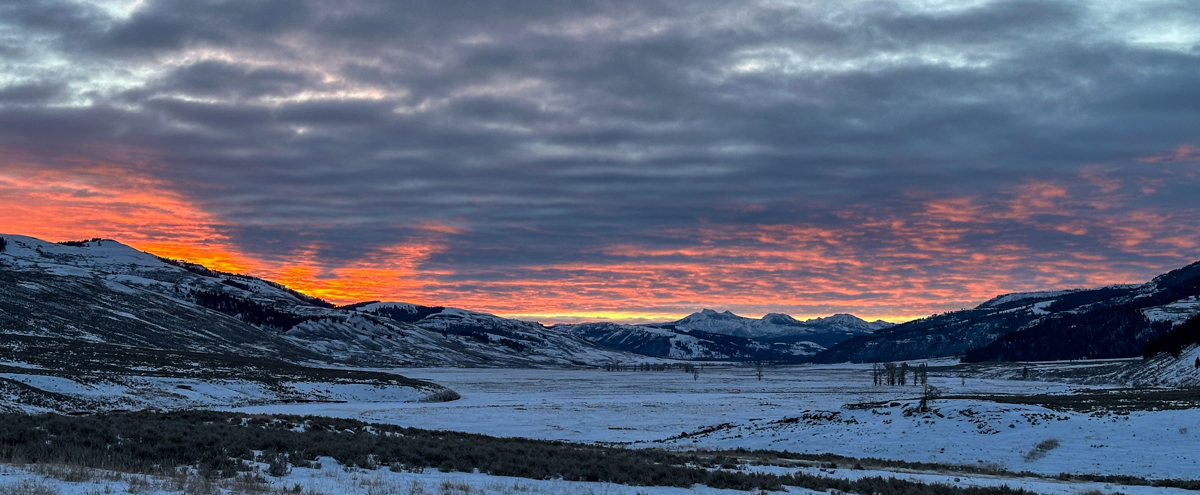
Lamar Valley at sunrise

As we continued into the park, we spotted a bison carcass being scavenged by a juvenile bald eagle and approximately 25 ravens. Maybe 50 yards east were 2 bedded wolves, lying in the snow across the valley. We wondered if maybe they had fed on the carcass which would explain their satisfied, docile behavior.

Afterwards we continued on to Silver Gate, MT to the home of Dan and Cindy Hartman but before we arrived we were blessed to find 2 moose, a cow and a calf, having a morning meal of willow plants. Dan and Cindy, who are wildlife photographers and naturalists, shared with our group some of their recent work creating movies about nature. Our feature film today was called “Harvest,” which was his new film on the impact of the loss of whitebark pine trees on a multitude of animals. This film was based on his study of middens, which is a cache of pine nuts made by red squirrels. After the video we talked about the invasive species, pine bark beetle which is killing off many of these tress and affecting the ecosystem. He shared with us that his mission is to encourage others to respect and appreciate nature through a deeper connection with all living things. One of our team asked Dan what we could do to help protect whitebark pine. His response: “It’s going to be up to our children to save them.” As we were leaving the Hartmans we were thrilled to see a beautiful fuzzy pine marten, a member of the weasel family, scampering up a snag outside his cabin. In addition, we saw numerous birds including some Clark’s nutcrackers, Steller’s jays, mountain chickadees, pine grosbeaks and a red-breasted nuthatch.
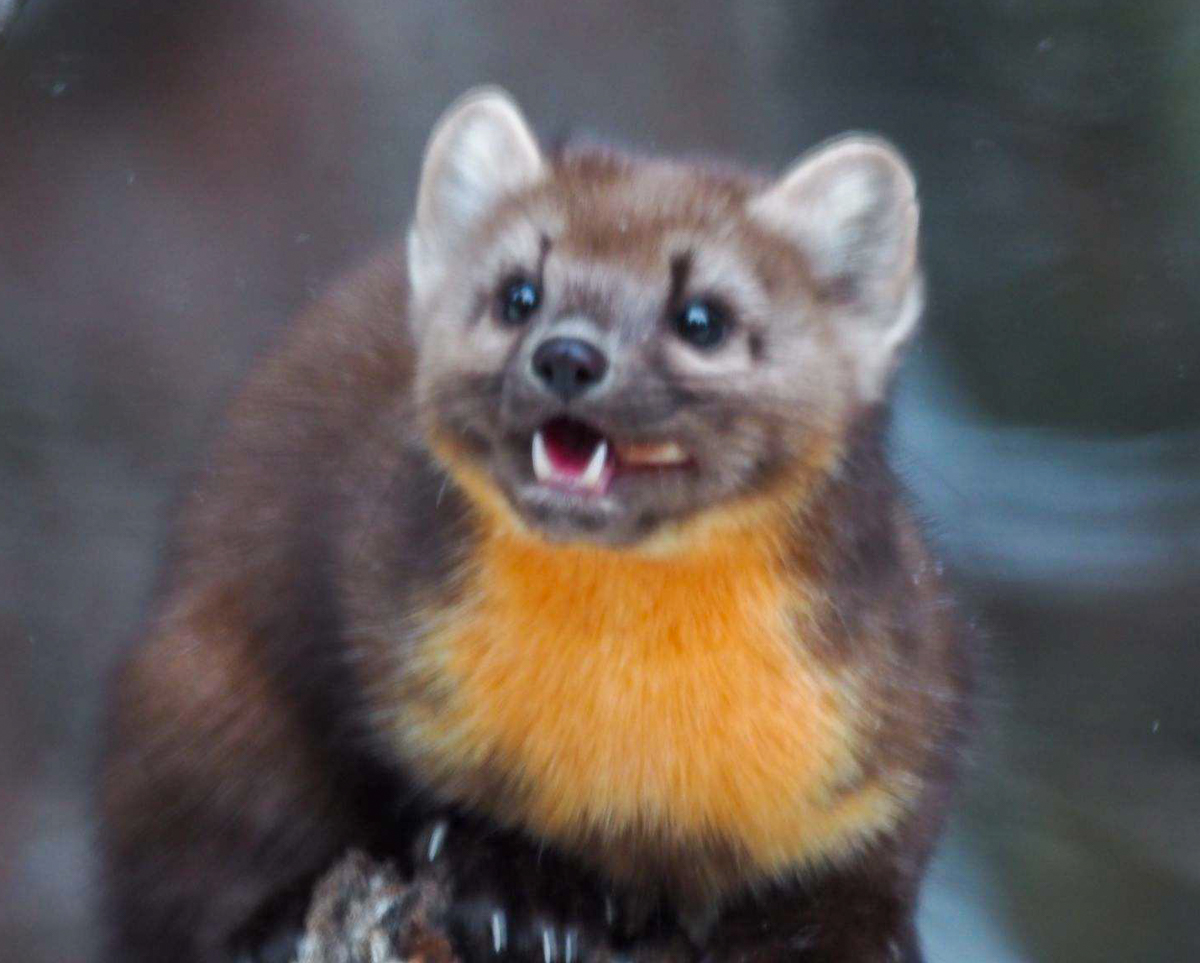
Pine marten at Dan and Cindy Hartman’s house. Photo by Adam Smith.

The other animals we spotted today include: lots of bison, more dippers, ducks, pronghorns, eagles, elk, ravens, a ferruginous hawk and two red foxes. We ended our day by exiting the park during daylight hours so that we could see the Roosevelt Arch.
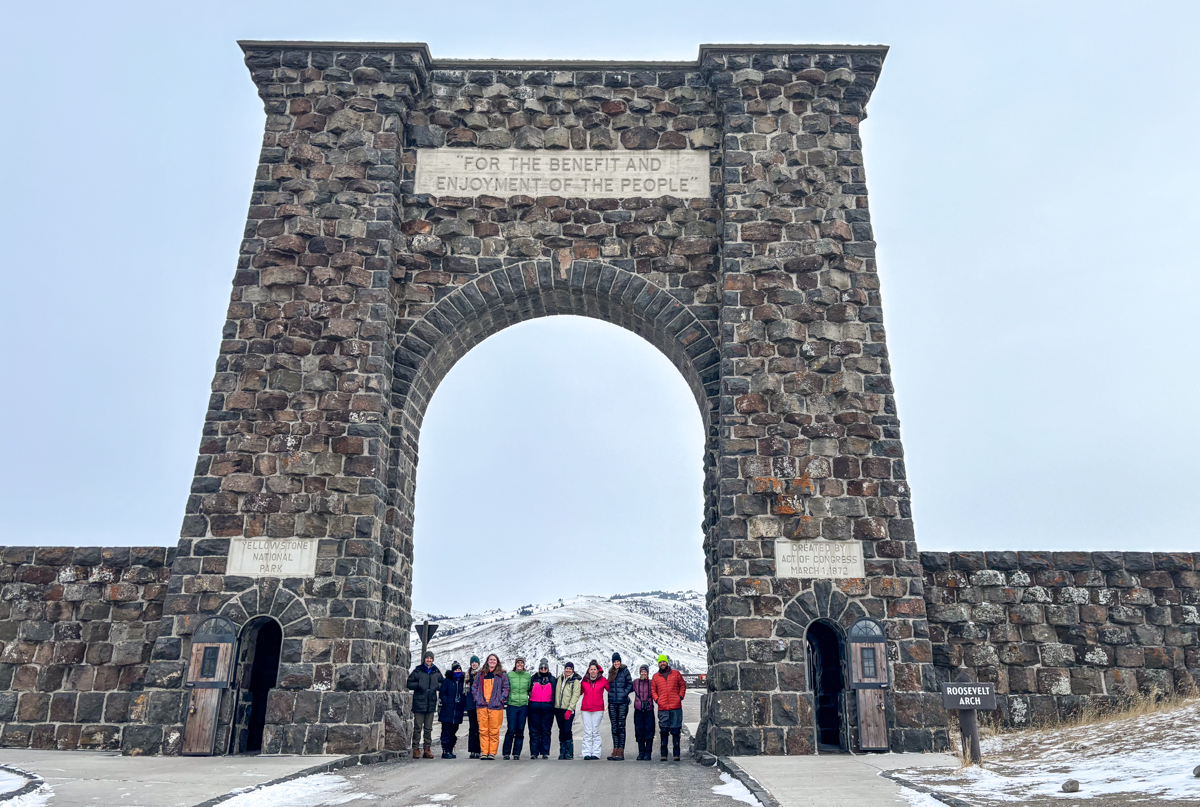
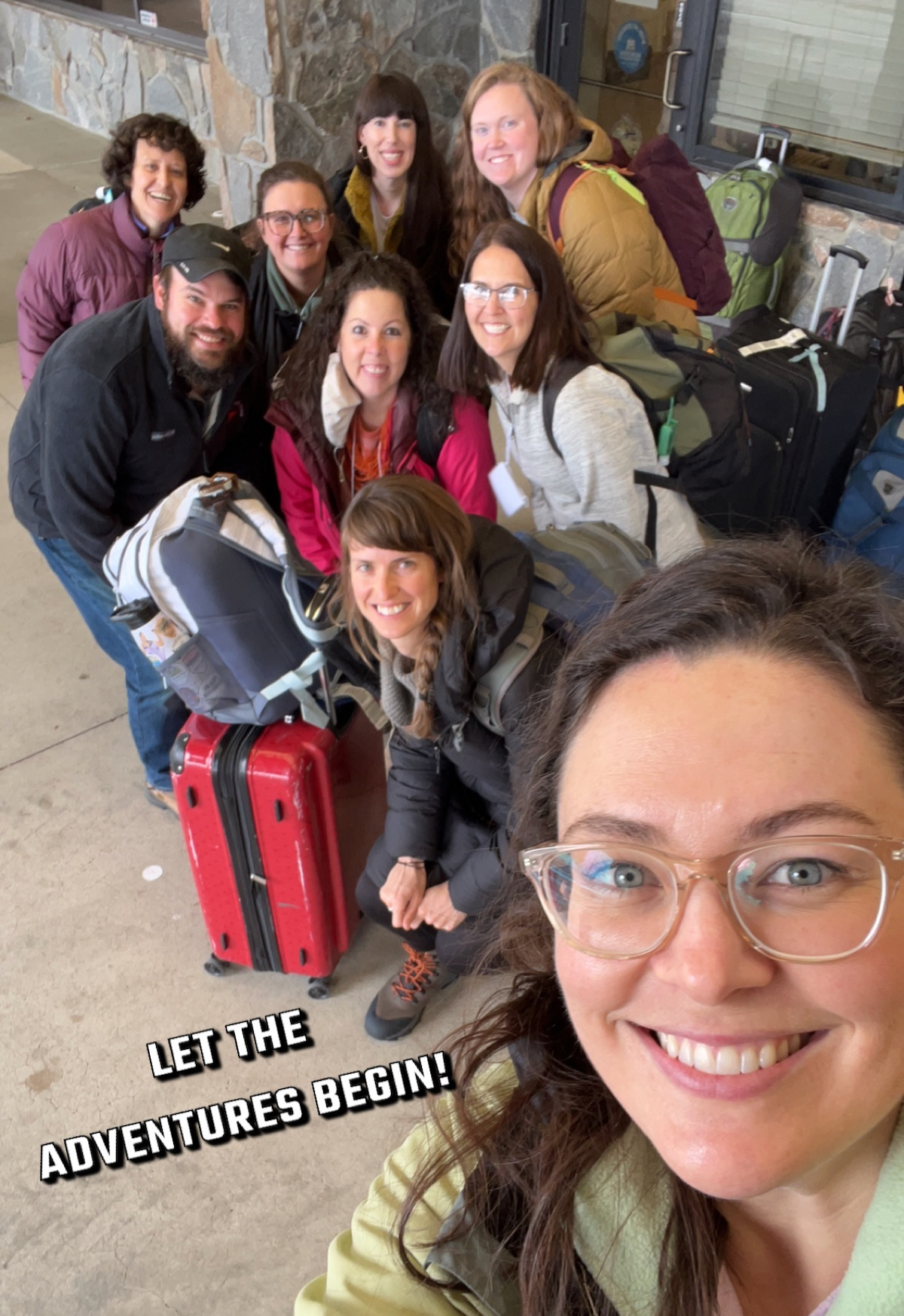
Group at Roosevelt Arch

Even though it was a mere 3 degrees, we rewarded ourselves by taking a relaxing dip in the Yellowstone Hot Springs, a private spot outside of the national park where hot groundwater is used in manmade pools to create a lovely spot. This was much needed after the frigid week we’ve had. Our bodies should be ready for more park action tomorrow after soaking in the mineral rich geothermal waters which will help with our aches and pains from the physical activity we have endured.
Yellowstone in Winter

“How to Survive at -27 F: Hand Warmers, Keep Moving, Surprise Hot Chocolate”

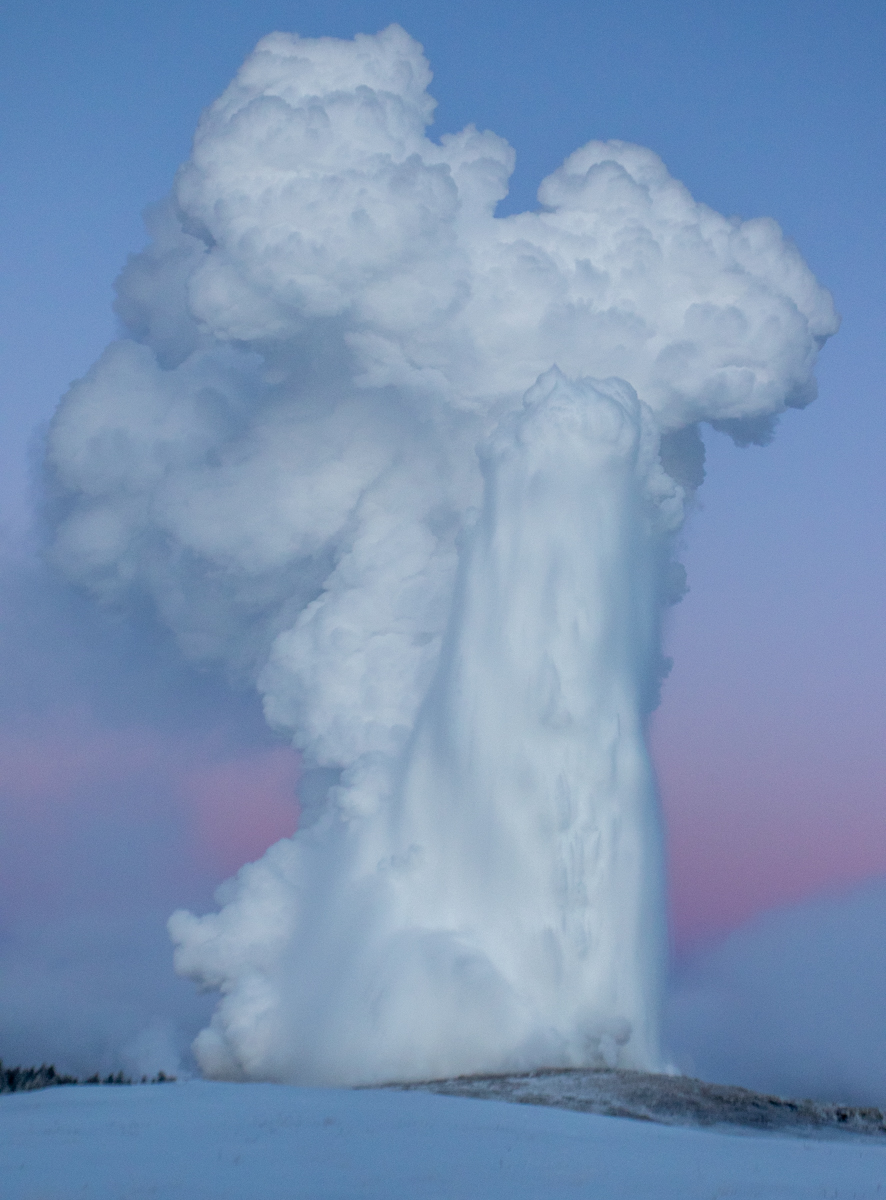
Our day began with a sunrise hike to Old Faithful and Upper Geyser Basin. It was an absolutely beautiful morning with pre-dawn light tinting the sky blue and pink. We were graced with an eruption of Old Faithful at 7:47 am against that spectacular background.

Old Faithful eruption just before dawn

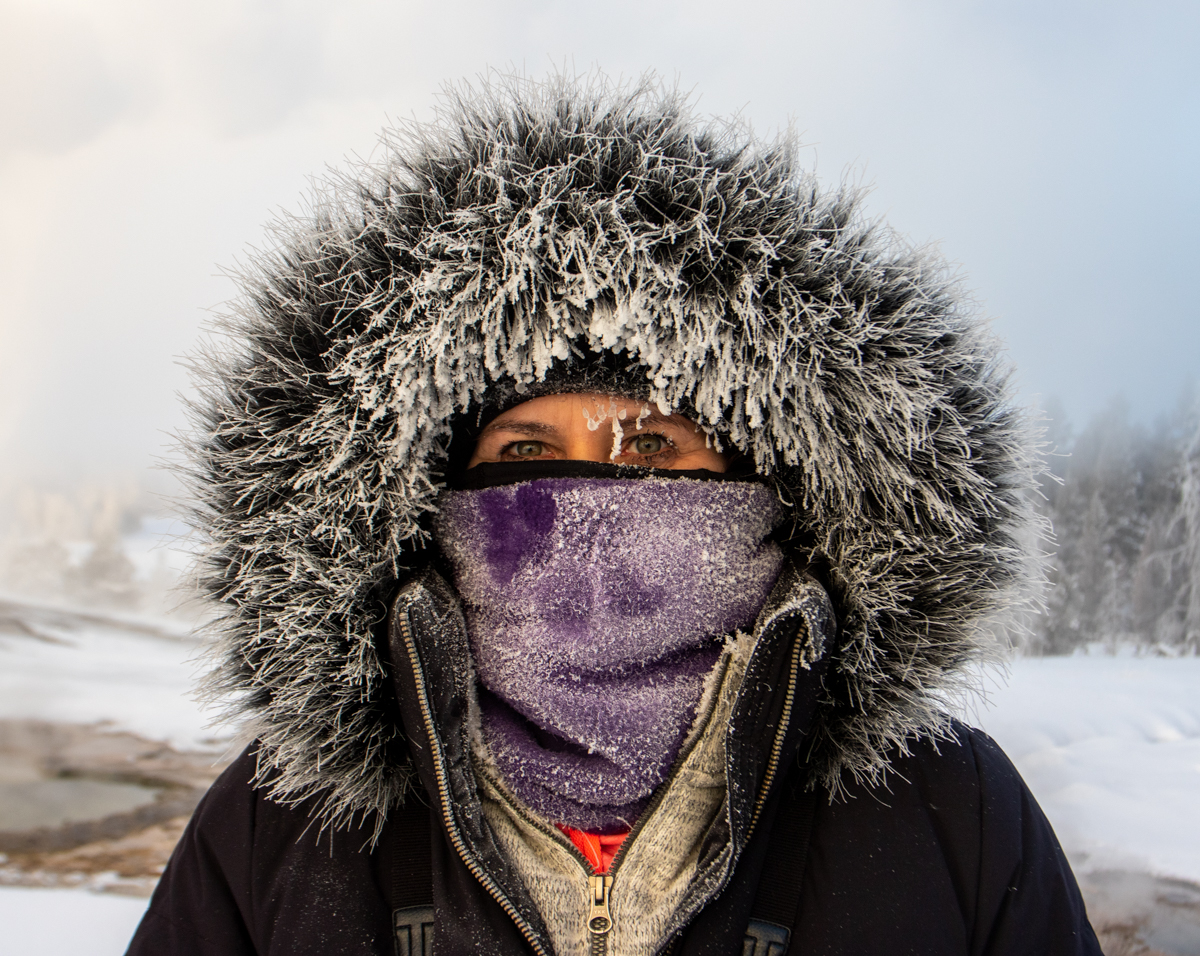
As we walked across the Firehole River to Geyser Hill, we measured a temperature of -27°F. We made short stops to look at geysers and hot springs, but kept ourselves moving so we wouldn’t get too cold. As we walked past Lion Geyser, we were surprised as it started to erupt! We turned around, and in the opposite direction, we watched as the sun peaked out of the far ridgeline between lodgepole pine trees. In temperatures this cold, whenever we walked through steam from a thermal feature, the moisture in the air froze to our hair and clothing, and even our eyelashes.

Angie’s hood provided the perfect site for rime ice to form!

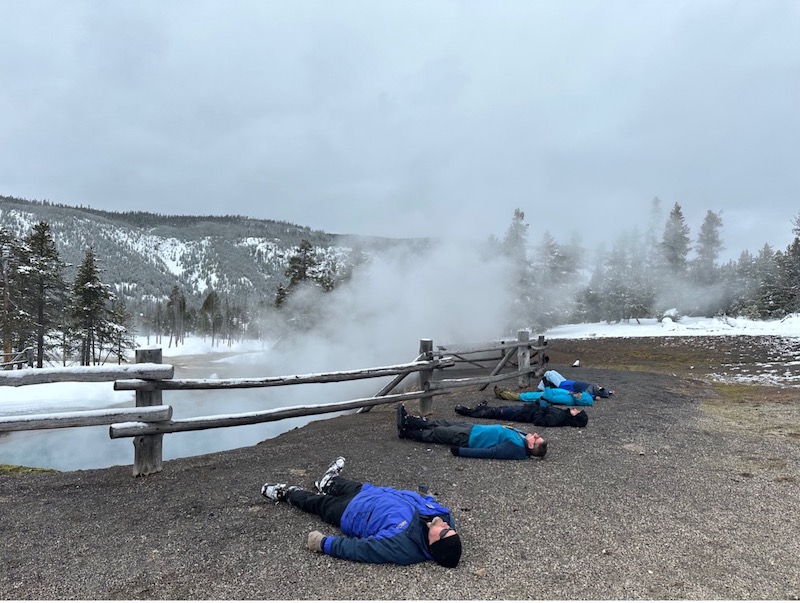
Shortly after departing from Old Faithful in our snowcoach, we stopped to hike to Black Sands Pool through about a foot of snow. Near the rim of the spring, where heat from the hot water below had melted any snow away, we laid down on the obsidian gravel covered ground. We were able to feel thumps in the ground below us caused by small steam explosions underground.

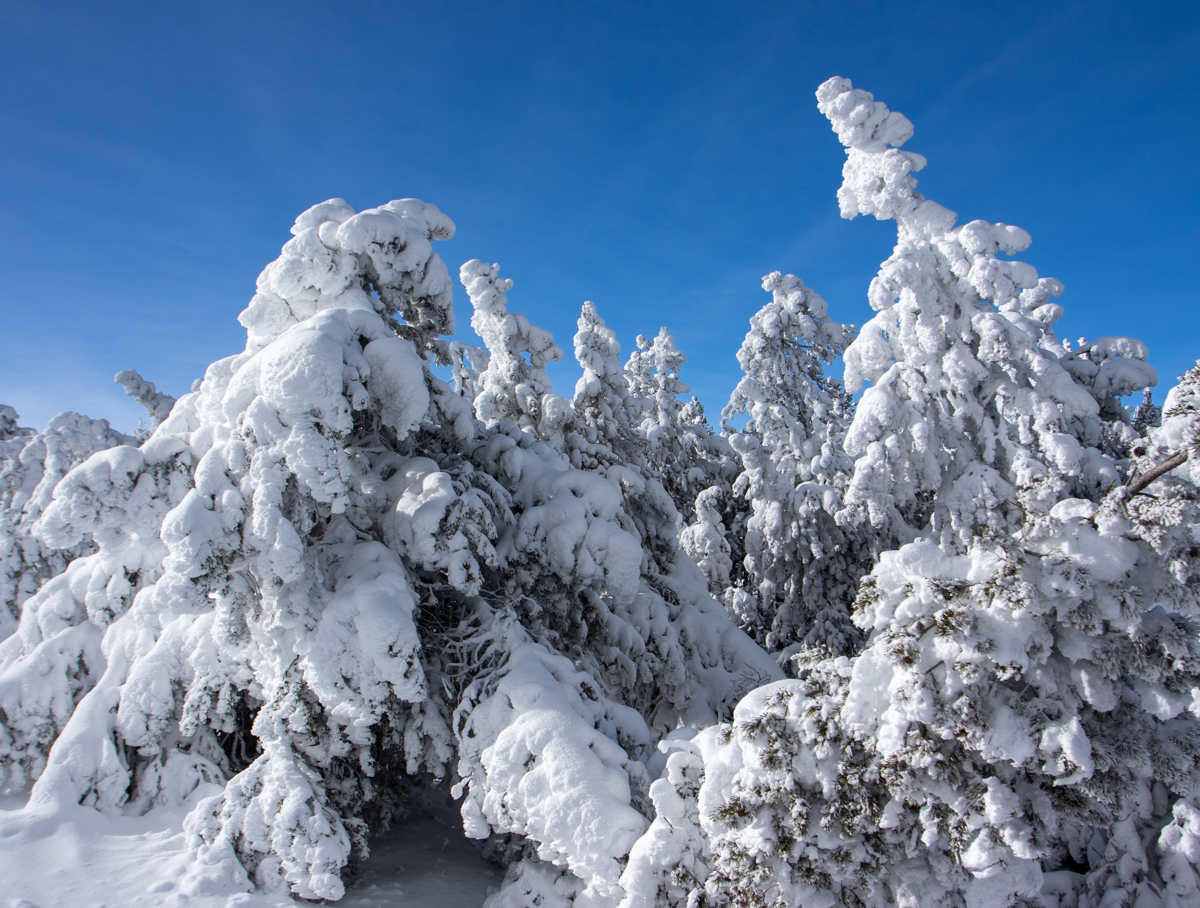
Our next stop was Midway Geyser Basin, where the huge amounts of steam produced by Excelsior Geyser coated the trees in rime ice. The lodgepole pines looked like the trees in Whoville! We took another weather measurement and the temperature was 2.1 degrees Fahrenheit while the wind chill was -17.5 degrees Fahrenheit, quite balmy after our frigid morning!

Ice-covered trees at Midway Geyser Basin

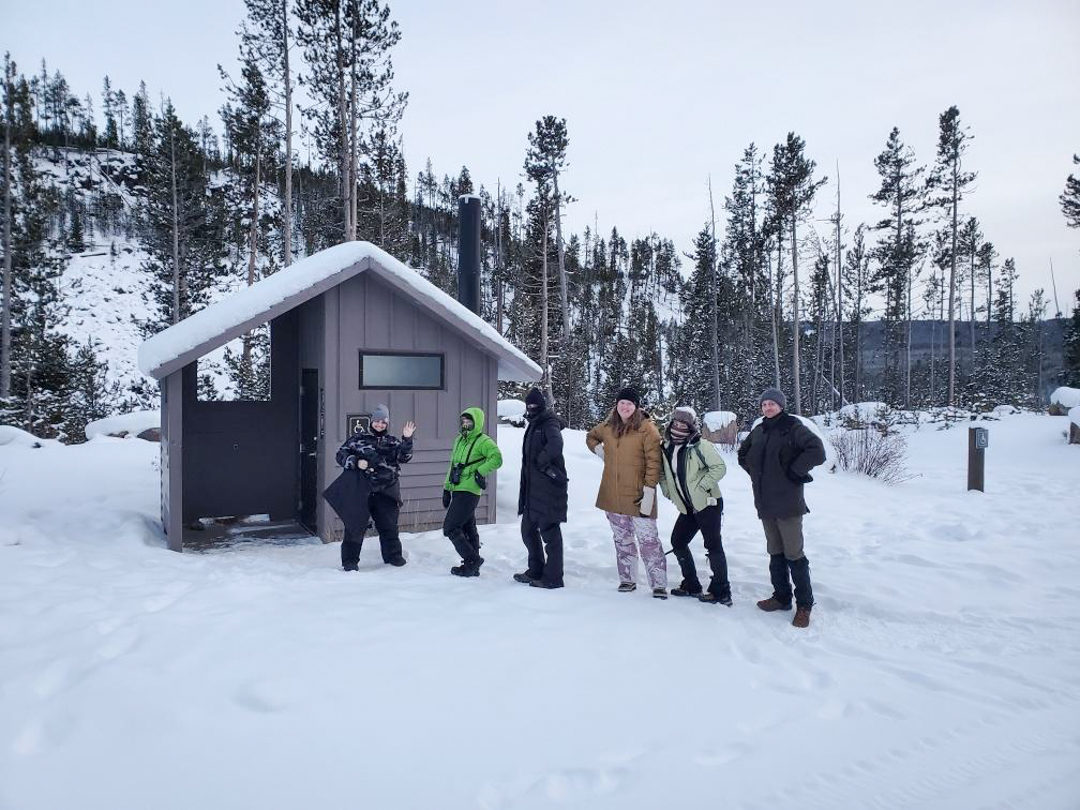
As we traveled north towards Mammoth, we got to stop at a warming hut where they served hot chocolate and snacks. We even got to use the bathroom in a heated building (every other bathroom up until this point had been in a pit toilet which had no heat or light).

Styling and profiling while waiting in line for the pit toilet

The brief moments of warmth and luxury still paled in comparison to the splendor we experienced among Yellowstone’s most famous geothermal features. Tomorrow, we head to the Lamar Valley again to look for more of Yellowstone’s other most famous features, the wildlife.

Yellowstone in Winter

“‘oh, what fun it is to ride in a Yellowstone snowcoach today, hey!’”

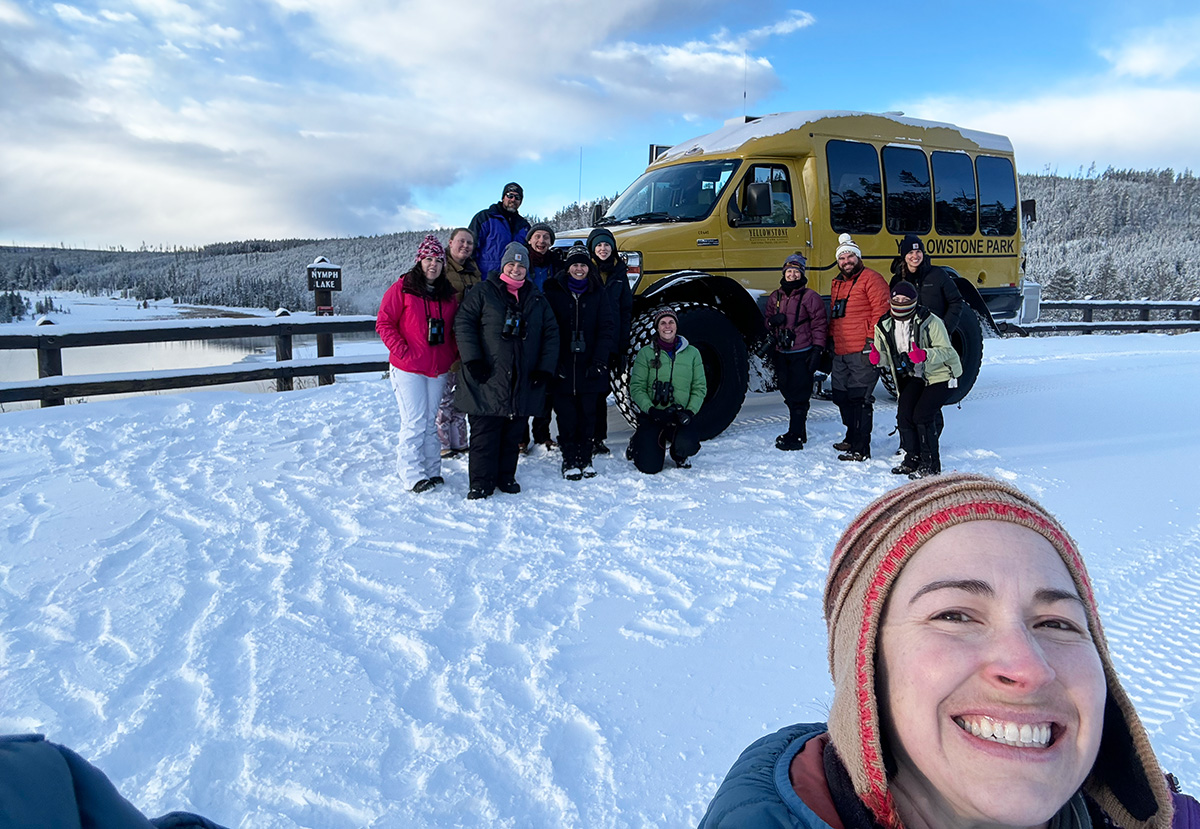
Friday proved to be more thrilling than we could have imagined! We started our day at Mammoth Hot Springs Hotel. We loaded up in a snowcoach & headed out for a day full of learning & adventure! 

Group with our snowcoach at Nymph Lake

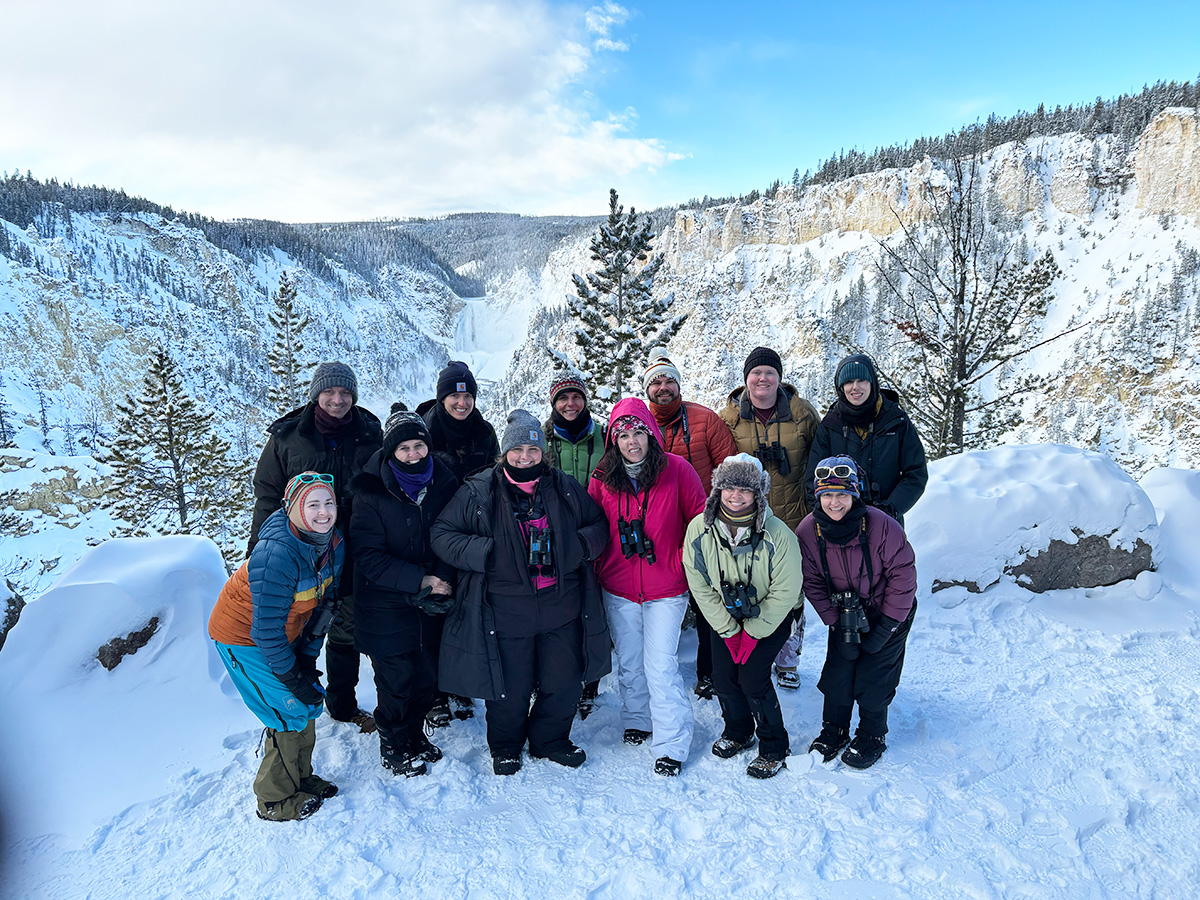
We were caught up in a bison parade as we followed a herd down the road, but not close enough to alter their behavior. We visited multiple overlooks on the Grand Canyon of the Yellowstone, including the famous Artist Point, where Adam taught us about Thomas Moran, an artist who visited Yellowstone before the park was established and whose paintings helped persuade Congress to create our first national park. At another overlook, Kelly helped the group spot an otter. We watched as it climbed the steep slopes near the Lower Falls, went into the trees, and after a surprisingly short time, appeared again on the ice near the top of the 308 foot tall waterfall!

Group at the Lower Falls of the Yellowstone River

Amazingly, on our ride through Hayden Valley we spotted a very tightly gathered group of bison. Our driver, John, suggested that they might be gathered like that in response to a predator. Sure enough, we spotted a wolf a few minutes later, just to the side of the herd of bison. We set up our spotting scope in the door of the snowcoach and watched as first one, then two, then as many as 13 wolves came into view! For the most part, the bison seemed unfazed, but as a wolf approached too close, a large bison raised its tail and ran at the wolves, chasing them back. There were a few other similar interactions before we lost sight of the wolf pack behind a small hill and moved on. We were thrilled to have had the chance to watch such an amazing interaction!

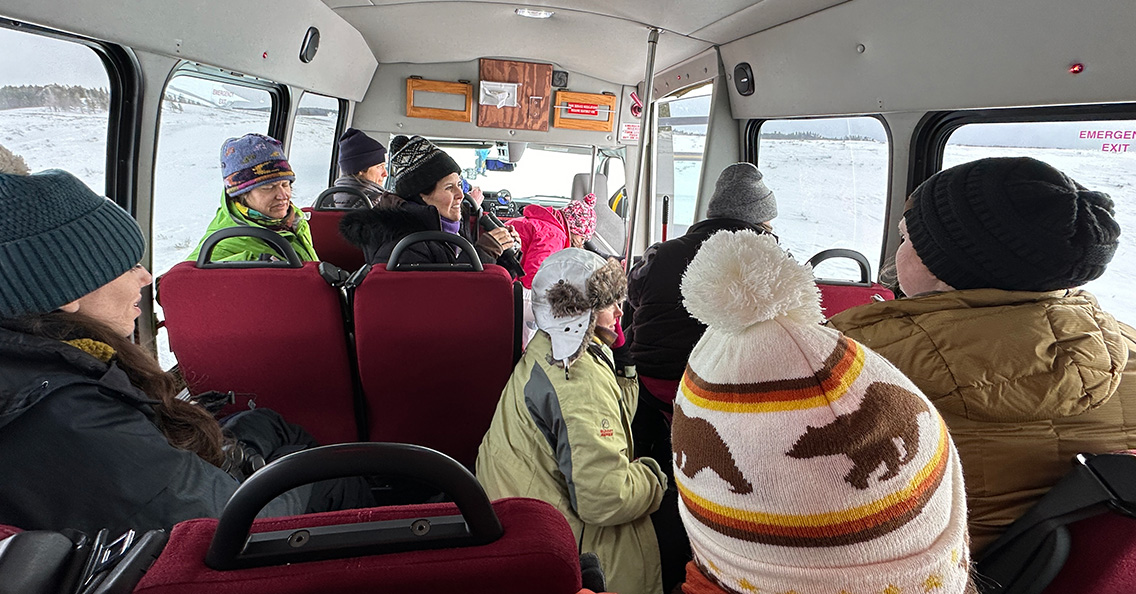
Wolf watching from the snowcoach – in the back you can see Tracy peering through the scope set up in the doorway

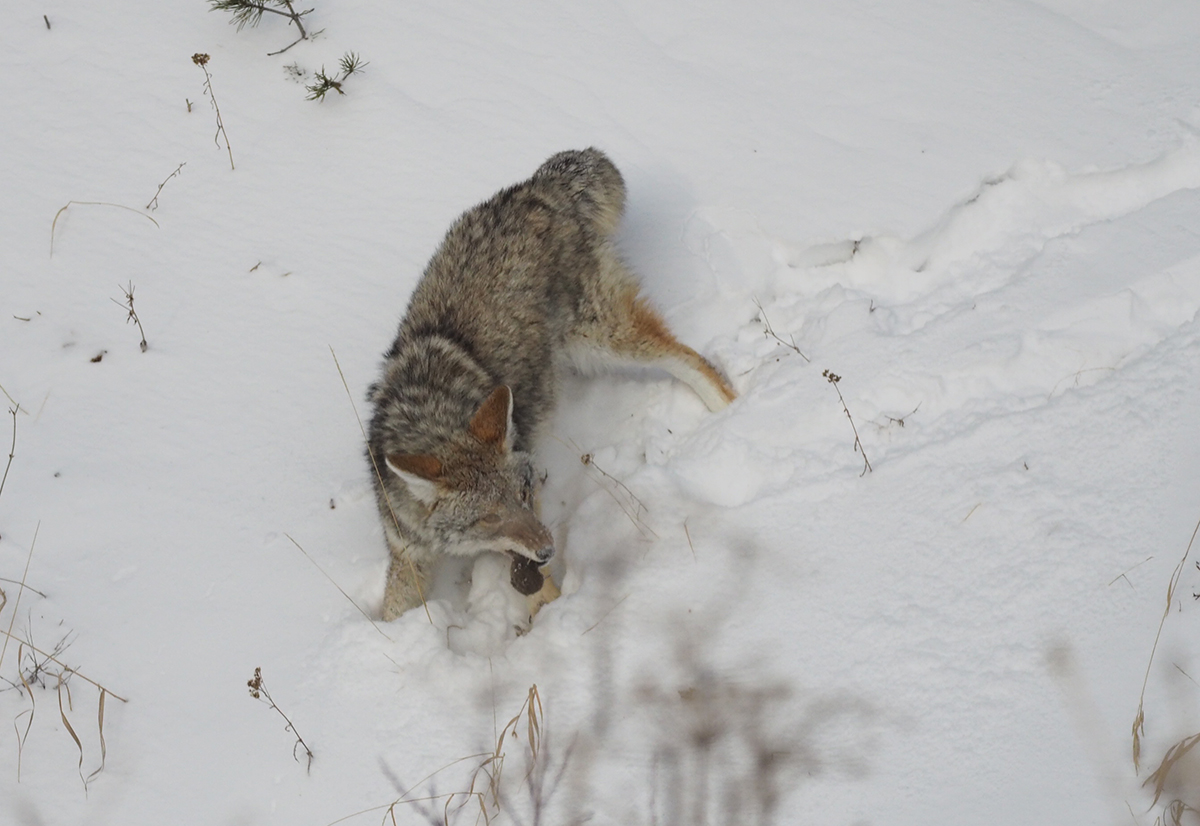
As we continued our journey along the Yellowstone river, we stopped to view trumpeter swans and other waterfowl at Fishing Bridge, near where the Yellowstone River flows out of Yellowstone Lake. Before we could even get out of the snowcoach, we spotted a coyote doing face-plants on the other side of the road. After a number of unsuccessful attempts at catching prey, we got to see it munch on a small, gray-colored subnivean creature (small animals that live under the snow in the winter, and also Sallie’s expert topic). We think it was likely a vole.

Coyote chomping on what we think was a vole. Photo by Adam Smith.

Our group has learned and experienced so much together already. Johlynn summed up our day with a beautiful quote by Maya Angelou: “My mission in life is not merely to survive, but to thrive; and to do so with some passion, some humor, and some style.”

We ended our day at Old Faithful Snow Lodge. Our group enjoyed group quality time over dinner. We turned in early to prepare for our next full, very cold day; tonight’s low temperature at Old Faithful is predicted to be -34°F with a wind chill of -45°F… We hope we survive our dawn walk around the geyser basin tomorrow!

Yellowstone in Winter

“Stop! Look! Listen!”

We headed out before dawn on our first trip into Yellowstone. We were giddy as we sighted the Roosevelt Arch at Yellowstone’s North Entrance, where Roosevelt gave a dedication speech in 1903 and laid the cornerstone for the arch.

Kira Cassidy, a biologist with the Yellowstone Wolf Project, kicked off our first full day of exploration. She possesses a wealth of information from her twelve years studying and documenting the wolves of Yellowstone. Kira told a story about one of her favorite wolf experiences. A wolf nervously moved at the top of a snowy ridge. With one misstep and a howl, the wolf set off an avalanche; fortunately, that wolf, as well as the opposing pack at the bottom of the ridge, all escaped unscathed.

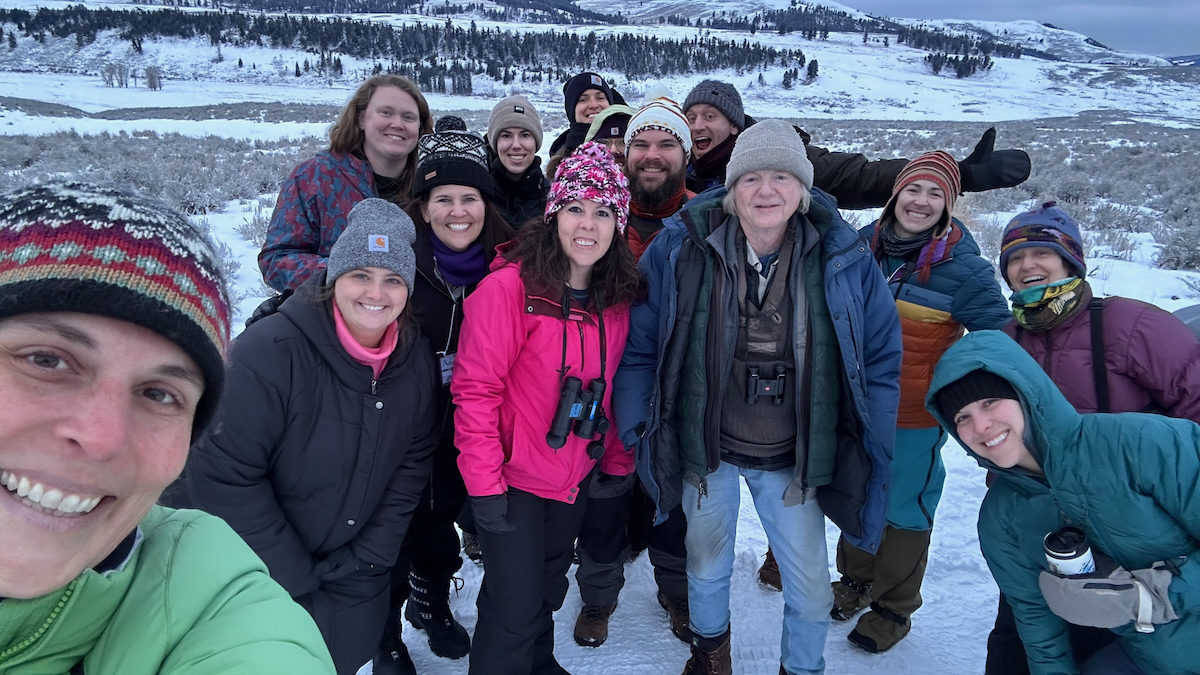
Kira spotted our first wolf at the top of Specimen Ridge, near the west end of Little America. We each took turns excitedly viewing this majestic canid. Imagine our surprise when, all of a sudden, a vehicle pulled up and out jumped Rick McIntyre! We were admittedly all quite starstruck due to him being featured in our required reading about the history of wolves in the park. Amid snapping selfies with Rick, we eagerly listened to his knowledgeable insights into the various packs of wolves and their lineages. He became such an aficionado through his over thirty years of observations of the Yellowstone wolves.

The group with Rick McIntyre (in blue jeans) and Kira Cassidy (far right in blue).

The group with Rick McIntyre (in blue jeans) and Kira Cassidy (far right in blue).

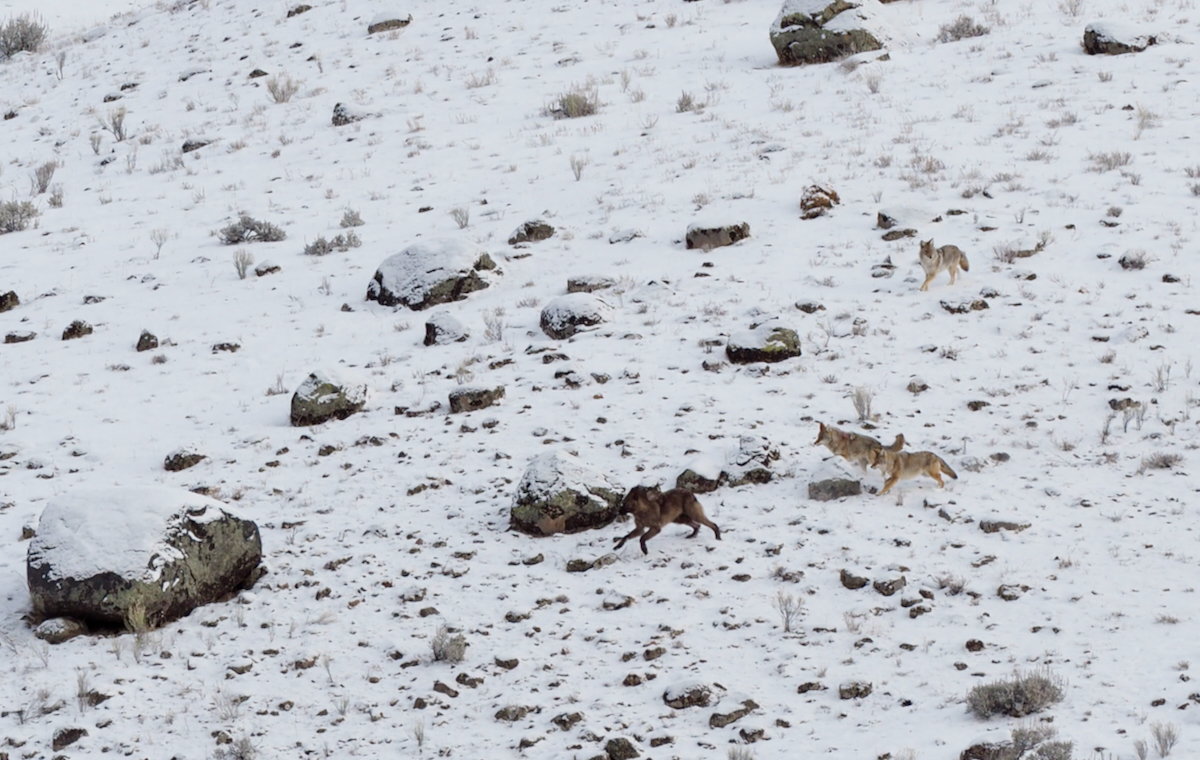
It wasn’t long after that we noticed four coyotes interacting with three wolves on the north side of the road in Little America. One wolf was a yearling female (less than a year old) and the other two were born in the spring of 2022. They were from the Junction Butte Pack.

Black colored wolf on the left being chased by three coyotes on the right. Photo by Adam Smith.

Black colored wolf on the left being chased by three coyotes on the right. Photo by Adam Smith.

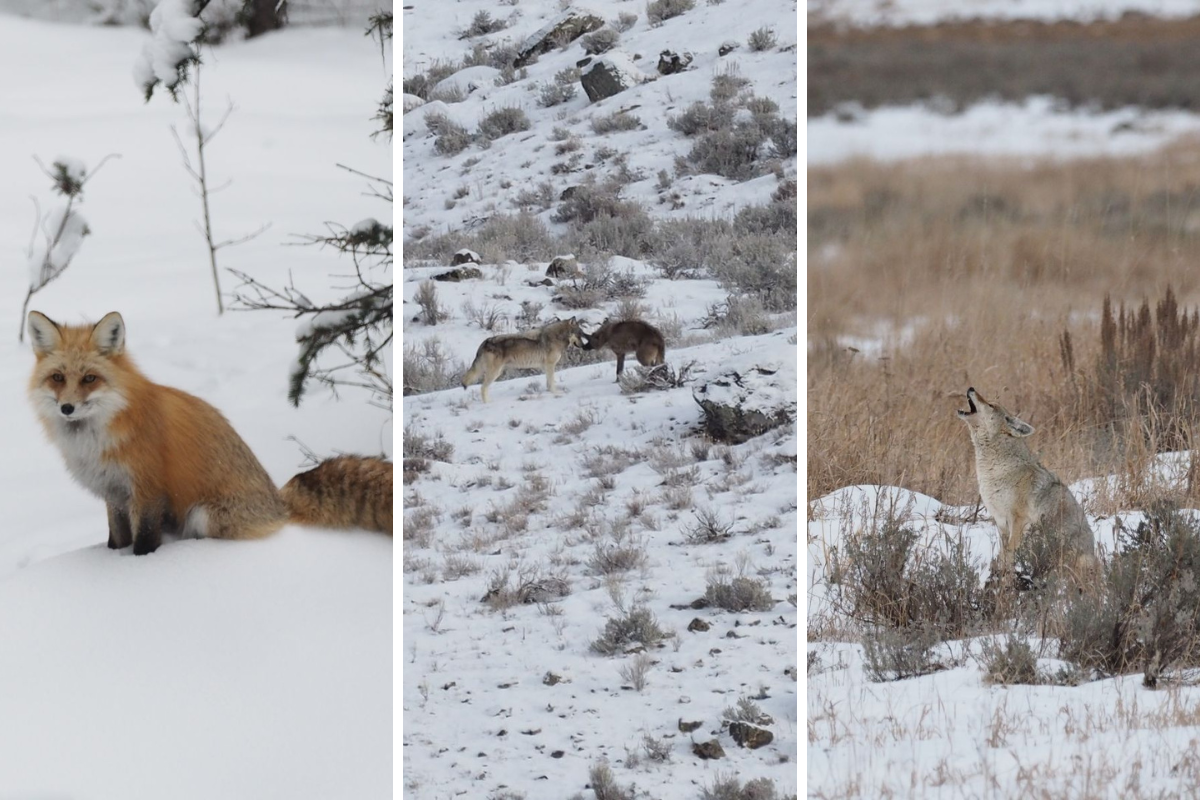
Later in our journey we headed towards Barronette Peak where we spotted a beautiful red fox right on the road. She gave us a show as she posed on a seasonal stream. It flows during times of high snow melt in the spring. This third canid led us to the achievement of a three dog day, meaning we had observed a fox, coyote, and a wolf all in one day!

Red fox on left, two wolves (one gray and one black), and coyote howling on right. Photos by Adam Smith

Today was epic, but we are even more excited about what tomorrow holds: we will pile into a snowcoach and travel throughout the interior of the park down to Old Faithful.

Yellowstone in Winter

“Early Birds Get to Yellowstone”

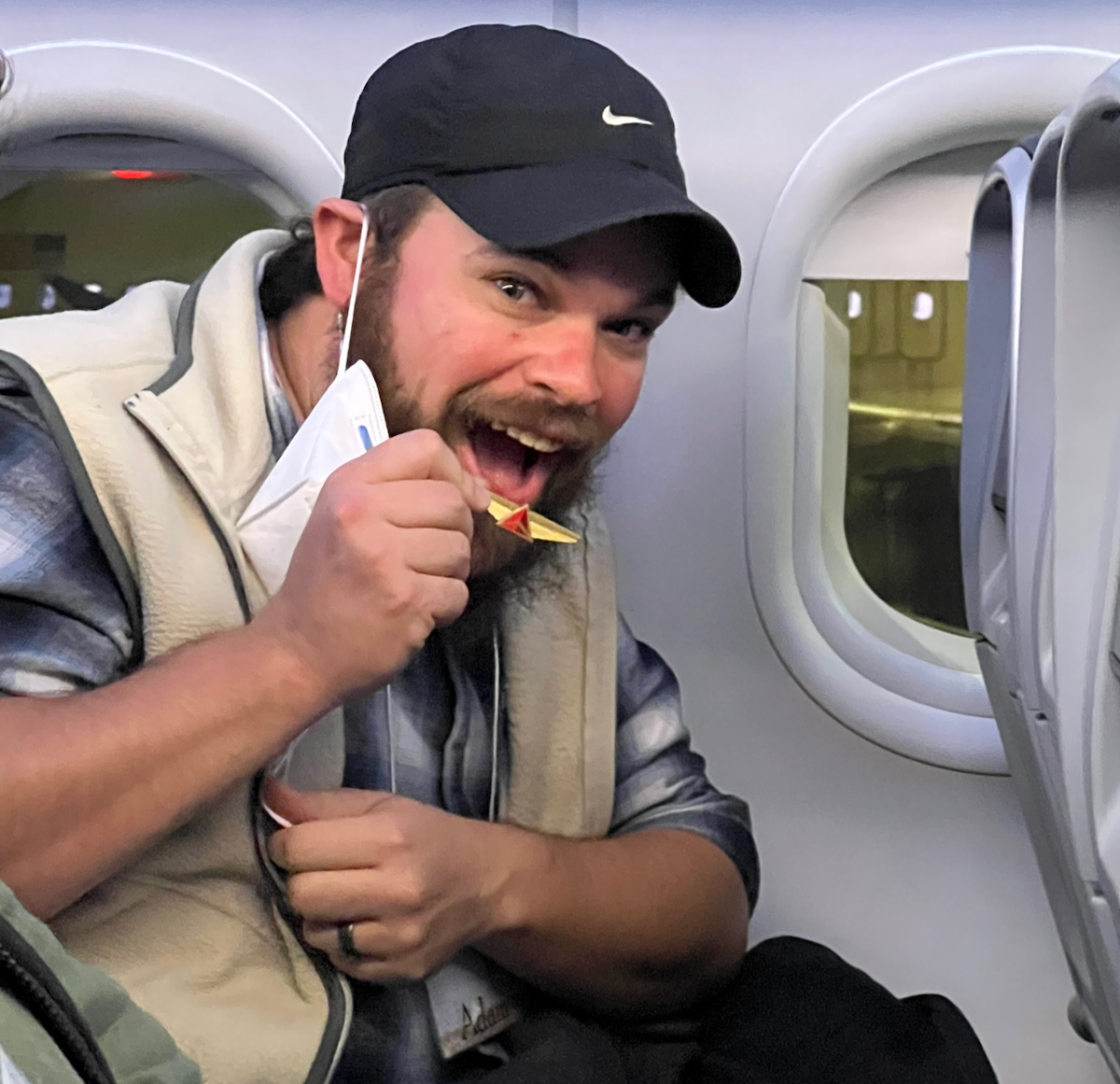
Everybody made it to Raleigh despite the extreme weather that affected our state yesterday. Some folks had such a long trip yesterday that they stayed in a hotel last night, and they had to deal with power outages. Our travels began extremely early today, and most of the folks on our team got up at 2:30am to be at the airport at 4am. Surprisingly, even with the weather, neither of our flights was affected. One of our team members, Adam, celebrated a major life event this morning, as it was his first flight!

Adam gets his wings on his first flight.

Our team is really meshing well, and we have already started to bond. Our teachers are enjoying surrendering control to our museum leaders and getting the opportunity to be in the role of students.

On the drive to Yellowstone from the airport in Bozeman we saw magpies, elk, bald eagles, bison and mule deer. We observed the angles, layers and textures of the rock formations, which we used to deduce the geologic history of the area.

We arrived at our hostel, nestled beside the Yellowstone River. We got settled in our rooms, had a refreshing team meeting and enjoyed a yummy supper. Everyone is exhausted and happy, so we are going to bed early. Tomorrow starts with breakfast at 5:30am and a 6am departure for Yellowstone National Park!

Yellowstone in Winter

“Yellowstone, here we come!”

Early Wednesday morning, nine outstanding North Carolina educators will meet three Museum staff at the RDU airport heading to Yellowstone National Park! For the past few weeks, everyone has been preparing in their own way. Team members shared snippets of what’s been going on as they look forward to this snow-filled educational adventure to our first national park….

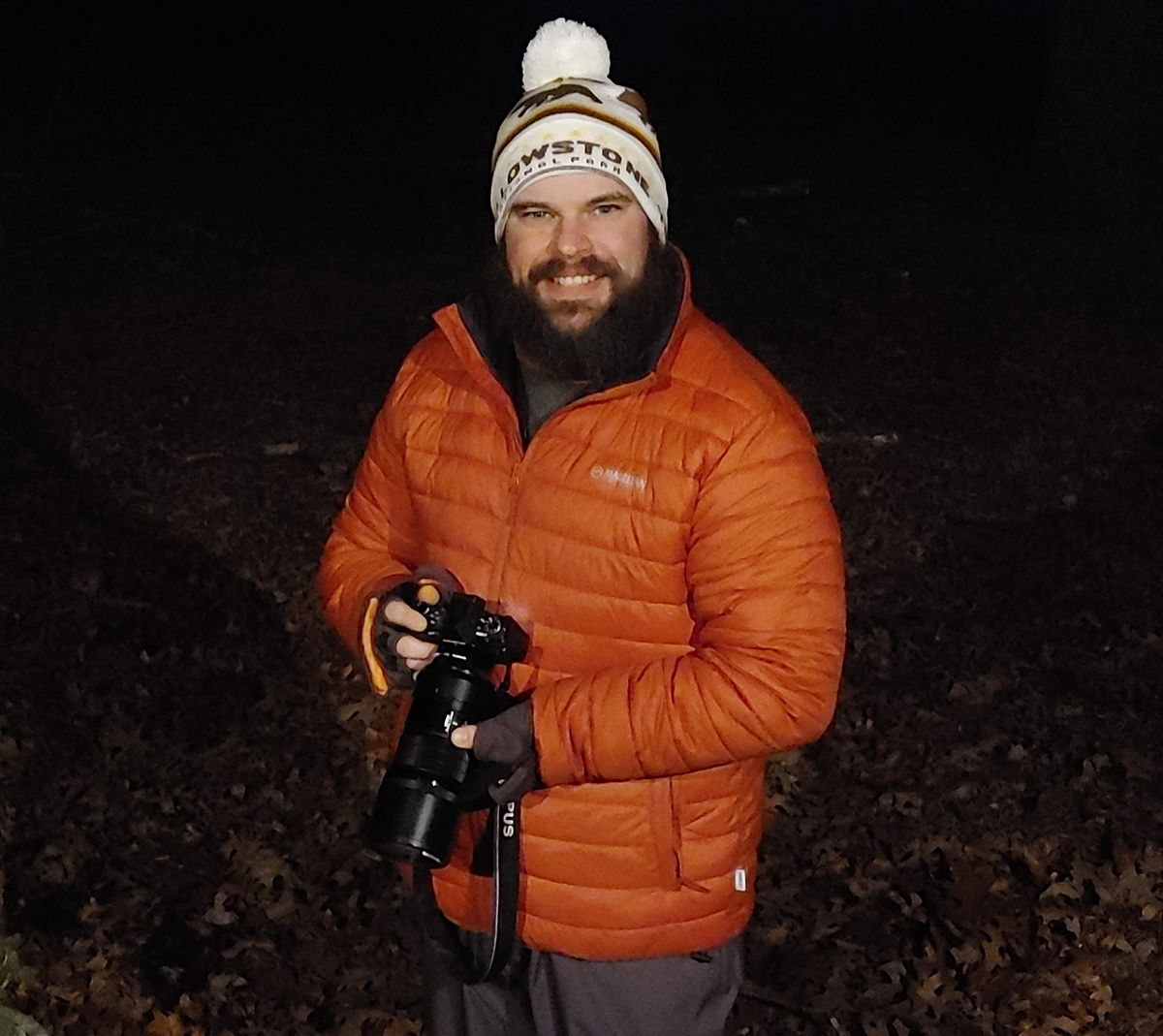
Adam testing out his winter gear and camera.

Adam testing out his winter gear and camera.

Adam writes:

Here we are just a few short days out and I feel both prepared and unprepared at the same time! I know that I am ready. I have read “American Wolf,” studied my topic for discussion, watched documentaries about Yellowstone, watched YouTube videos on winter wildlife photography, read multiple articles about layering to stay warm and bought all the appropriate gear! Yet here I am doing a dry run on packing my bag and trying on clothes in our few 30-degree days thinking am I missing something — what is left to do? During a 6-mile training hike today, my wife reminded me to just relax. I have done all the prep work, I have everything I need, ‘just get ready to enjoy this once-in-a-lifetime experience,’ that I have been blessed to be a part of!

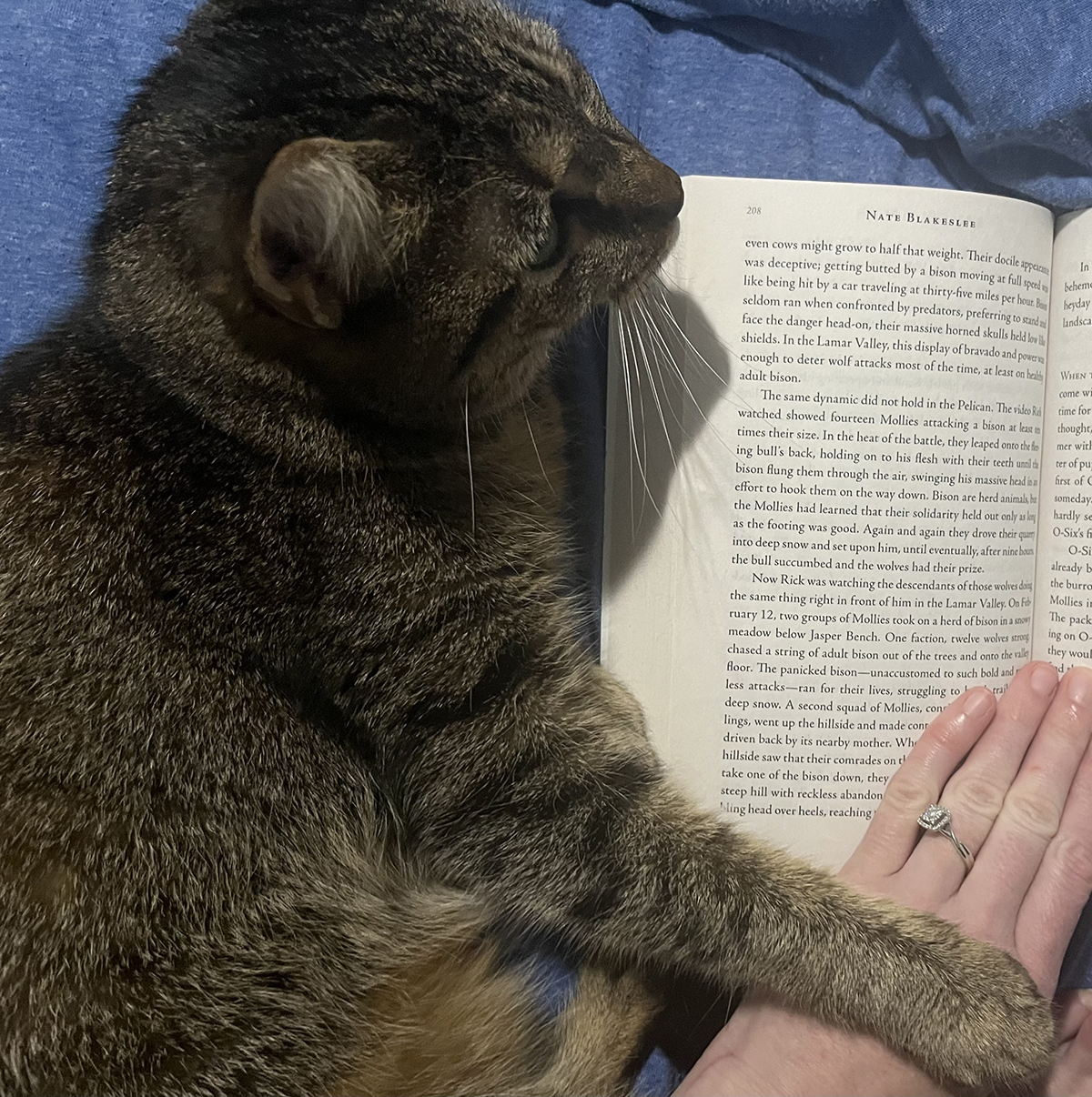
Johlynn and her kitty reading American Wolf together.

Johlynn and her kitty reading “American Wolf” together.

Johlynn writes:

I cannot believe that in just a matter of days I will be in Yellowstone.  When I talked with my elementary students about the trip, they especially enjoyed hearing that I am going to switch roles and be the student for a week; I told them I even had homework!  Speaking of which, my cats Tabitha and Agatha have been working through our assigned reading, “American Wolf,” by Nate Blakeslee, with me. It’s been fascinating learning about the history of wolves in Yellowstone, and I am very hopeful for wolf sightings on the trip.  My Edgewood Wolfies (future Whiteville High Wolfpack) especially hope I can bring back some photos and videos of wolves.  My cats have also been good sports while I worked on another pre-trip task: familiarizing myself with my new digital camera.

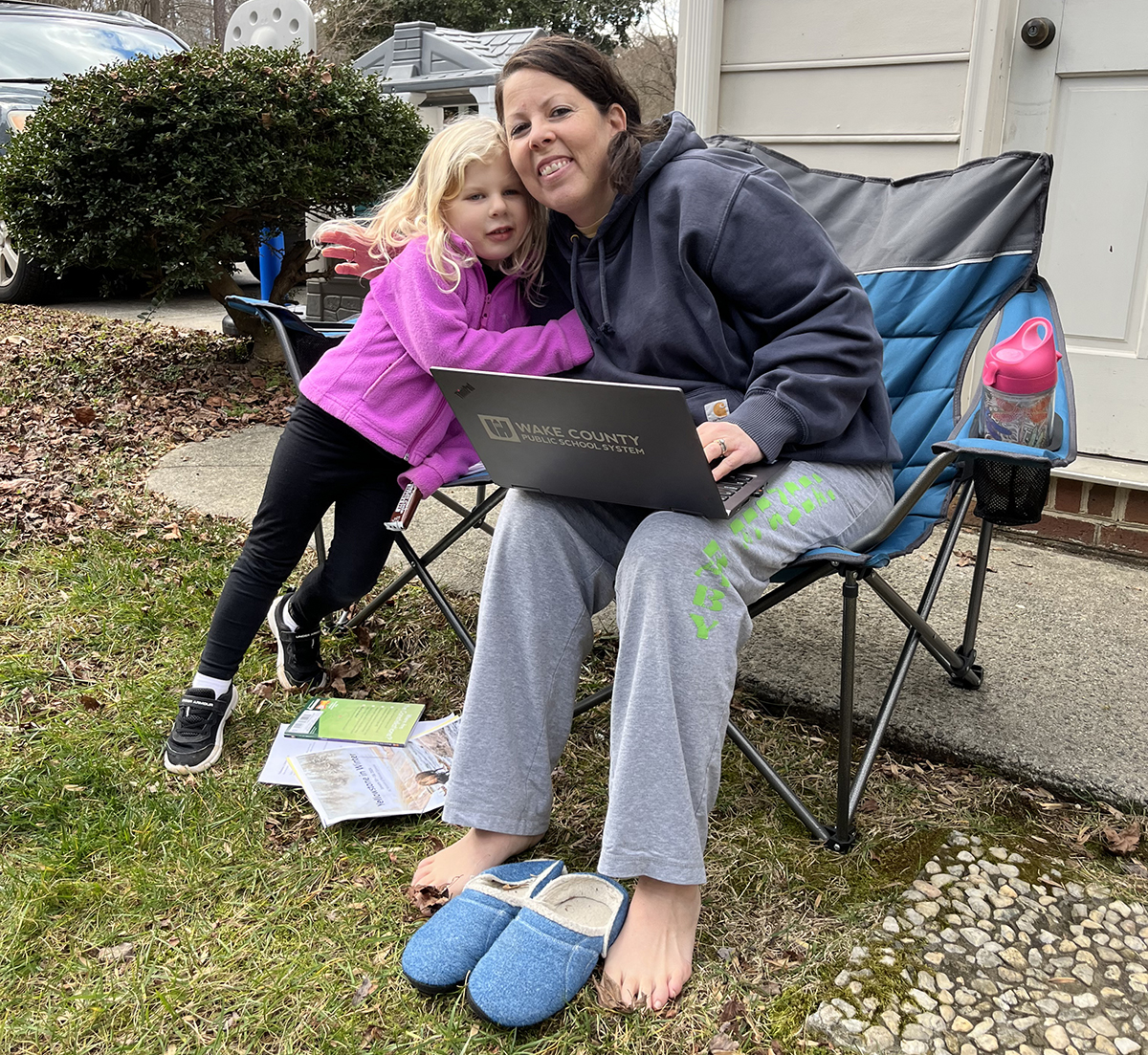
Tracy's daughter helps her prepare substitute plans for her time away from school.

Tracy’s daughter helps her prepare substitute plans for her time away from school.

From Tracy:

The Best and Worst of Preparing for Yellowstone.

Best = Packing the Layers! It’s going to be COLD and snowy and I’m feeling prepared and blessed as I try on all my gear that my family and friends gifted me in 50-degree Raleigh weather.

Worst = The worst is time spent preparing sub[stitute] plans while I’m gone. It takes HOURS and HOURS of preparing 30+ lessons for while I’m out. But on the bright side, my 5th graders are super excited to track our team’s whereabouts on poster-sized maps of Yellowstone and read about our daily adventures on our blog.

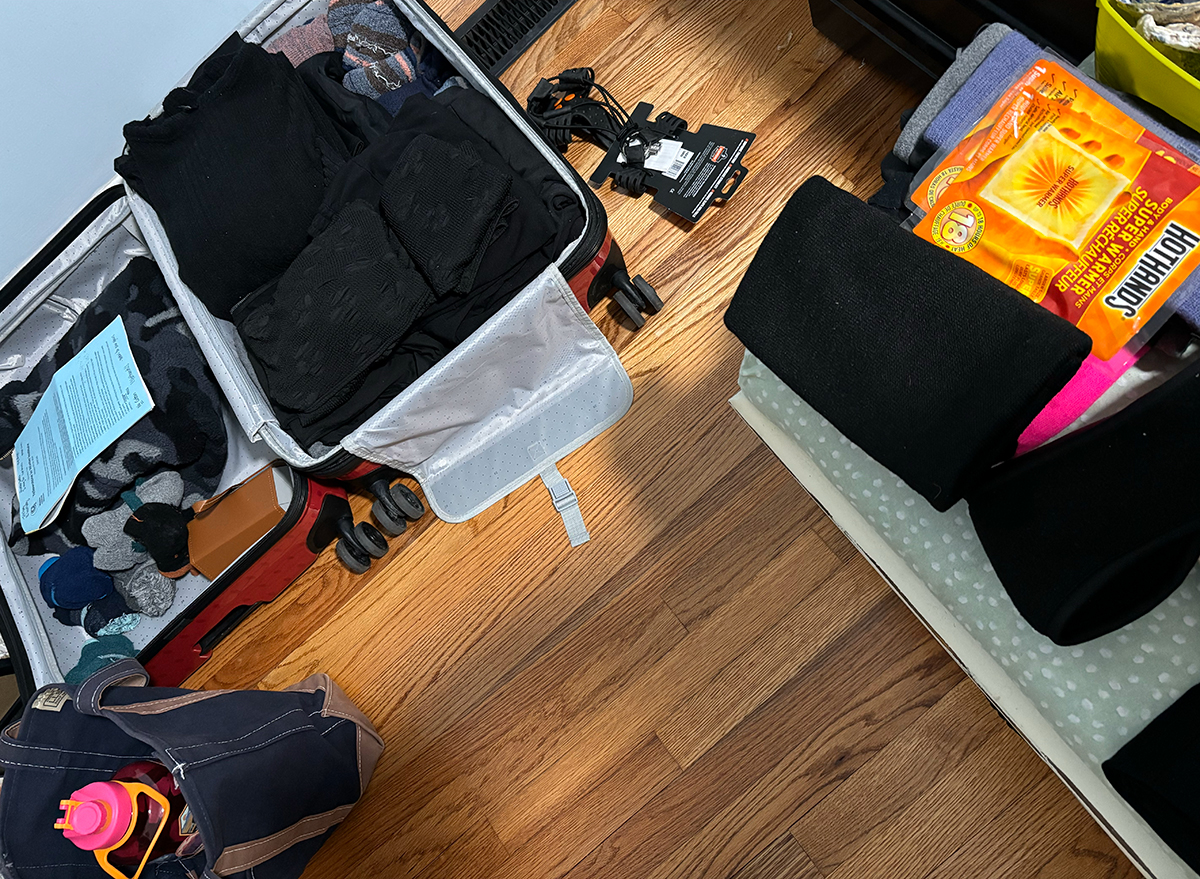
Landon's very organized packing... this blog editor is impressed.

Landon’s very organized packing… this blog editor is impressed.

From Landon:

I always start my preparation for a trip with a packing list. I’ve been going over what I need & then checking twice to make sure I have it in my stack. I’ve been playing around with my smaller suitcase to see if I can squeeze everything into that! I used this trip as an excuse to buy a new carry-on duffle bag. I am SO looking forward to Yellowstone during winter! My shoe gaiters came in & were the wrong size, so I panicked and bought two new pairs. I’m hoping they both come in time & that one of them fits… Here’s hoping. 🙂

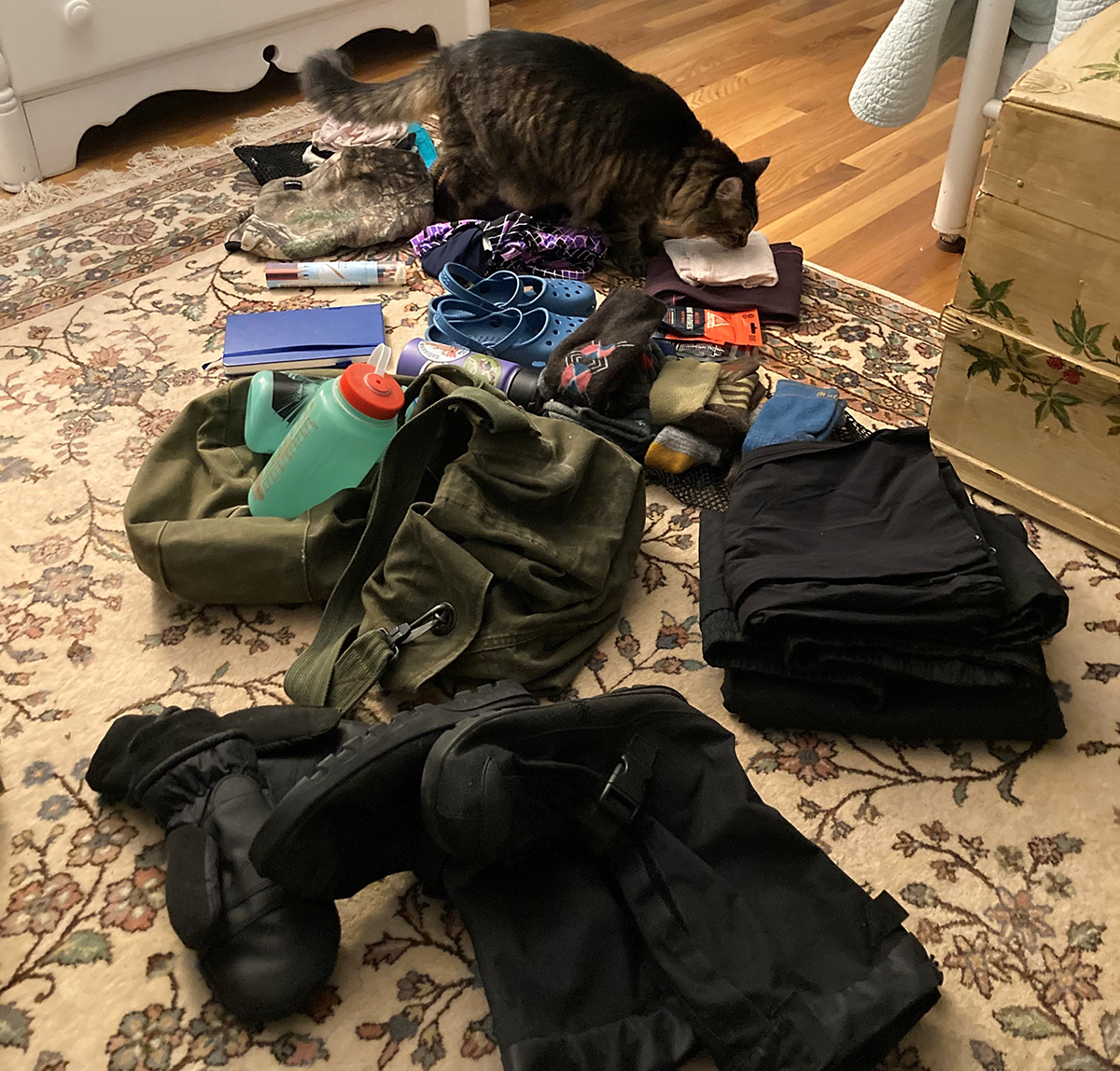
Kelly's cat is checking to make sure she's packing enough warm clothes.

Kelly’s cat is checking to make sure she’s packing enough warm clothes.

From Kelly:

How does one prepare for such an adventure? Luckily we got a list — two pages of stuff — that our intrepid leaders recommended that we pack so that we will have an amazing experience in the freezing Yellowstone landscape. I’ve found lots of stuff in my closet, borrowed other things, and thrifted a few. Luckily my cat is doing quality control on this hodgepodge of gear. I’ve been working on this for weeks, slowly adding things to the pile in my guest bedroom as I think of them, and I’ll do a final packing the night before we have to be at the airport at 4am. Until then, I’m dreaming of frosty bison, starry nights, steamy geysers and howling wolves. Oh yeah, and I’m still packing, and packing, and packing….

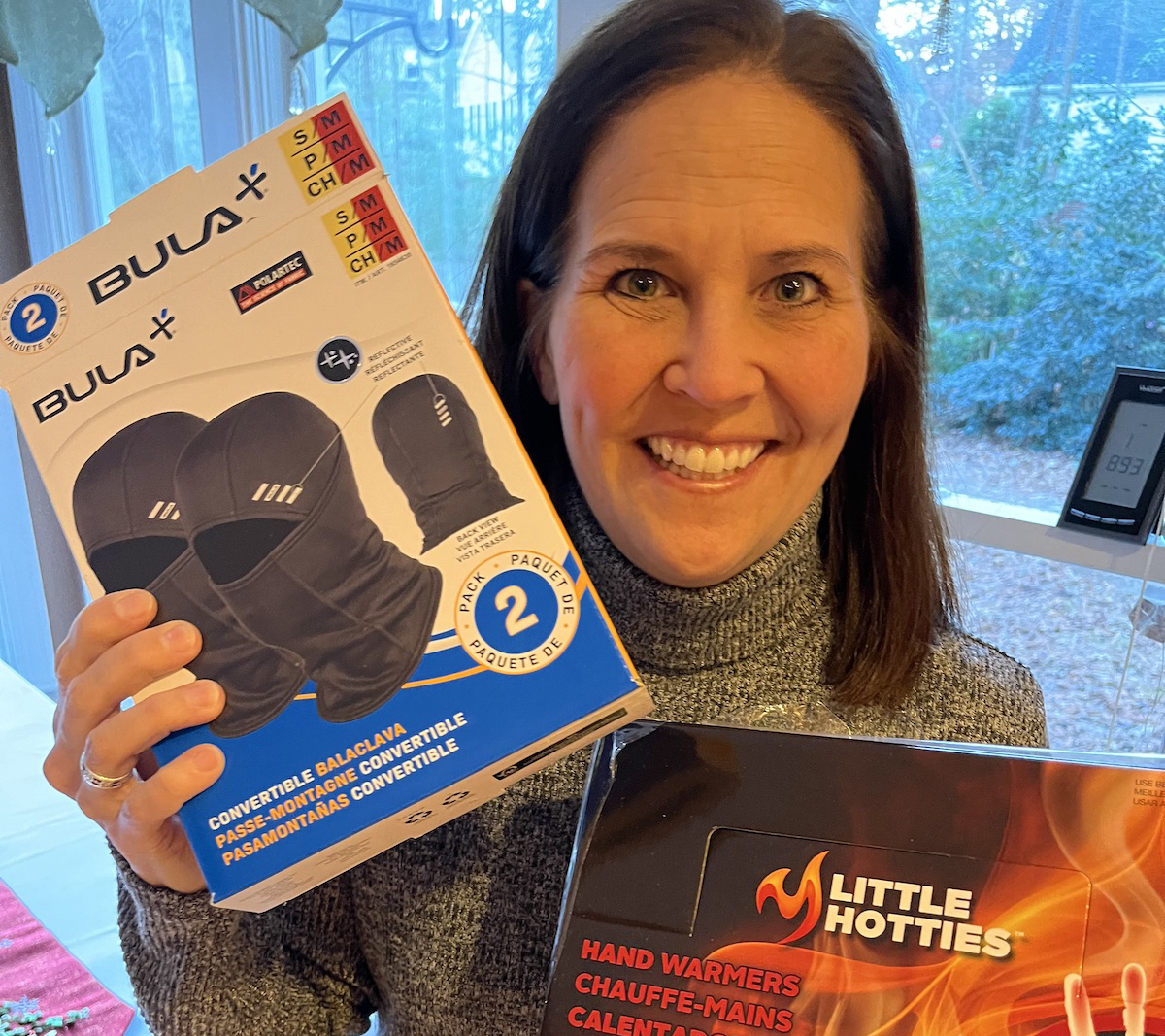
Getting ready!! I have my hand warmers and learned what a balaclava is … and bought 2!! Can’t wait to see everyone again at RDU at 4am. It’s an early morning I’m thrilled about!

From Angie: “Getting ready!! I have my hand warmers and learned what a balaclava is … and bought two!! Can’t wait to see everyone again at RDU at 4am. It’s an early morning I’m thrilled about!”

Sallie writes:

I’m spending the weekend figuring out just how many warm layers I can wear at once! Answer: many! The snowy and blustery weather in Western North Carolina is helping me gain some perspective on how Yellowstone might feel. Temps in the mid-30s like we have today are MUCH warmer than what we will experience during our entire time in the park. As I prepare for the coldest temperatures and wind chills I’ve ever experienced, I am getting excited for the snow and wildlife, and seeing how the landscape changes from dawn to dark!

We hope you will follow our adventure over the next week as we explore the magic of Yellowstone in Winter. We’ll post a blog each night of our trip, so check back often!

Yellowstone in Winter

“When One Adventure Ends, Another Begins”

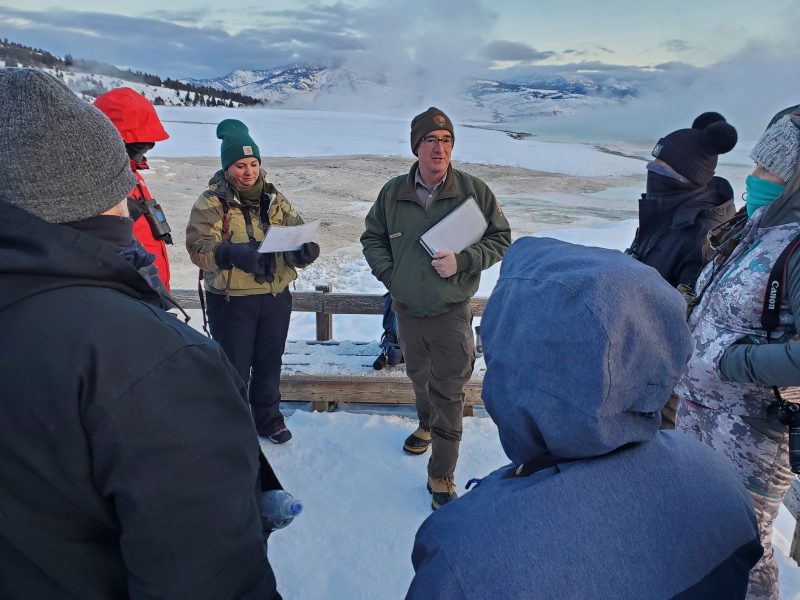
Although we flew home today, we squeezed in one more adventure. With the help of Ranger Mike, we toured around Mammoth Hot Springs. We followed the snowy boardwalks as the sun rose over Mt. Everts to see the travertine terraces. Steam from the ever-changing geothermal features surrounded us as we listened to Ranger Mike use analogy and humor to educate the group. We compared the Upper Geyser Basin where Old Faithful is located to the Mammoth Hot Springs where we now stood. Ranger Mike explained the travertine terraces build up quickly but non-violently while the geyserite deposits of the Upper Geyser Basin build up slowly but can be violent.

After braving our coldest morning (2 degrees Fahrenheit) yet we packed up our luggage to head home to North Carolina. As we drove from the North Yellowstone Lodge in Gardiner, MT to the Bozeman Airport we continued to use our newly developed wildlife spotting skills. The group finally saw the eighth ungulate, the elusive white-tailed deer. Golden eagles, bald eagles, magpies, elk, ravens and a possible carcass party were spotted along our drive.


We arrived at the Bozeman Airport and had come to terms with our grand Yellowstone adventure ending. The once group of strangers knew our newly developed friendships and passion for education would continue to grow. The ideas of bringing Yellowstone to our own classrooms flew out of our mouths as we chatted about the past week.


Through this experience both our eyes and hearts were opened to the importance of conservation of the greater Yellowstone ecosystem. Our first national park, now 150 years old, is the home of various extraordinary species that need to be protected, studied and learned from. Through the continued preservation of this special place, future generations will have the opportunity to experience all the magical wonders Yellowstone for themselves.


Yellowstone in Winter

“Tired Bodies, Full Hearts”

We awoke this morning with high hopes of a wolf sighting (or at least a howl or two). We set out and met Kira Cassidy who is a wolf biologist with the Yellowstone Wolf Project. She was our guide and led us all around the park as she tracked wolves that had been fitted with radio collars. We bounced from spot to spot trying to get just the right angle where we could catch a glimpse.  All the while, Kira gave us insights into all of the knowledge she has gained on the wolves of Yellowstone over her 11 years in this position. While we were bouncing from spot to spot, we even ran into the author of the famed book, wolf “American Wolf,” Rick McIntyre.

Kira and Rick

Kira Cassidy and Rick McIntyre

Unfortunately, we struck out on seeing or hearing a wolf, but we hit the jackpot on a wealth of knowledge about the wolf population in the Greater Yellowstone Ecosystem. The entire group was grateful that Kira was able to share her time and passion about this topic with us.

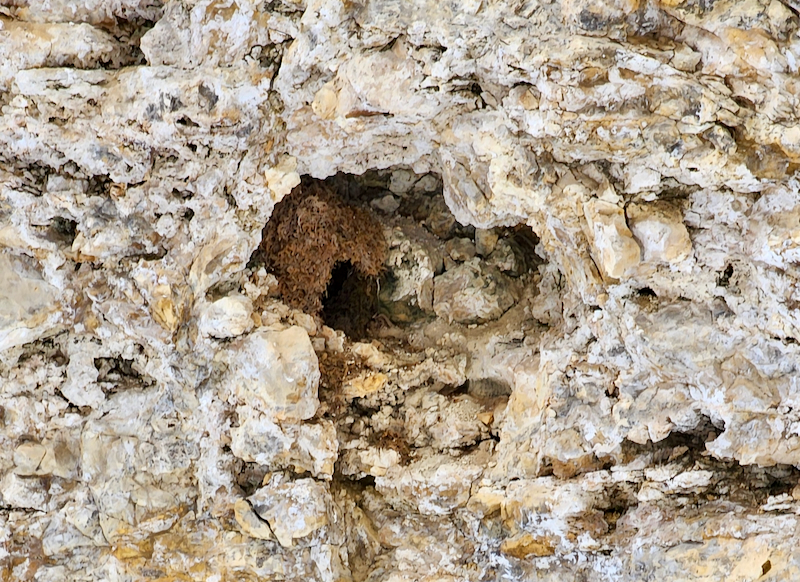
Next stop was a quick check in with the only aquatic songbird in North America, the American Dipper! Cathy gave us the lowdown on this amazing creature. Including the fact that they nest in rock walls near water, which we saw shortly after on our snowshoe hike.

nest made of moss tucked in a hole on a rock wall

American dipper nest

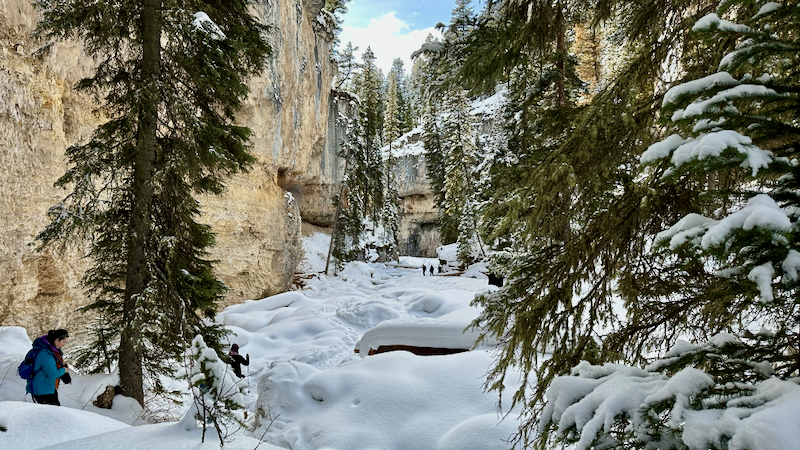
Speaking of the snowshoe hike, that was AWESOME! We started snowshoeing down a nondescript path along Pebble Creek for a short distance only to make a turn and see this!!!

narrow canyon with snow

Snowshoe hike

It was a truly awe-inspiring experience.

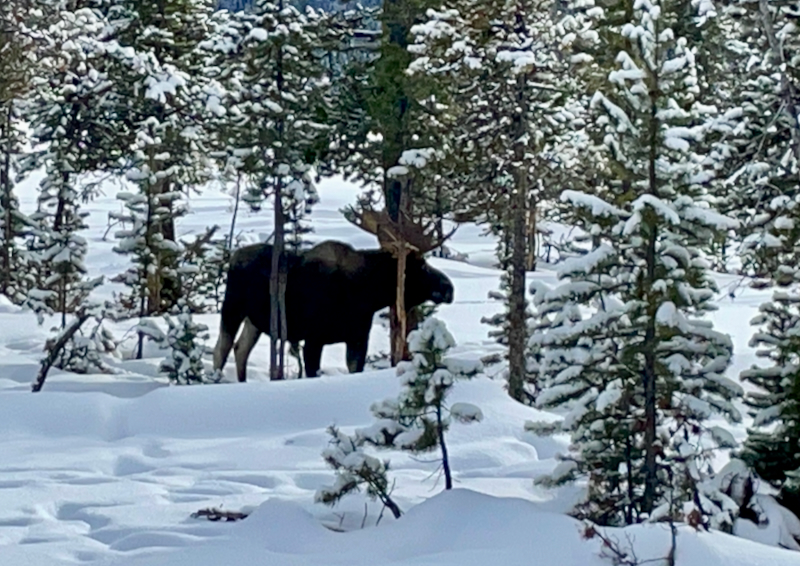
While we were on the hike, Amanda stayed behind and saw two bull moose!

moose in trees

We ended our day with hundreds of bison crossing the road in front of us in the dark, many of them running as if in a stampede. It gave us just a glimpse of what it must have been like when over ten million bison roamed this country. We turned in with tired bodies and full hearts.

Yellowstone in Winter

“For the Birds”

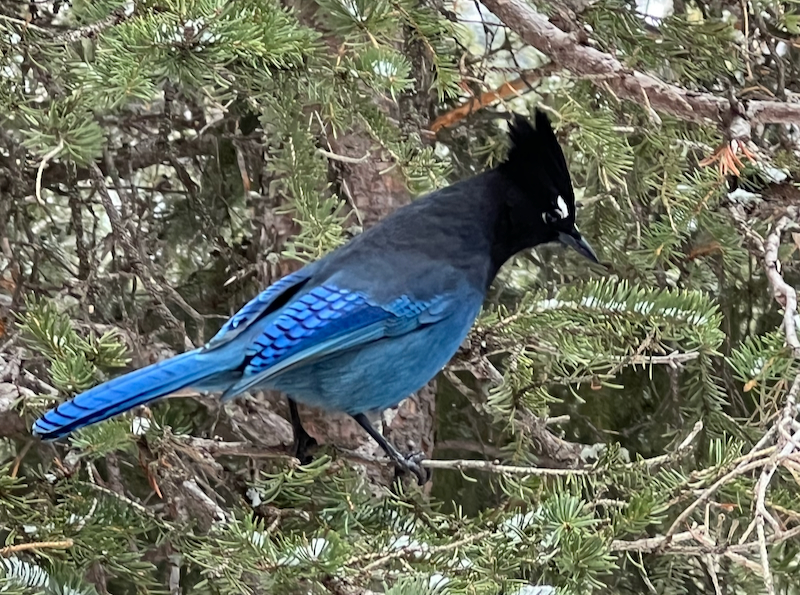
We got to sleep in! We were able to sleep in until 7:00 am, so we could be on the road by 8:00 am. Our day started with a trip through the park, where we saw a herd of bighorn sheep. Then it was off to the house of Dan & Cindy Hartman in Silver Gate, located just outside the park. We were immediately greeted by a plethora of birds that included the Canada jay and the vibrantly blue colored Steller’s jay.

bird with black head, white eyebrow, and blue body and wings

Once inside, Dan regaled the group with tales of his time filming the wildlife, discussing the importance of conservation while showing one of his films. This visit was a highlight for the group because of Dan’s passion and dedication to his craft. It was intoxicating and contagious. The group left with a renewed sense of life and how everything in nature is interconnected, including human beings.

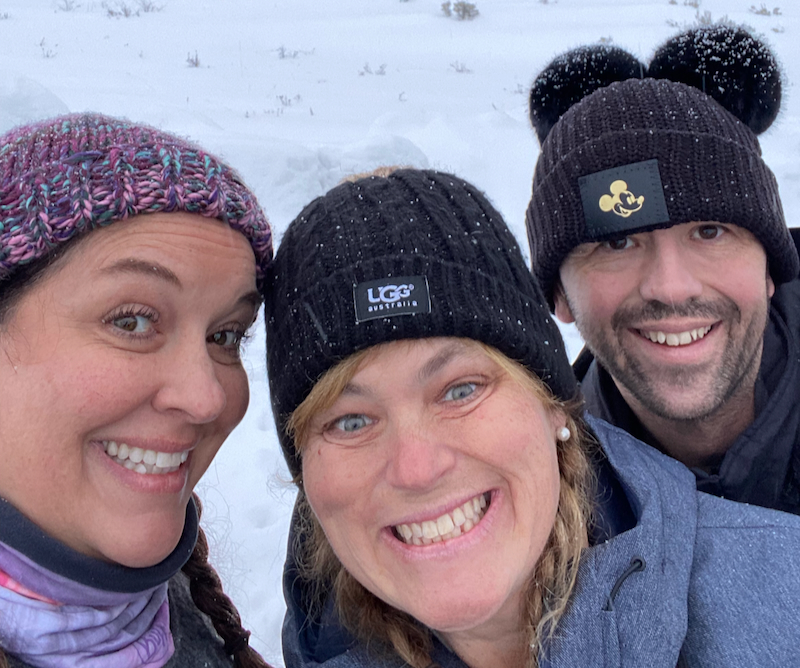
selfie of 3 people

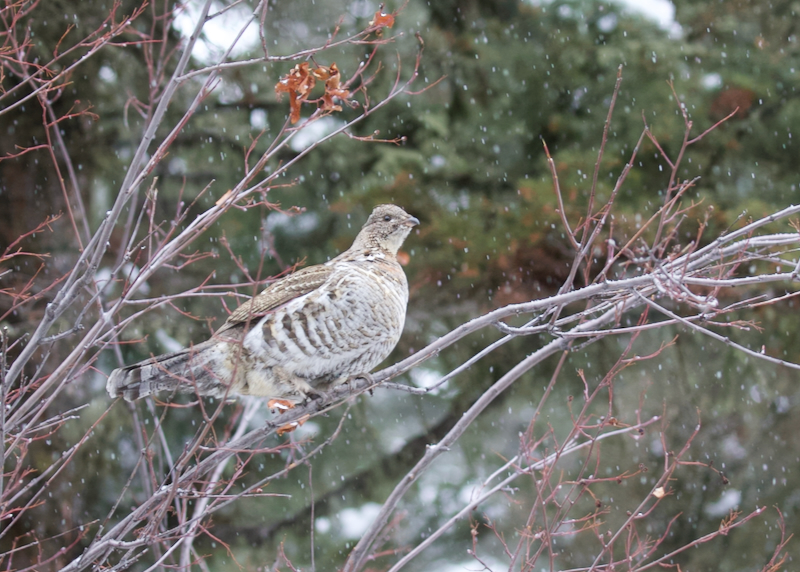
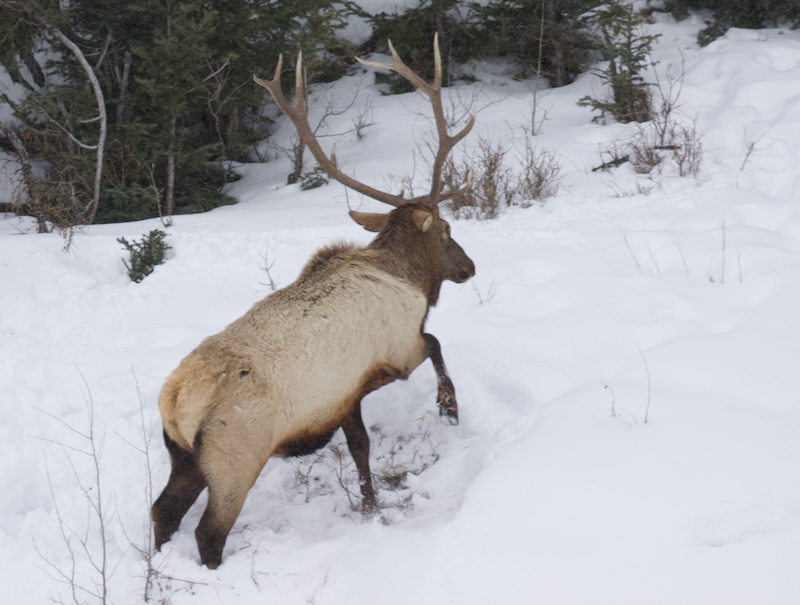
After leaving the Hartman’s we were very fortunate that one of our members excitedly started yelling “Bird! Bird!” when Dustin (impressively) spotted a ruffed grouse from the very back seat in the trees along the road. We excitedly turned the cars around on the icy road to get up close & personal with the bird (from the car), who didn’t seem to notice our presence. After getting our fill of photographs, we were on our way. We hadn’t gone very far when we saw a massive bull elk using its front legs to “snowplow” for the rich grasses below the fresh snowfall. We watched him in awe and then loaded the vehicles to head out of park & back to the lodge. It was an amazing day for all!


Yellowstone in Winter

“From Bacteria to Bobcat”

We started today by coming together to watch Old Faithful erupt. It teased us for 45 minutes with small belches of water and steam before finally putting on a show. This was followed by a tour of the Upper Basin by Ranger Colin, whose passion for the world’s greatest concentration of geysers got us excited for our upcoming day of observing geothermal features. We had just missed Colin’s favorite, Beehive Geyser, due to Old Faithful’s antics holding us up.

At our next stop, we split up to choose our own adventure. Some went on a short but snowy hike to Black Sand Pool, laying down to feel the thumping from below. The others took to the boardwalks around Black Sand Basin, braving boardwalks covered in packed snow and slippery conditions, only to have to pause for two bison who decided to walk across the warm ground after wading through the cold river winding through the geysers and springs. Remember to stay AT LEAST 25 yards from a bison! They finally disappeared into the mist, and we continued our explorations.

people laying on the ground near a hot spring

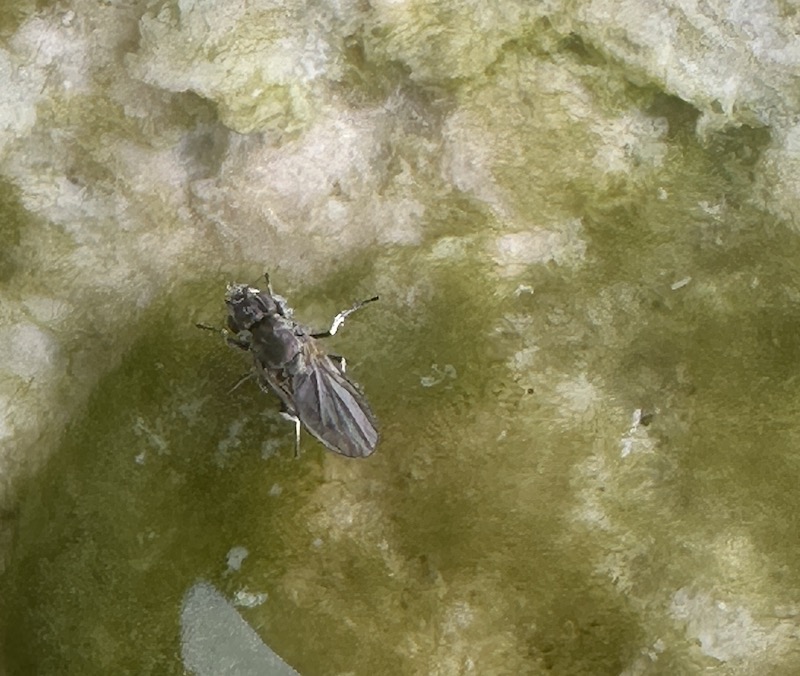
Midway Geyser Basin started with the Excelsior Geyser Crater and Grand Prismatic Spring. The combination of snow, warm steam, and ice make the boardwalks here very slippery, but we persevered. We saw the thermophilic bacterial mats, the silica deposits in the flowing waters, and ephydrid flies! We witnessed larva and adult flies, all happily eating the bacterial mats. They stay active in winter because the waters coming from the springs keep their environment warm enough for them to live.

ephydrid fly

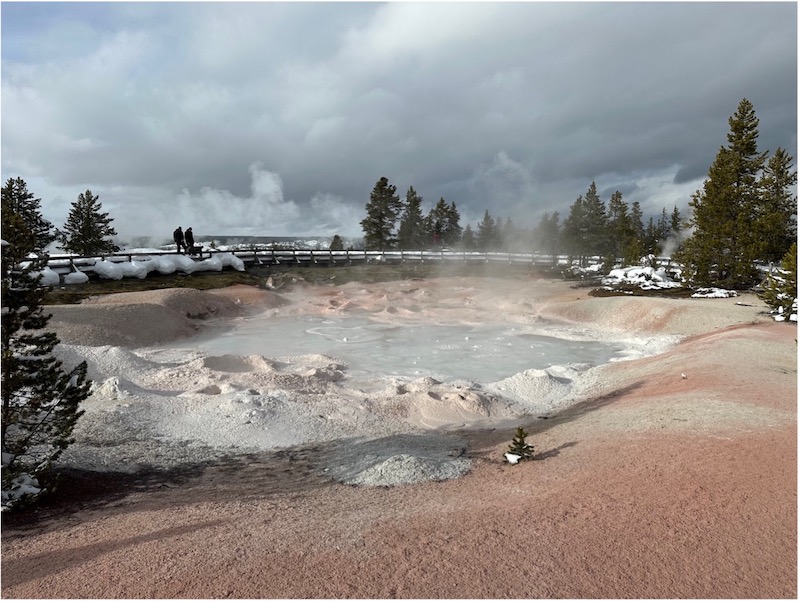
The next stop was Fountain Paint Pots. It was like a scene from another planet: smaller geysers erupting, steam rising from fumaroles, acidic mud bubbling, and colors from both mineral deposits and bacterial mats. Dustin gave us a lesson on Thermus aquaticus, one of the many bacteria making up the colorful mats where the warm waters from thermal features flow over the land.

Hitting the road again in the snowcoach, our driver John had to deal with bison in the roadway. He handled it like a professional, patiently waiting for the herd to decide to move out of the way. This was just out first encounter with road-bison today!

We stopped to see Firehole Falls, where the Firehole River splits the difference between two ancient lava flows, tumbling down exposed rhyolites. While exploring the stop and enjoying the view, we found a nice snowbank that made for a perfect slide.

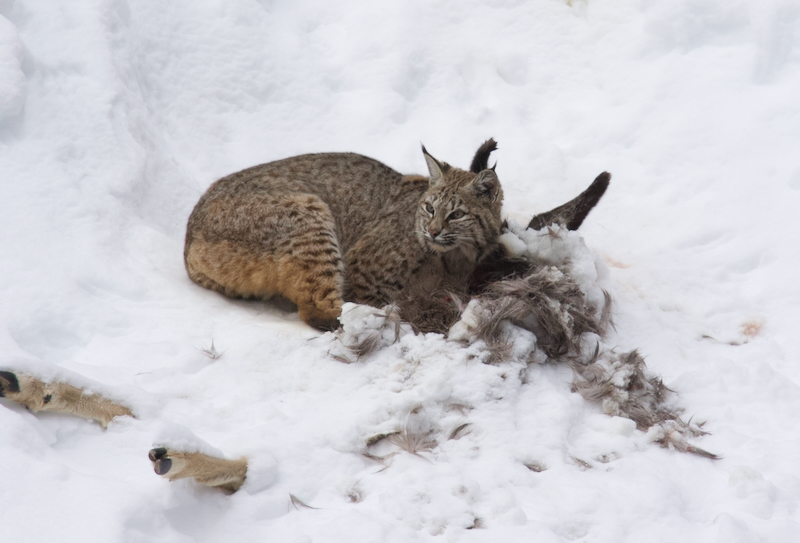
Further down the Firehole Canyon we came upon a rare sight: a bobcat was feeding on a mule deer carcass on the other side of the river! The bobcat had been feeding on this carcass for days. No one knew how the deer died, but word had spread, and there were many snowcoaches pausing here to take photos. And the bobcat could not have cared less.

bobcat

Next, we had a brief stop at Gibbon Falls, enjoying once again the power of flowing water to reshape the land. From there we drove home, but on the way we had an opportunity to experience stillness and silence. Stopping in the middle of Swan Lake Flats, we all stepped out of the snowcoach, John turned off the lights and engine, and we enjoyed a few minutes just absorbing the night-time scene.