TOP
Blue Ridge

“Breaking Camp—Wet, Wet Day”

Chris: This morning dawned clear after the previous evening’s rain.  We shook ourselves off and grabbed coffee, tea, and breakfast, then packed under a deadline.  Wisely, our illustrious leaders told us we needed to be ready NO LATER than 7:30 AM so we were all ready, of course, by 7:44—a minute ahead of the actual schedule! 

Something popped its head out of the water as we were packing up: Beaver, otter? It gave us just a quick look over its shoulder before it resubmerged and bid us adieu.

Kate: Our first adventure of the day was an easy quarter mile hike to observe a great feat for finishing the Blue Ridge Parkway— The Linn Cove Viaduct. In what might have been a short hike for the average person, we spent most of the morning identifying plants! White bergamot mixed in with umbrella leaf and bee balm were such a delight to see for all.
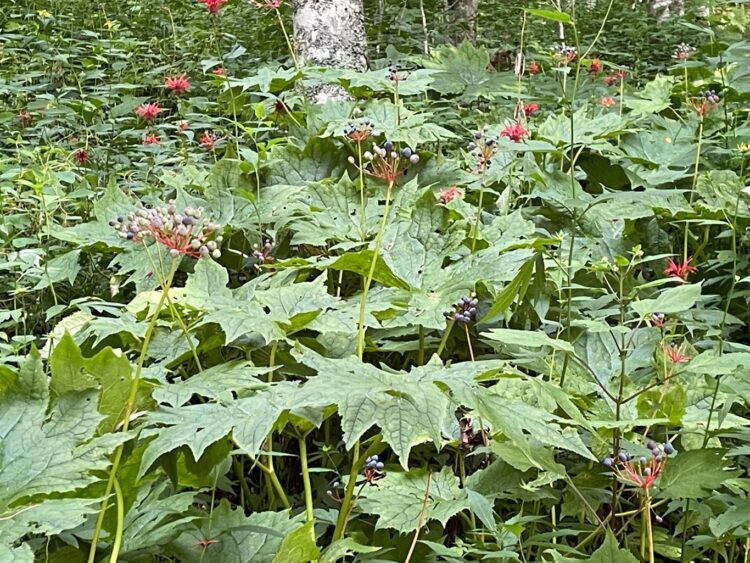
A sea of umbrella leaf and bee balm

Seriously, 12 nature geeks cannot cover .25 miles in less than an hour! Too many birds…so many plants…and Megan spotted not one, but two dusky salamanders! (She is the salamander whisperer!)

Rich:  Next up was a short hike along the Mountains to Sea Trail from the Blue Ridge Parkway up to Beacon Heights.  What an awesome view, complemented by a couple of showy cedar waxwing birds.
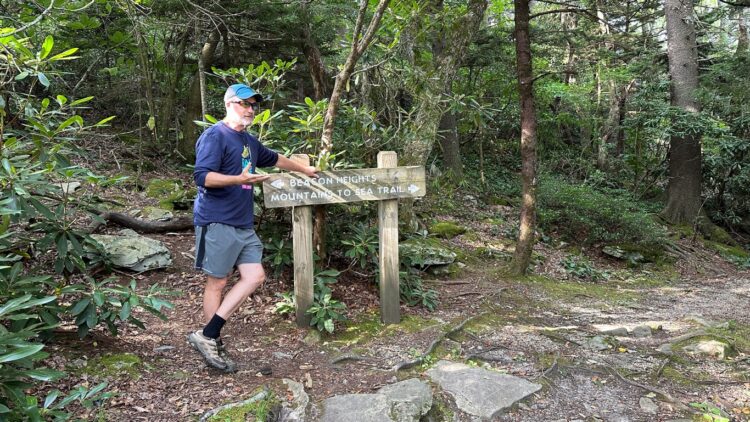
Rich is an avid hiker and helps maintain trails, so he told us all about the Mountains to Sea Trail

My highlight was getting to listen to Olivia, a National Park Service and Blue Ridge Parkway ranger.  She is very engaging and did a great job giving us the history and details of the Blue Ridge Parkway.  The Blue Ridge Parkway is not just a road, by the way.  She showed us a diagram that detailed just one mile of the Parkway: each tree, each fence has been carefully planned.  Great job, Olivia!
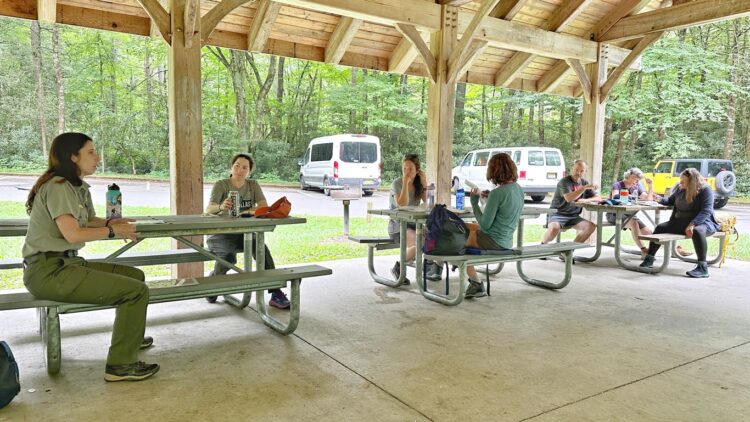
Learning from Ranger Olivia

Chris: The next leg of our journey saw us hitting the road briefly to hike another short trail, this one up to the upper falls at Linville Gorge. Taking way longer than we needed to, we stopped many times along the trail to identify and confirm the identity of birds and flora.  No one gets impatient to move…we are all content to take our time and enjoy the journey, not just the destination.  But, oh, the destination!  The falls are beautiful and inspire wonder.  The end of the trail took us quite near the edge, where we looked for salamanders and appreciated the geography.  We listened to two separate “expert talks”.  That is to say, we have all taken on a subject to become the “Five Minute Expert” on, and two of us were able to give our talks at the falls. Lydia told us all about the galax, a very common but important plant that is prevalent in the higher elevations.  Lydia really helped us to better understand the history of the plant and I can now identify a new plant in our mountains.  Thanks, Lydia! 

Kate: Up next was learning about mudpuppies from Chris! Chris took her expert topic to the next level by showing off her life size needle-felted mudpuppy!  After that, we finished our hike and drove to our new home- Briar Bottom Campground at the base of Mount Mitchell.  
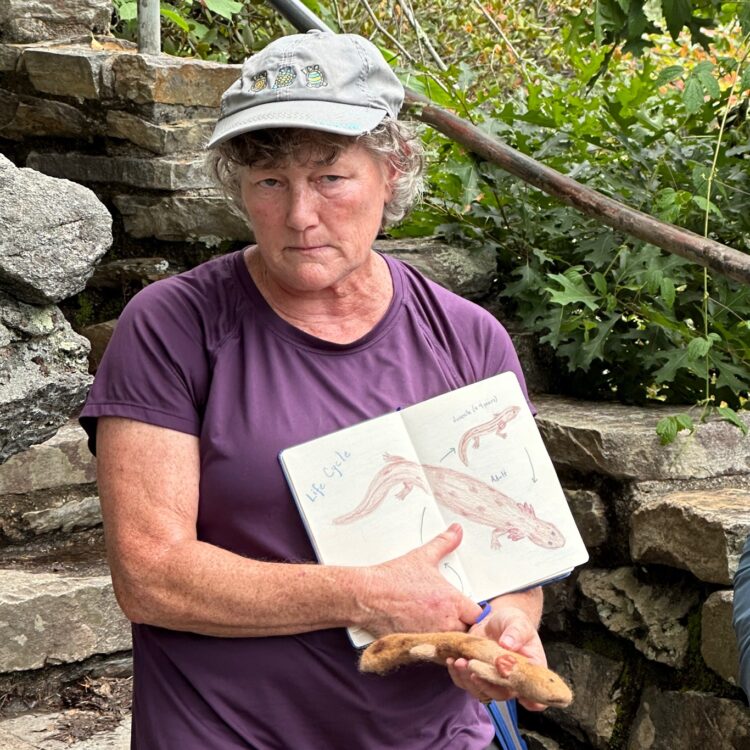
Chris teaching us with her illustrations and felted mudpuppy

Rich:  Did Kate mention that it may have rained?!  But what’s a little rain?  We have great tents and great teamwork to make sure everyone is going to have a dry night’s sleep.  Tomorrow: the highest point in North Carolina and east of the Mississippi – Mount Mitchell.
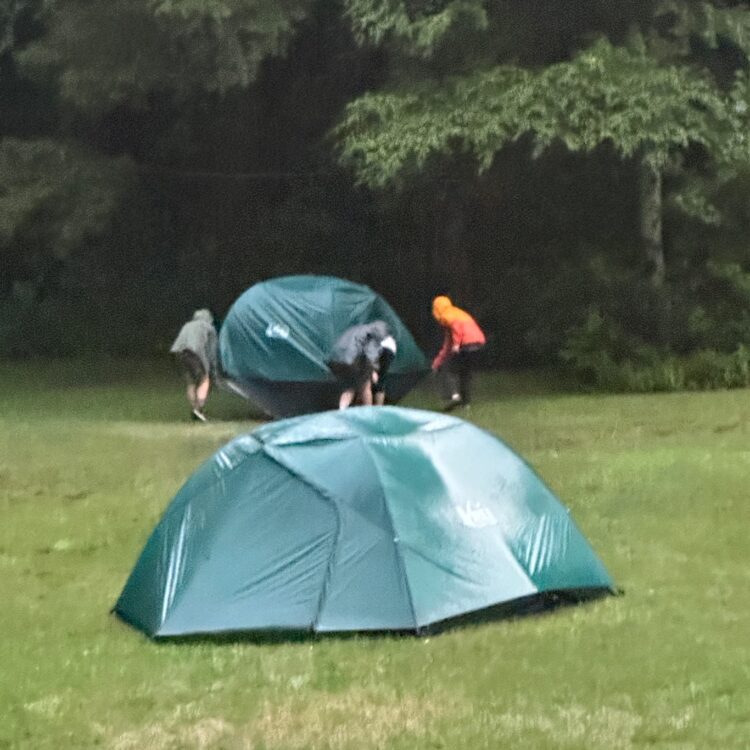
We had to move a few tents out of puddles, but the team pulled together to do it quickly!
Blue Ridge

“A Grand Day at Grandfather Mountain”

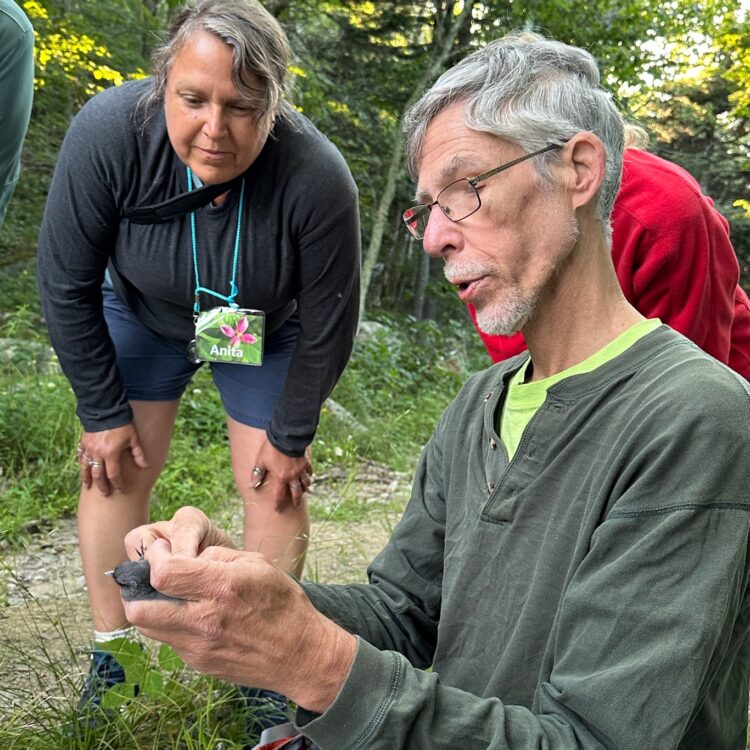
What would get educators on summer vacation out of bed at 4:30 a.m.?  Bird banding, of course!  We had the amazing opportunity to set up bird-catching nets with John Gerwin, Curator of Ornithology at the Museum. We assisted him with setting up the nets and anxiously awaited the birds! We were so excited to catch a junco! After we observed, measured, and tagged the bird, we released him back into the wild safe and sound.

John Gerwin showing us how to band a junco

We heard and observed several other birds such as the towhee, the red-breasted nuthatch and an entire family of wild turkeys. We also met Rachel and Ryan, who both work for Grandfather Mountain Stewardship Foundation. Rachel work with the animals and their habitats, as well as in education and Ryan is on the resource management team. 

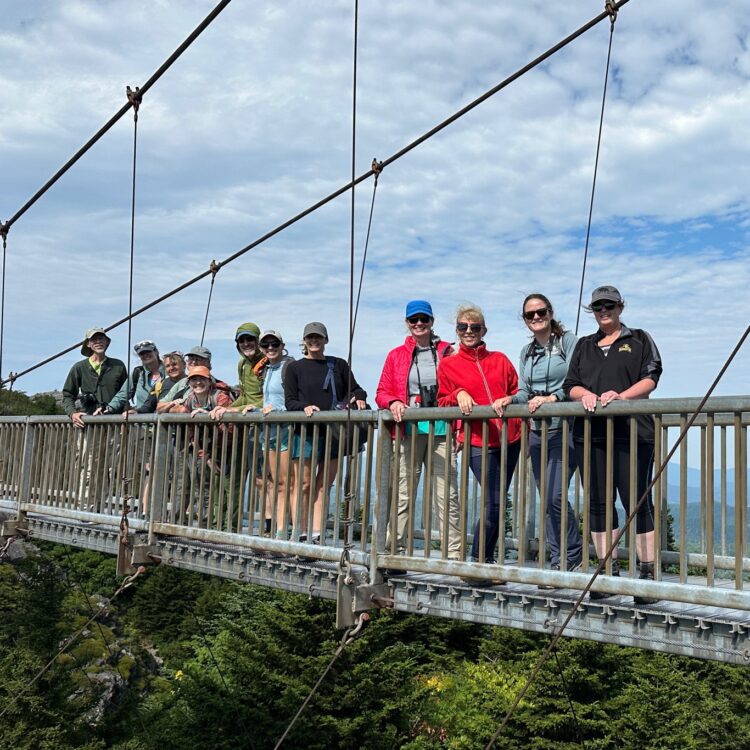
After bird banding, we had a chance to visit the Mile High Swinging Bridge. Erin and Anita conquered their fear of heights and made it across the bridge and back! (Group pic on the bridge here!) We got to take in some amazing views while enjoying cooler temperatures. While up on the bridge we also saw two peregrine falcons. These birds nest in the craggy rocks on the mountain.

Group on the Mile High Swinging Bridge

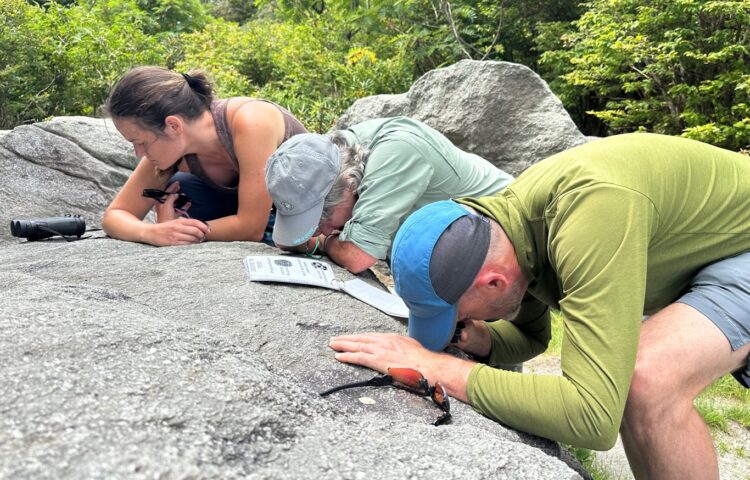
Our group then walked along a trail under the bridge to observe and learn about the geology of the rock formations at Grandfather Mountains and across North Carolina.  (Any pictures of the geology observations here!) Lastly, Elizabeth, a naturalist at Grandfather, led discussions on stewardship of native and invasive plants. Everyone got to practice our observation skills again, and we got to see what happens when you rehydrate very dry lichen. Check out our Instagram reel to see a time-lapse of how a dull gray lichen turned bright green with just a little bit of water!

Looking at the rocks with our magnifiers

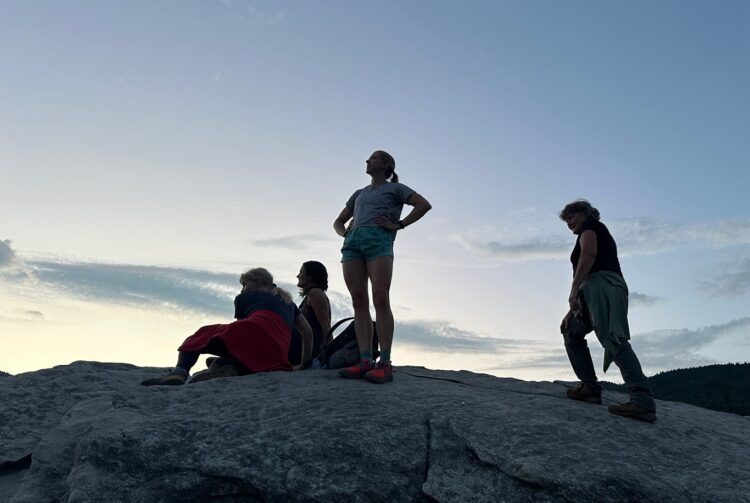
After dinner, we hiked to Rough Ridge to take in the gorgeous 360 degree views! We’re all excited for a good night’s sleep and all the adventures tomorrow will bring!

Rough Ridge at sunset
Blue Ridge

“I Notice, I Wonder…”

Though we didn’t have signal to post last night, we’ve arrived at Julian Price Park and set up camp! Some of us for the first time! We re-introduced ourselves with our “I Am From” poems, which follow a specific format but are filled with tidbits of our personal histories. What an incredible way to get to know each other and our myriad stories.

Preparing for the week ahead, we launched into observational activities to develop skills we will need to document our natural experiences. Some of the various strategies included using all of our 5 senses, shifting our perspective, or using the sentence starter prompts of “I notice… or I wonder… or “it reminds me of…” to spark better observations and reflections. The process allows us to dig deeper into our experience and perception of our surroundings.

Though it is definitely cooler than the Piedmont or the Coastal plain today, at 87 degrees F, it is quite warm for the mountains, and so we took a quick excursion to a refreshing creek to soak our feet (or our bodies), and to look for salamanders and macroinvertebrates. We concluded our first day with a picnic dinner at the Raven Rocks overlook on the Blue Ridge Parkway to catch the most spectacular sunset ever!  We are off to a phenomenal start!

Blue Ridge

“How to Prep for a 8-night Group Camping Adventure!?!”

First, find a group of amazing educators that are willing to travel and camp with a bunch of strangers for 9 days. No camping experience required, just enthusiasm for exploring the nature world! Then, gather them for a meeting to go over the trip details and get to know one another. Finally, give them a thorough packing list and see what happens…

Here’s how our group has been preparing for our Blue Ridge Institute!

Chris Keffer: “I’m getting excited for our trip.  Well, I’ve been excited for our trip, but it’s time to get serious now. I’ve been going through last minute needs: What do I have vs. what I need vs. what I’d like to have.  I’ve found I don’t need to purchase many things, but the purchases I have made will be useful to me beyond our adventure, so that’s okay. The best investment?  Waterproofing!  Seems strange right now because we are in a drought, but I’ve noticed a trend of storms and showers, anywhere but over my garden.  I look forward to some cooling rain, but getting wet and staying wet is not my idea of a good time.”

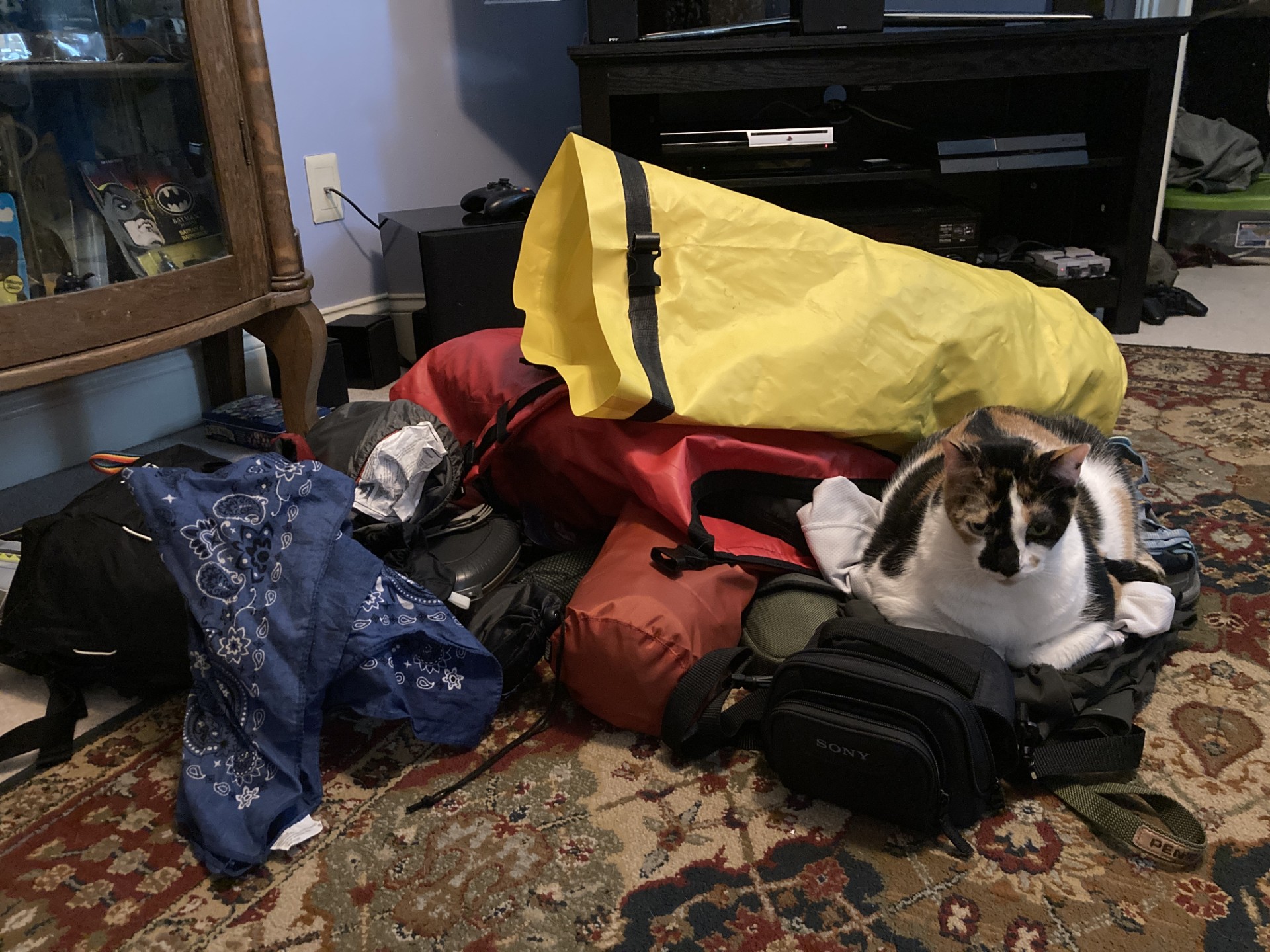
Erin Quinlan: “My excitement is growing along with the pile of stuff for packing.  Princess Rainbow Sparkles has already claimed the pile as her own.  Unfortunately, she hasn’t even started packing…”

Holly Kolarova: “I am really excited for the trip!  I am looking forward to challenging myself, learning about our wonderful state, and sharing adventures with my fellow teachers.  I have been hiking every day, sometimes twice a day, to build up stamina. I took a trip up Big Glassy at Carl Sandburg National  Park Site when I was breaking in my new hiking boots.  I recently requested and received a bilingual book about the state parks (and I have copies to share)! I can’t wait to use the books and my experiences from the trip with my students.”

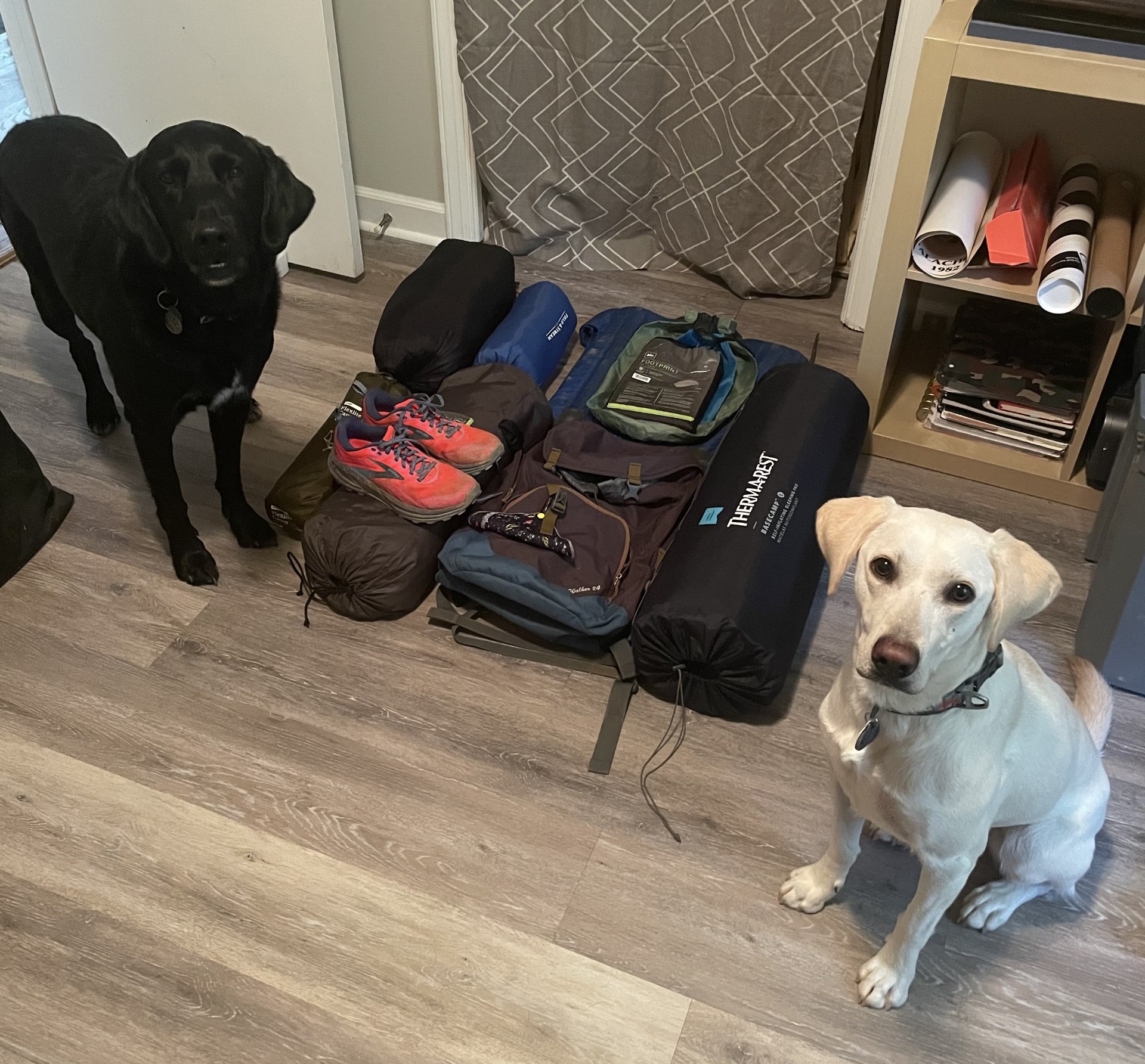
Abby Goodson: “I am so excited for the trip to begin! This weekend, I started pulling together the gear I’ll need to take with me. Porter and Luna were very curious about it and a little sad to hear they are not on the packing list for next week!”

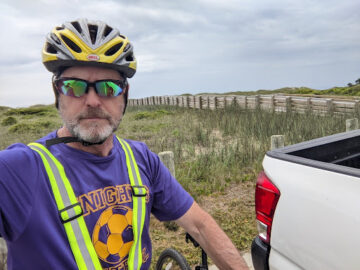
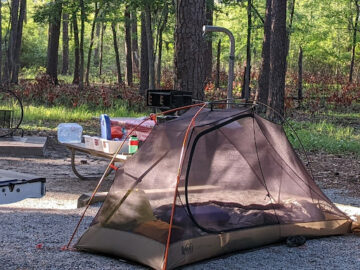
Rich Bowerman: “I prepared by getting out there and camping!  Pictured above is my set up at Goose Creek State Park near Washington, NC in the coastal plain, which is a totally different ecosystem than we will experience along the Blue Ridge in July. I bicycled and hiked the 14.3 miles of the Mountains to Sea Trail that runs along the beach on Ocracoke Island.  The Mountains to Sea Trail runs for over 1,175 miles starting at Kuwohi in the Great Smoky Mountains National Park and ending at Jockey’s Ridge State Park in the Outer Banks. I attended a teacher workshop at the North Carolina Center for the Advancement of Teaching (NCCAT) on Ocracoke Island.  The 5-day workshop was North Carolina History Unfolded Inquiry-Based Project.  Very interesting! Finally, I’ve returned to Henderson County in the mountains to wrap up my preparations for the Blue Ridge Institute adventure!”

Luba Tyer: “I’m beyond excited to dive into the Appalachians in just 5 days. I’ve been brainstorming a presentation on the “Turk’s Cap Lily,” my expert topic for the trip. I’m figuring out the ways to create paper flowers in 5 minutes!”

Kate Keller: “The check list that Melissa and Megan provided has been awesome!  This week, I have been getting my things together and laying it all out in our spare room. Before I pack things in a bag, I like to have everything in sight. I have a list and I am checking it twice. I have a lot of precious fur or feather pets at home. I’m spending any extra time with my animals and working on getting all my farm chores completed before I leave on this amazing trip! I’m excited to have the opportunity to learn from so many experts about the place that I call home! I am really excited to be a part of this cohort and look forward to coming back with more knowledge and ideas to support our programming at our state forests.”

Almost forgot the last step in our preparations: asking y’all to cross your fingers and toes for good weather during our travels! And please wish us well or ask questions while we’re on the road by leaving comments on the blog.

Yellowstone

“It Was a Journey for a Lifetime”

They say that all good things must come to an end, but that doesn’t mean that our group was ready to let our trip end without another 5 am Lamar Valley wildlife viewing.

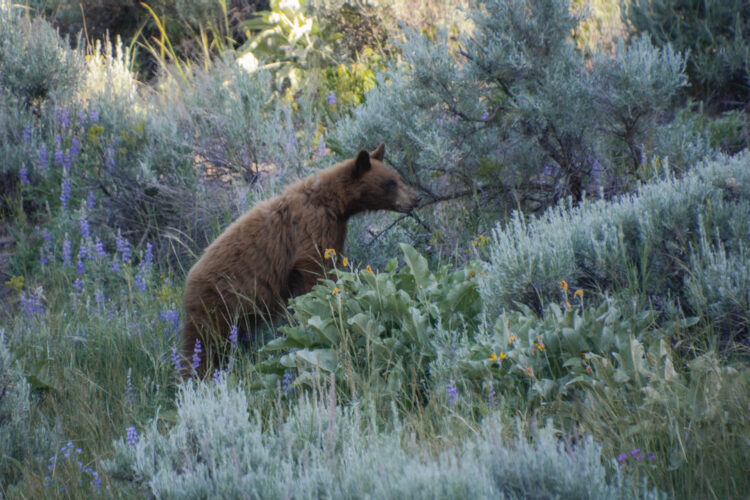
The wildlife must have sensed our heavy hearts and greeted us in abundance, with the bison seemingly leading the parade. Our first sighting was a black bear within inches of our van eagerly looking for an early morning snack, and he opened the floodgates for the animals to come: a wolf pup, a cinnamon-colored black bear, cliff swallows looking curiously out of their nests, a mountain goat with her kid, a red-tailed hawk, a coyote jogging along, a bald eagle, and our very own mosquito party at the pit toilets.

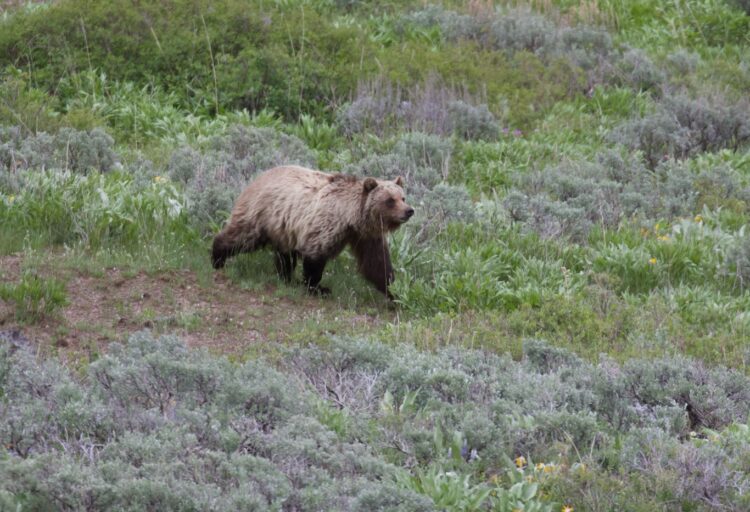
a brown-colored bear among a field of flowers and sagebrush
A cinnamon-colored black bear the group spotted from the car on our last morning in the park.

We turned around and circled back for another look at an active wolf den and found a family of wolves with some playful pups. The two scopes came out and we decided that there was no better place to have our last breakfast picnic. With our impending departure on our minds, all rules for a proper breakfast flew out the window and the pringles and nutella came out earlier than usual, much to our delight.

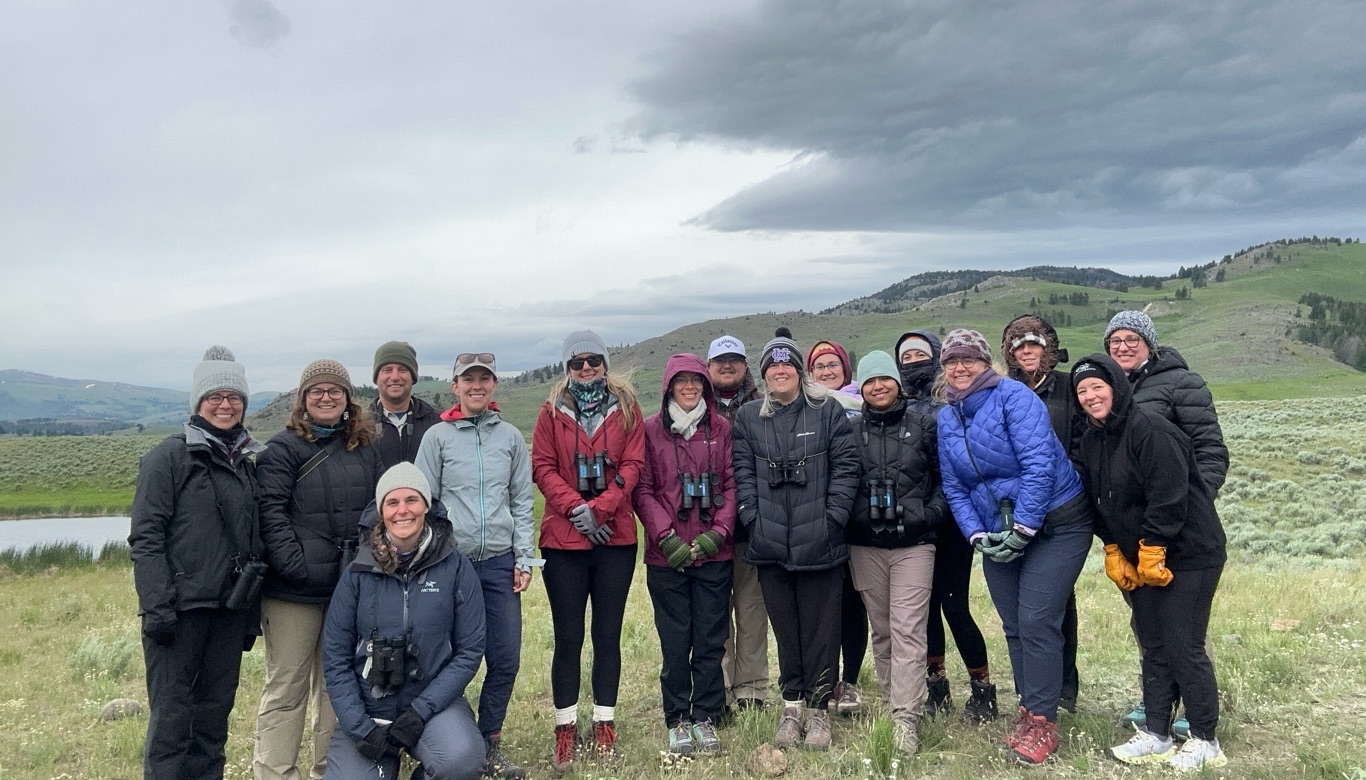
Taking in the views at Slough Creek for the last time, it was a bit quieter than normal as we all took time to process what the last 10 days have meant to us.

Emerson Hough, an early journalist who reported on Yellowstone, wrote that, “It was a journey for a lifetime.” Upon leaving Yellowstone, we’d be inclined to say that anyone who has the opportunity to experience Yellowstone’s magic is destined to wholeheartedly agree.

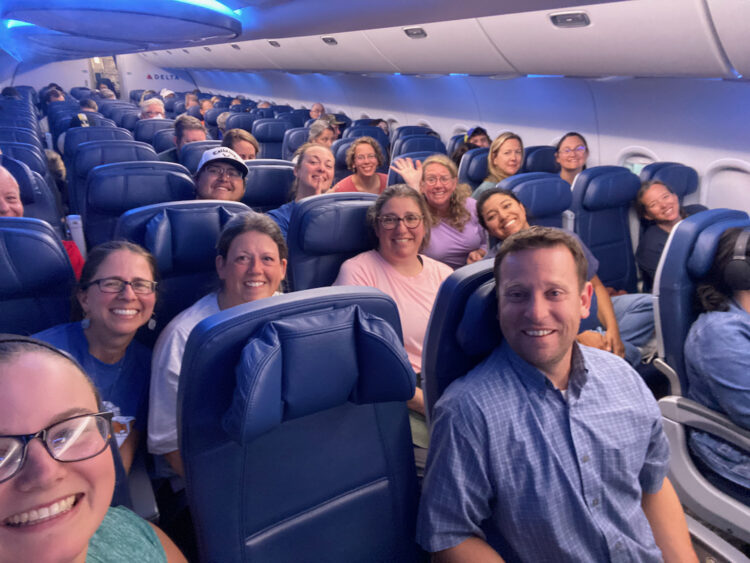
A group of people sitting in seats on a plane
On our way back to North Carolina after a race through the airport to make our connecting flight!
Yellowstone

“Great Geyser Gazing”

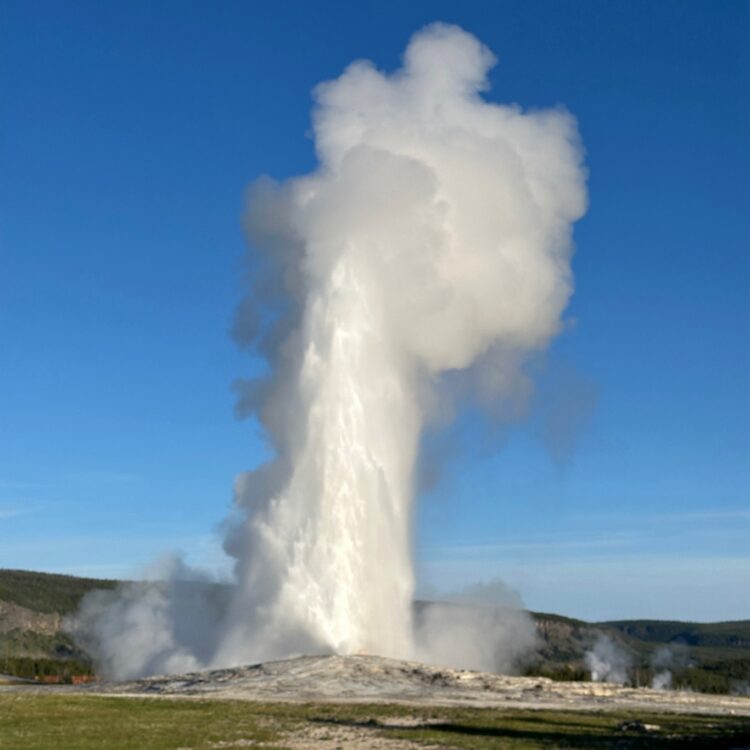
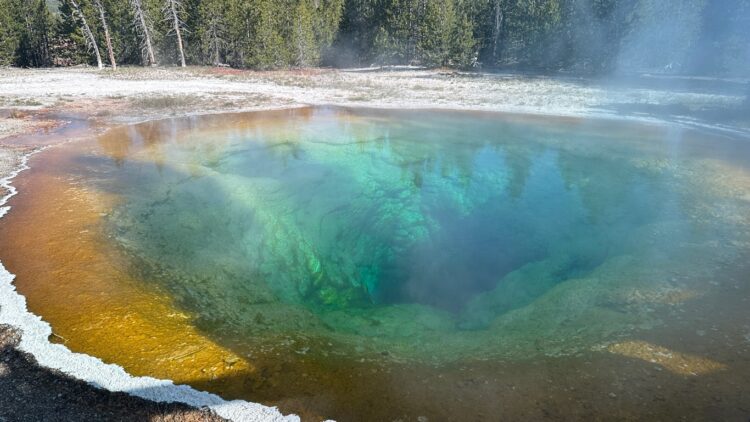
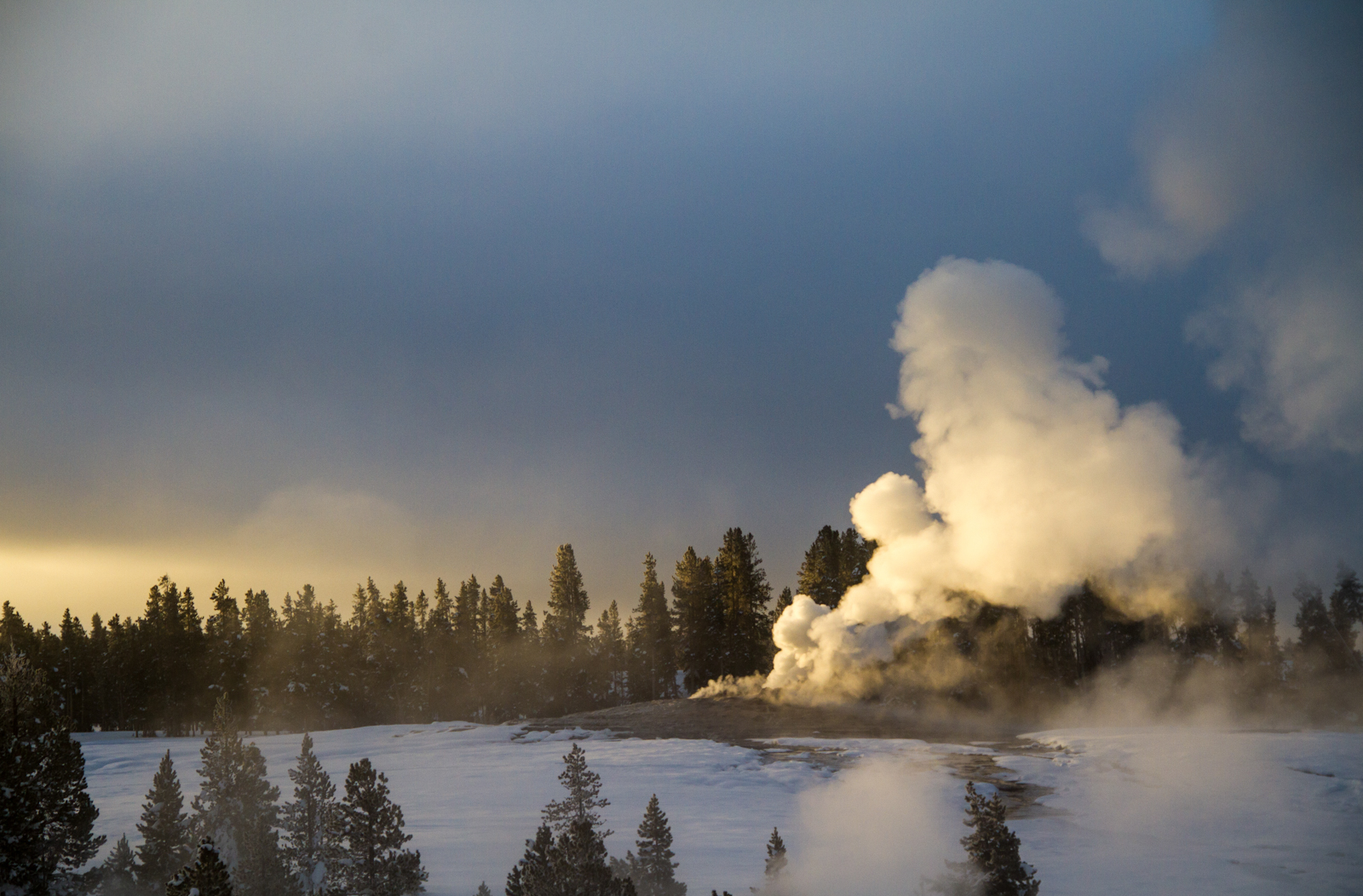
We headed out to the geyser basin early this morning to avoid the crowds. Luckily, we got to see Old Faithful erupt and basically had it all to ourselves. After watching that, we headed over to Sawmill and Tardy Geysers, which weren’t as tall, but still really interesting to watch. We then decided to book it over to Grand, Vent and Turban geysers to see if we could catch them erupting. We were lucky to get to talk with two of the “Geyser Gazers”, people who spend their days watching and recording the various eruptions. It was interesting to speak with people really passionate about the geology of geysers. We learned that Grand Geyser emits about 1 million gallons at each eruption and is taller than Old Faithful! We booked it over to Daisy Geyser, which is unique in that it erupts at an angle and sounds like a chugging train at the end. It was fascinating to see the various types of eruptions and learn about what causes them all. At Morning Glory Pool, we talked about the fact that the geysers and other areas in Yellowstone need to be protected from humans so that they continue to amaze us and do what they do. It’s important that we do everything we can to leave no trace!

Old Faithful
Morning Glory pool

We visited the Tribal Heritage Center, where some of us talked to the artist in residence from Standing Rock Reservation. She’s there as part of a program that brings artists from the 27 tribes associated with Yellowstone for one week residencies in the park. The artists get to display their art and they talk with visitors about their work and their tribe. She had beautiful beadwork, clothing, and paintings. We felt really lucky to get to talk with her for so long and learn about her art and experiences.

On our way north back to Mammoth, we stopped by Swan Lake where we had the great, good fortune to see two trumpeter swans with their five cygnets. It’s becoming rarer to see them because of the influx of Canadian Geese, so we all enjoyed the moment and knew we were lucky to see them today.

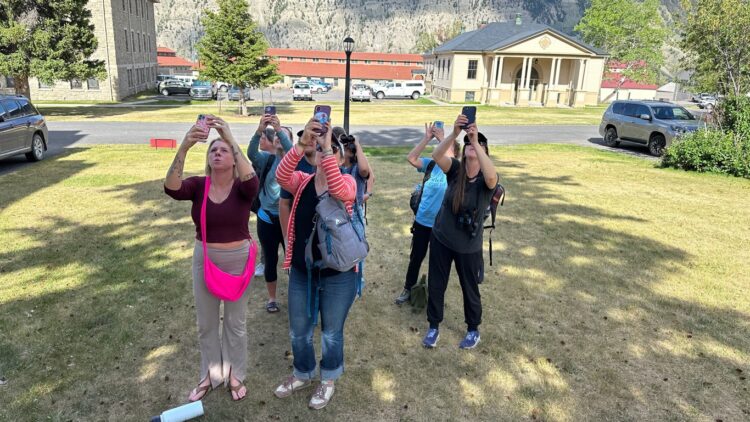
Taking pictures of a baby owl after our final group meeting

Serendipity, joy and curiosity have been the themes of our trip. We’ve all been so fortunate to experience this place. In the words of Olaus Murie, a naturalist and biologist who lived in Grand Teton: “I know that when I have stood in Nature’s domain, rapt in wonder, in the presence of some manifestation of her charm, perhaps a sunset, a mighty unfolding of mountain ranges to the horizon, or the soft hooting of an owl at dusk, at such times I have had my greatest peace. At such times I can harbor no ill will toward my fellow man.”

We’re all leaving here having experienced great peace, joy, awe, and amazement.

Group at the Roosevelt Arch at the North Entrance to Yellowstone
Yellowstone

“Grounding in the Tetons”

From a distance, the sharp spires loom large. Majesty unparalleled. A blue abyss reflects the awesomeness of nature, snaking its way through the mountain passes. Otherworldly comes to mind. As we continue the approach, the jagged geography grows and grows, never losing its novelty. The glacier of Mt. Moran shines bright white in the morning sun, beckoning visitors and whispering tales of long, long ago.

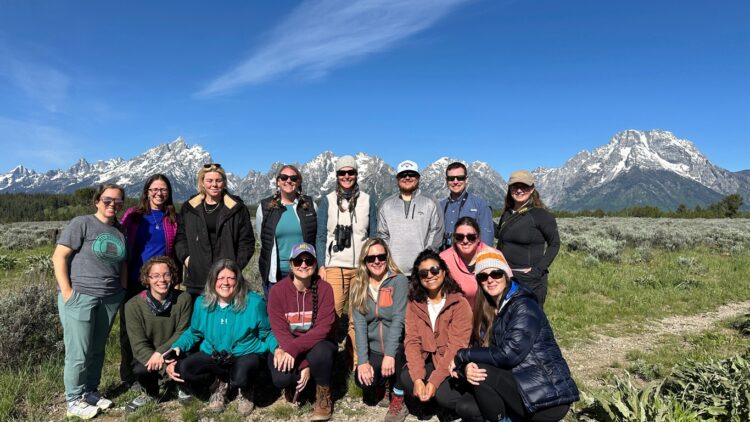
Group at Grand Teton National Park

We hike to Taggart Lake. The aspen trees, grouse and butterflies set the stage for a beautiful outdoor day. The stream’s melody greets us along our way. A pine forest reminiscent of Narnia brings peace and nostalgia. Changing, ever-changing, are these mountain paths. The challenging terrain is the work before the reward. The lake’s crystal blues and greens sing a siren song, that lure one of our own into its refreshing waters.

Liz wading in Taggart Lake

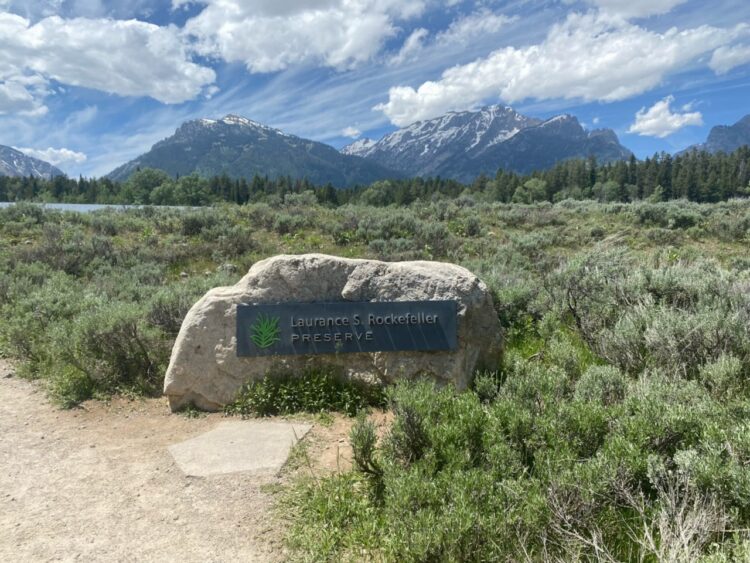
Birds singing and aspens rustling in the wind embrace you at Laurance S. Rockefeller Preserve. The minimalist landscape and eco-friendly visitor center embody the tranquil beauty of the Tetons. Trails meander through lush green thickets and creeks are wild and loud. A waterfall lulls you into oblivion before the lake refreshes the soul.

The entrance to the Laurance S. Rockefeller Preserve

Mother Nature puts on yet another show as we depart Grand Teton and witness true symbols of the wild—-BEARS!—-a grizzly and her three cubs, a cinnamon black bear and a grizzly bear.

These experiences allowed connection to self, each other and the awesomeness of the outdoors.

“Mindful of different ways of being, our awareness as a species shifts — We recognize the soul of the land as our own.”
Terry Tempest Williams

Yellowstone

“Entering a New Frontier”

This place has an order of perfection that the indigenous people certainly understood. There’s a reason that our first national park has close to five million visitors each year. This place seems otherworldly at times, almost like you’re in some fictional universe (perhaps a bit like Star Wars). It creates an inner peace where the only things that can break through are the sounds of birds, the whispering of the wind, the howls of wolves, and other sounds that are only heard in nature. It shows its grandeur in its mountains, cascading falls, and its thermal features. It holds mysteries in its varying landscapes and elusive animals.  

This is the first day we were able to sleep in. However, some of us still chose to get up early to watch the sunrise over Yellowstone Lake. Bear spray in tow, we trekked across the historic Lake Hotel grounds. The view over the lake was breathtaking with the mountains in the distance, sunlight glistening over the snow caps like glass. It was worth the missed sleep. 

Each day our small groups rotate roles and responsibilities to include documenting the physical features of the day. There was an unspoken competition between teams over which would clock the highest temperature over the geothermal landscapes (using an infrared thermometer). A reading at West Thumb Geyser Basin of Black Pool hot spring edged out the previous high of 161 degrees F with the highest temperature of 174 degrees F. 

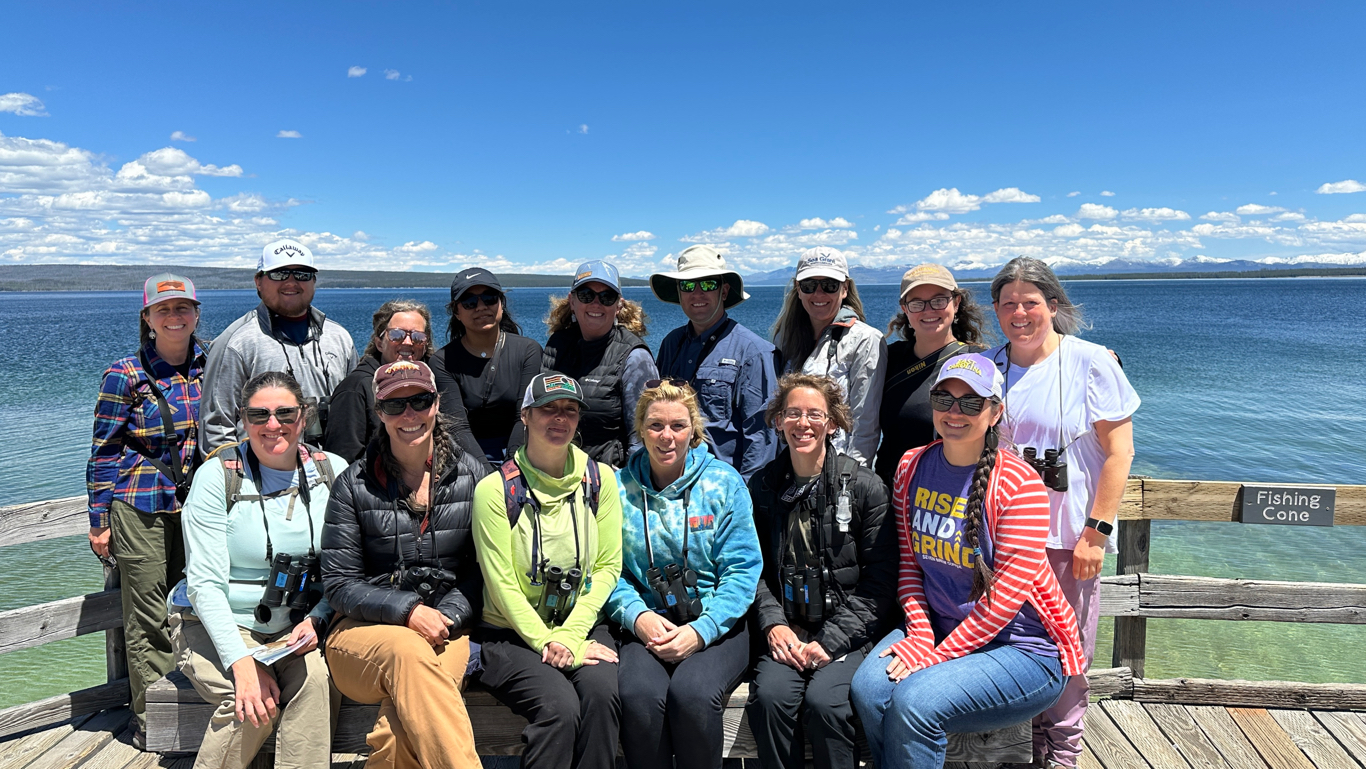
group in front of a lake
Group at West Thumb Geyser Basin on the shore of Yellowstone Lake

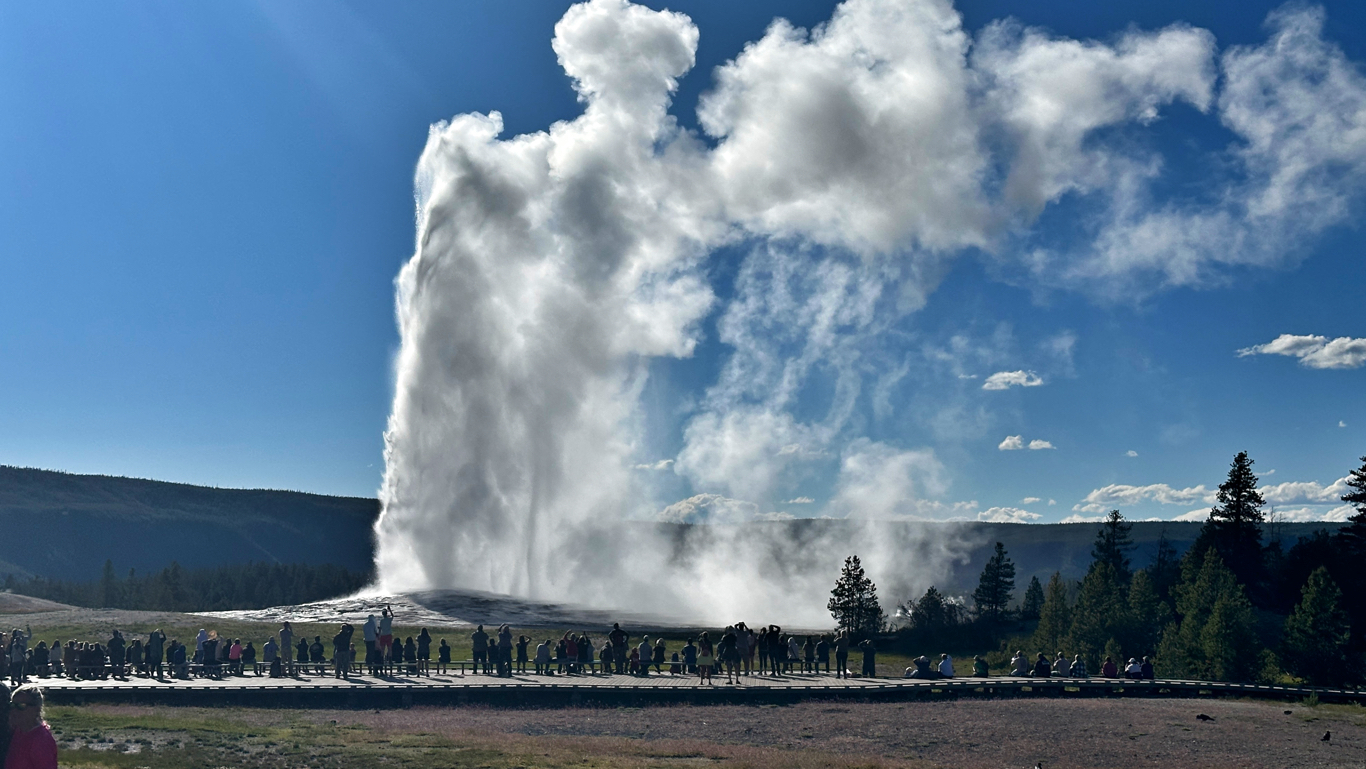
We visited the Continental Divide at Isa Lake, where we caught some leeches. Not all other visitors were as interested in this as our group was. We then traveled to Old Faithful and were fortunate enough to catch an eruption within minutes of our arrival. Once checked into the Old Faithful Inn, we headed out on another hike to view Grand Prismatic Spring. The mosquitos were especially excited to have us there. 

geyser eruption
Old Faithful

All of these experiences have helped our group return to some of the joys that children possess, and it reminds us of our responsibilities to not only live life to the fullest, but to also protect the natural world that helps create those feelings of pure joy. 

Laura W., James, and Allyson

Yellowstone

“Snow or Woah: Over the Washburn Pass”

Woke up to a dusting of snow, but the pass was open. Heading south to Hayden Valley – a new section of the park!

A moment of awe, with a nearby grizzly, a brave coyote, and a watchful elk.

Snowball fights, and a snowball duel!

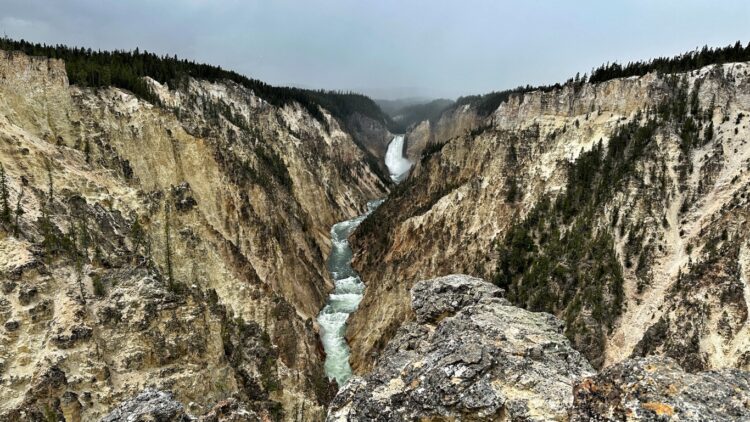
Humbled by the power of the Yellowstone River’s Lower Falls.

Bison surprise at the end of a four mile hike through the Grand Canyon of Yellowstone’s changing landscapes.

Unbearable temperatures of the Mud Volcano reached 159°F.

Rolling hills outline the expansive Hayden Valley where herds of elk and bison lounge.

Noxious odors of the Dragons Mouth Spring are juxtaposed with its impressiveness.

Grizzly bear
Hiking through graupel (snowflakes coated in rime ice that look a lot like dip-n-dots) in a backcountry thermal area

Perusing a wide variety of merchandise at Canyon Village.

An ominous day where everything magically worked out…

Sounds of the piano as the group kicks back at the Lake Hotel.

Sadly, another day has come to an end.

Snow moving in over the Lower Falls of the Yellowstone River
Yellowstone

“An Ecology of Awe”

In her book The Hour of Land, Terry Tempest Williams writes about the importance of fostering an ecology of awe. On this fourth full day in the park, we continue to be in awe of the scale, the diversity, and the overwhelming beauty of this place.

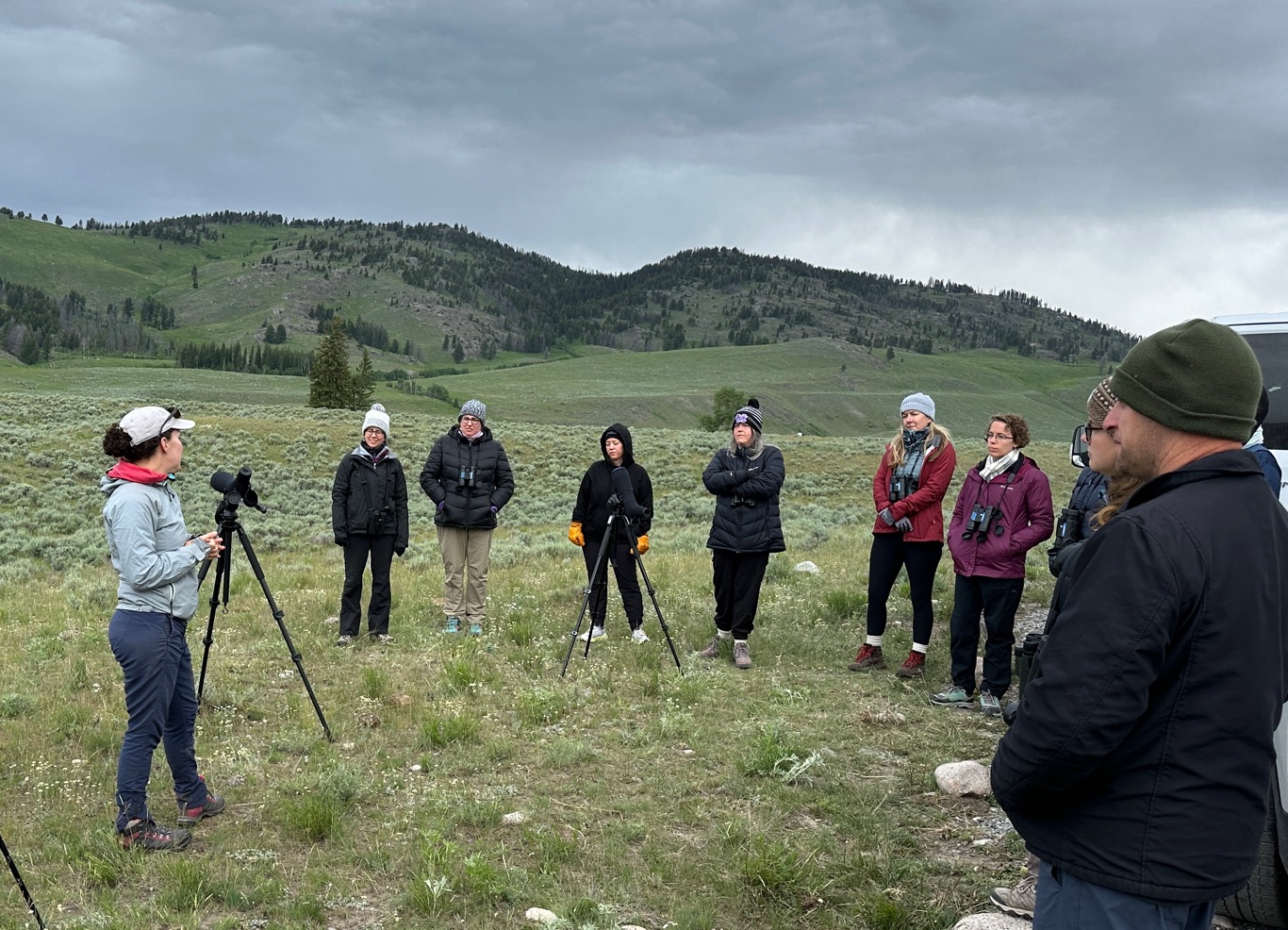
We started out this morning, once again, in the dark. We headed out by 5:06 to Slough Creek to meet Kira Cassidy, a wolf biologist. On the way, our eyes scanned the meadows and ridges for movements. We’ve all gotten better at telling the difference between a bison and rock, but we still get tricked occasionally.

We got to Slough Creek and saw a bald eagle, a beaver, a pronghorn with her two fawns, and one of the wolves in the distance. Turns out that pronghorn fawn butts are super cute. We headed east into Lamar Valley to the Buffalo Ranch to check on the coyote and her seven pups. They’ve gotten super playful over the last few days and it’s always nice to see them out playing. This morning, they were having a lazy morning, so they were just sleeping in front of their den. But, we did see a grizzly with two cubs playing around up on the ridge.

Once we caught up with Kira back at Slough Creek, we learned all about the wolf reintroduction project that began in 1995. She answered all of our questions and provided us with so much information about how the wolf biologists study the wolves, how the packs behave, and the history of the reintroduction project. A few interesting facts: the wolves in Yellowstone National Park can trace their lineage back 9-10 generations to those original wolves brought here from Alberta, Canada and British Columbia. There have been wolves who have traveled far from the park. A collared wolf made her way down to Colorado and another made their way down to the Grand Canyon. Mike Phillips, who led the reintroduction of the wolves to Yellowstone, also reintroduced Red Wolves to Eastern North Carolina in 1987. Kira said that wolves smell like sage. Kira’s work is a perfect example of the ecology of awe.

Talking with Kira while keeping an eye on the Junction Butte pack’s den

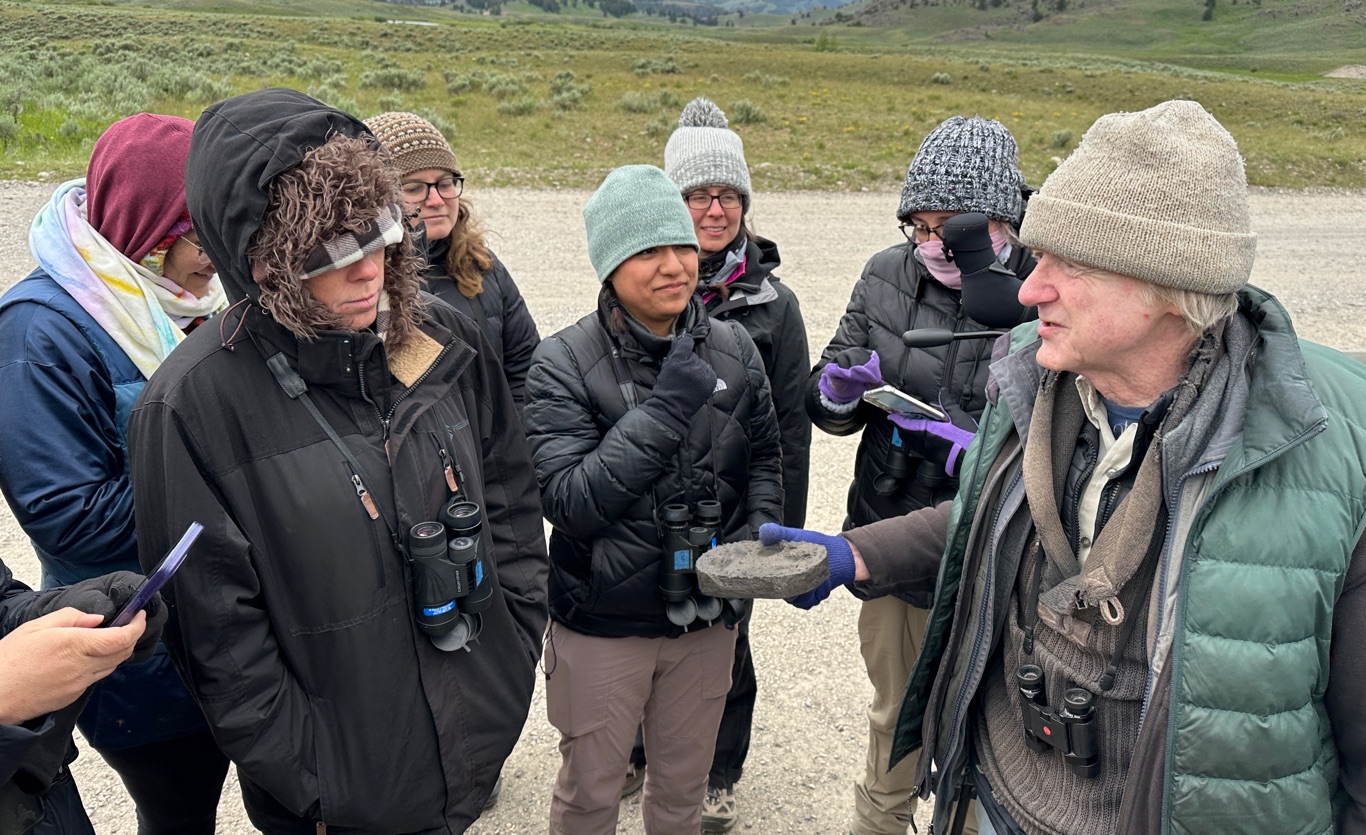
After our fairly long visit with Kira, we also got to visit with Rick McIntyre, the scientist and author of 4 books about the wolves of Yellowstone. His wry sense of humor, coupled with his extensive knowledge of the wolves, made for a fascinating conversation. When we asked if he had ever missed a day watching the wolves, he smiled and asked “Why would I?”. Rick’s longest stretch of never missing a day is 15 years!

He told us about 907, the oldest living wolf in the park. We were standing down the hills from her den and have had the pleasure of watching her every day. She’s 11, which is approximately 86 in human years, and had three pups this season. His next book, Think Like a Wolf, is about 907. He also showed us the paw print of wolf 21, a wolf who he said died of a broken heart after his mate, 42 died. That he knows these wolves so intimately gave us all a deeper appreciation of the animals we have been seeing during our time here. Many of us decided that we’d like to have Rick as one of our “Who would you invite to dinner” person. As we said goodbye, he advised us all to heed the words of John Potter, an indigenous wolf expert, who, in the afterward to one of Rick’s books, writes “don’t just learn about wolves, learn from them.” This seems like another way of fostering an ecology of awe.

Rick showing us a cast of wolf 21’s track

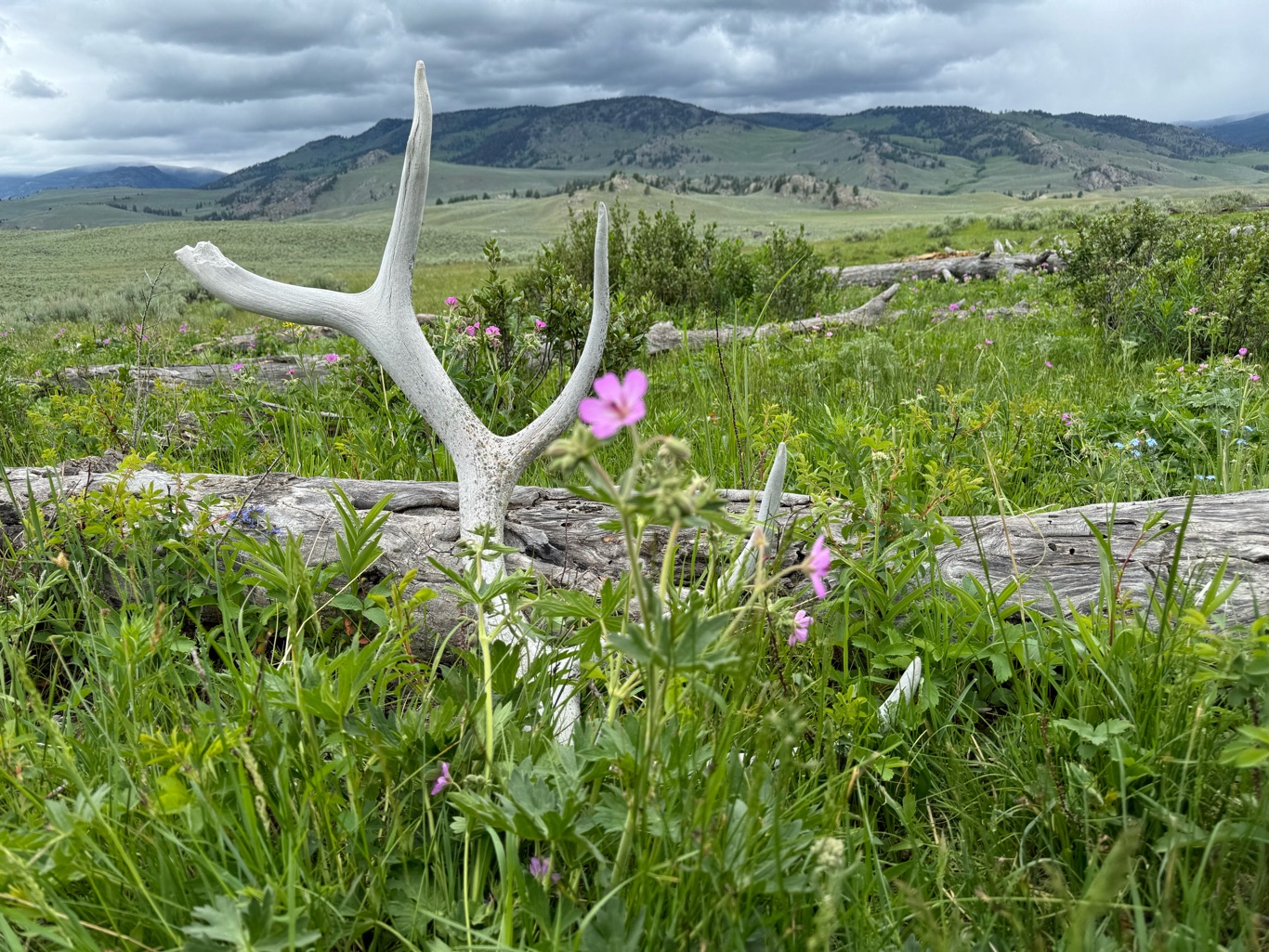
After our conversation with Rick came to an end, we headed toward an abandoned wolf den. The walk there led us through Sage meadows and we all understood what Kira meant when she said that wolves smell like Sage. Along the way to the den, we found two pile of bones that visitors before us had piled near each other for easy spotting. We were all thrilled to hold and investigate the bones that had been bleached white by the sun and that reminded us of the size and power of the bison and elk. The den was just inside the tree line; while it had collapsed considerably since last use, we would all see why that location was chosen. On the way back, we found a 6×6 intact Elk rack along with other antler pieces. The rather heavy rack provided a great photo op.

After lunch, we headed out into a meadow to search for the remains of a baby bison that Melissa had seen last week alone in the field. We found another recent bison carcass nearby, first and then his carcass. We suspect that perhaps his mother died, and he was unable to make it on his own. While we looked at the remains, we stood in silence in awe and respect for their lives.

Mountain iris near where we found the remains of the two bison

We have really enjoyed sharing our scopes, knowledge, and enthusiasm with other park visitors. We’ve had lots of people say things like “oh, you’re teachers, no wonder you’re all so helpful and enthusiastic; thanks for all that you do”. It’s been a joyous day of awe and we still have 4 full days and one morning in the park.

The group with Kira Cassidy